Apr 17, 2026
5G and V2X Connectivity: how smart mobility is improving
From vehicle-to-infrastructure communication to cooperative driving: what changes with lower latency, greater reliability, and interoperability at scale.
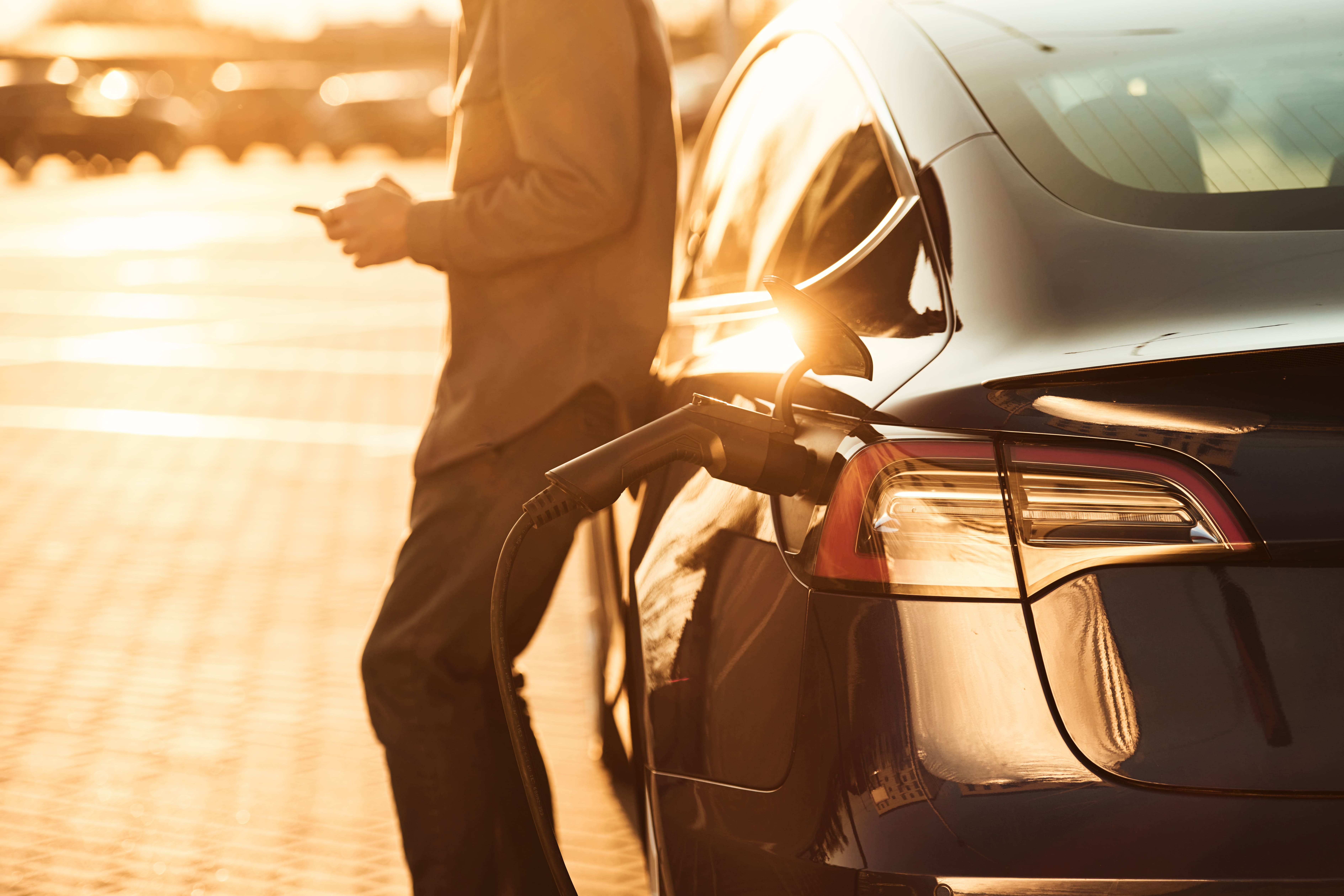
There is a reason why, when smart mobility is discussed, the “5G + V2X” pair keeps coming up. This is not just about “more speed” or a next-generation network in a generic sense. The point, more concrete, is different: 5G makes it more realistic to design priority, reliable, measurable communications between vehicles, infrastructure, and the network, with a quality of service that can be managed more precisely.
In other words, with 5G, V2X stops being only a fascinating idea and becomes, increasingly often, practical ground on which to build services that still work when things get complicated: heavy traffic, crowded intersections, adverse weather, dense urban areas.
In which scenarios end-to-end latency, jitter, and packet loss matter
When thinking about V2X, people often talk about latency. But be careful: it is not enough to say “low latency” and move on. What really matters is end-to-end latency, meaning the total time between detecting an event and turning it into a useful action.
To understand what this means, it is enough to follow a typical path:
sensors detect an event (for example an obstacle, hard braking, or a pedestrian in a blind spot);
the system generates a message;
the message travels (directly or via the network);
any processing happens at the edge or on control platforms;
the recipient receives, validates, and decides;
the action is executed (alert, ADAS intervention, traffic light optimization, etc.).
Here is the key point: if average latency is low but fluctuates a lot, jitter comes into play. High jitter makes message timing unstable and makes it harder to set thresholds, priorities, and fallback behaviors. Honestly, it is one of the reasons why some demos work in controlled conditions and then struggle in the field.
When low latency enables safety-critical and cooperative safety functions
In safety-critical cases, a few milliseconds can make the difference between an event managed in advance and one that becomes an emergency. However, network latency should not be confused with overall latency: quality depends on the whole system, not only on radio access.
When network capacity matters for urban density and high vehicle traffic
In cities, the real challenge is often density: many vehicles, many messages, lots of interference. Here, capacity, congestion management, prioritization, and continuity matter. In practice, the network has to hold up exactly when it is needed most.
Why reliability and coverage continuity remain the real constraints
It could be put this way: latency makes headlines; reliability makes the difference. A credible V2X service must remain consistent even in difficult conditions: interchanges, tunnels, urban canyons, loaded cells, frequent handovers.
Handover, congestion, and resilience in tunnels and interchanges
As a vehicle moves, cell-to-cell transitions are inevitable. If handover is unstable or the network becomes congested, messages can arrive late or not arrive at all. And no, this is not a detail: it determines whether a service can be deployed at scale.
Theoretical performance vs real-world performance: why they do not always match
Theoretical performance is not a lie, but it is not a guarantee either. In the field, what matters is effective coverage, QoS configuration, road infrastructure quality, software integration, and observability.
What V2X means and how it is structured across vehicle, infrastructure, and network
V2X stands for Vehicle-to-Everything: vehicle-to-vehicles, infrastructure, network, and even vulnerable road users. It is not a single device, but an ecosystem of communications and services that share information useful for safety, traffic, and automation.
V2V, V2I, V2N, and V2P: the essential map
V2V: vehicle-to-vehicle
The goal is to increase mutual awareness: sudden braking, stopped vehicle in lane, danger on a curve, reduced grip, complex maneuvers. It is the logic of “knowing earlier” and “knowing better.”
V2I: vehicle-to-infrastructure
Smart traffic lights, variable message signs, road sensors, traffic control centers. V2I is the bridge between mobility and the city: it enables priority, coordination, and dynamic management.
V2N: vehicle-to-network
This includes telematics, cloud services, flow analysis, fleet management, OTA updates. It is the part that makes services scalable and operable over time.
V2P: vehicle-to-vulnerable road user
Pedestrians and cyclists are an absolute priority. Communication can occur via mobile devices or dedicated infrastructure. A balance is needed: effectiveness, yes, but with attention to privacy and false alarms.
Why infotainment and V2X are not the same thing
It is easy to confuse a connected car with a V2X platform. In reality, they are different worlds.
Consumer services vs safety-critical services
A consumer service can tolerate buffering or delays. A service that affects safety must instead handle priorities, reliability, and behavior under degradation. This is not a matter of “style”; it is a matter of requirements.
QoS and service levels
V2X requires priority classes, congestion management, and, above all, controllable quality of service. With 5G, this becomes more feasible, provided the architecture is well designed.
Radio technologies and V2X modes: direct and network-based communication
A useful, and often decisive, distinction in the design phase is between direct communication and network-based communication.
Direct communication (PC5 sidelink) and network-based communication (Uu)
Direct communication: local cooperation
Direct communication focuses on fast exchanges between nearby entities, reducing dependence on end-to-end coverage. It is particularly interesting for local, immediate scenarios.
Urban, rural, highway: same system, different contexts
On highways the radio environment can be “cleaner,” while in cities shielding creates variability. Design is required: the same configuration cannot be assumed to work everywhere in the same way.
Interference and congestion: why channel discipline matters
More vehicles can mean more messages. Without load control rules and resource allocation, the channel can suffer precisely at critical moments. Put simply: everyone cannot “talk at the same time” without orchestration.
Network-based communication: orchestration, coverage, and edge services
Network-based communication is essential when event correlation, integration with infrastructure, SLA-backed services, and control platforms are needed. This is where edge computing truly makes a difference.
Roadmaps and standards: why they matter for choices and timelines
V2X evolves along standard and industrial trajectories. The role of 3GPP is relevant because it defines the evolution of cellular specifications: this affects hardware, compatibility, and validation cycles—especially in automotive, where product lifecycles are long.
Modems, network architectures, and validation
In a real project, clarity is required: requirements, constraints, update strategy, and compatibility. An “optimistic” plan without version management is a shortcut that usually gets paid for later.
Multi-vendor and compatibility: the interoperability challenge
In the real world, different components coexist: vehicles from different brands, infrastructure from different suppliers, networks from different operators. Compatibility is not a bonus; it is a condition for scale.
C-ITS and existing systems: how to avoid fragmentation
In the European context, ETSI profiles and specifications help guide interoperability and consistency. The value is practical: reducing the risk of creating islands that do not talk to each other.
End-to-end architecture: from OBU and RSU to edge and V2X platforms
A V2X system is credible when the end-to-end architecture is coherent: components, responsibilities, and measurement are defined before rollout.
Main components: what is really needed
Vehicle: OBU, integration with ECU and ADAS
The onboard unit and vehicle integration determine how quickly a message becomes a decision. If information arrives but is not well correlated with sensors, its value drops.
Infrastructure: RSU, road sensors, and integration with traffic lights and TMS
This is often where the biggest complexity lies: integrating with signal systems, TMS, legacy systems, and maintenance processes. Less “glamorous,” but decisive.
Edge computing (MEC): why it accelerates quality
Event correlation and data fusion: the value of local processing
With edge computing, events from vehicles, RSUs, and sensors can be correlated, generating more robust alerts and reducing traffic to the cloud. In many cases, it is the difference between a reactive service and a service that reacts too late.
Time synchronization and reliable timestamps
It sounds like a detail, but it is not: event correlation requires consistent time. Without reliable timestamps, false positives increase or effectiveness drops.
Monitoring end-to-end latency and delivery rate
A service is managed with data: end-to-end latency, delivery rate, jitter, packet loss, availability. If it is not measured, it cannot be improved.
QoS and slicing: how important messages are protected
5G enables separation of traffic profiles: more critical services and ordinary services. In V2X this helps prevent a non-essential spike from degrading what matters most.
Operational SLAs: from requirement to day-to-day management
It is not enough to define numbers: it is also necessary to decide what happens when thresholds are exceeded, how incidents are handled, how escalation works, and how service is restored.
Messaging and data: how cooperative events and information circulate
Awareness and real-time safety messages
In V2X, periodic messages and event-driven messages coexist. Balance matters: more frequency increases awareness, but also increases load.
Real-time events: when priority is needed
Emergency braking, obstacle, stopped vehicle: these messages must be handled with priority and resilience policies.
Data for smart traffic lights and traffic management
Information on signal phase, remaining time, priority, adaptation. Here, the value becomes visible: less stop-and-go, more flow, less congestion.
Congestion control and controlled degradation
When the channel is under stress, choices have to be made about what to preserve.
Rate control and quality adaptation
The system can reduce what is non-essential to preserve the critical. Simple to say, but it must be designed properly.
Overload: declared behavior, not improvised behavior
A service that degrades with logic is better than total collapse. In practice, this is what separates an industrial project from an experiment.
Use cases: safety, traffic, fleets, and cooperative driving
Here is the most concrete part: where value becomes visible.
Road safety: cooperative safety and collision avoidance
Emergency braking, stopped vehicle, obstacles, and danger on curves
High-impact use cases because they anticipate information compared to visual perception, or reinforce it when sensors are limited (fog, blind curves, traffic).
Vulnerable road users: pedestrians and cyclists
In cities, V2P can reduce risks at crossings and intersections. Balance is needed: effectiveness with a controlled false-alarm rate, otherwise trust declines and the service becomes effectively ignored.
Traffic efficiency: smart cities and connected traffic lights
“Green waves” and recommended speed
With smart signals and speed advice, unnecessary acceleration and frequent stops are reduced. It is an immediate benefit and often easier to measure.
Priority for public transport and emergency services
The gain is clear: punctuality, service quality, response times. Transparent governance is necessary: who gets priority, when, and why.
Fleets and logistics: predictability and reduced operating costs
Logistics corridors and industrial hubs
On repetitive routes and critical areas, V2X can improve incident management, access control, coordination, and safety in operational zones.
Reduced time, consumption, and downtime
For fleets, ROI is often easier to build because metrics already exist: time, stops, consumption/energy, maintenance.
Cooperative driving: coordinated maneuvers and cooperative perception
Merge assist, cooperative lane change, and platooning
Sharing intentions and context reduces uncertainty. Looking ahead, cooperative perception extends the “field of view” beyond the single vehicle.
Operational Design Domain: the boundary that makes a function credible
Every function needs a declared ODD: road type, conditions, density, coverage. Promising beyond the ODD is the fastest way to disappoint.
Responsibility and functional safety: clear rules
In advanced scenarios, clarity is needed on supervision and fallback: when the function activates, when it deactivates, and what happens under degradation.
Performance and coverage: how to size a V2X system on 5G
From needs to metrics: how to avoid ambiguity
A requirements-to-metrics matrix is an anchor: end-to-end latency, delivery rate, jitter, availability. Every use case needs measurable thresholds and targets.
Peaks and congestion: the reality test
A pilot that works in “light traffic” is not enough. Systems must be sized for peaks: rush hours, events, detours, incidents. This is often where “it works” becomes “it always works.”
Resilience: fallback and controlled degradation
Services should be classified: essential, important, optional. And they should be designed to degrade with purpose.
Logging and telemetry: the foundation of troubleshooting
Without telemetry, discussions are based on assumptions. With telemetry, improvements are driven by data. It is an investment that pays off.
Cybersecurity and trust: protecting messages and infrastructure
Typical threats: spoofing, replay, denial of service
In V2X, risk is not only “data theft.” It also includes manipulation of operational messages. Compromising an RSU, for example, can become a serious issue.
Countermeasures: authentication, integrity, and credential management
A credible setup includes message authentication and integrity, certificate management and credential rotation, plus hardening and segmentation.
Operations: monitoring and incident response
Security is not a document. It is a process: anomaly monitoring, patch management, response procedures, and clear responsibilities between stakeholders. Continuous work and indispensable.
Privacy and data governance: maintaining balance and trust
Data classification: location, trajectories, telemetry, and metadata
Re-identification risk exists and must be managed with clear policies and access controls.
Privacy by design and minimization
Minimal retention, audit trails, sharing criteria, and transparency toward users and operators. This is a condition for trust, and trust is a condition for adoption.
Standardization and interoperability: avoiding lock-in and technological islands
Interoperability across brands, cities, and operators
Interoperability is not just “speaking the same language” in theory: it means testing, certifying, and validating in multi-vendor environments. It is a discipline, not a wish.
Procurement: minimum requirements and contractual KPIs
In procurement, it is advisable to include technical KPIs (end-to-end latency, availability, delivery rate), observability requirements, and security requirements.
Lifecycle: versioning, OTA, and regressions
In automotive, lifecycles are long. OTA updates, version management, and regression testing must be integral parts of the project.
Practical implementation: how to launch a V2X project on a 5G network
Selecting use cases, pilot area, and KPIs
Better a few high-value use cases measured well than an endless list. It is a sober but effective choice: it reduces risk and accelerates learning.
Integration with infrastructure and vehicle
Integration with traffic lights and TMS, and vehicle integration with ADAS and ECUs. Method is required: map systems, constraints, responsibilities, maintenance.
Regulation and the European context: what enables scale
In Europe, directions and initiatives from the European Commission influence the push toward standardization and interoperability. In practice: to scale beyond a single pilot, it is useful to align profiles and requirements with the broader European ecosystem.
Roadmap and outlook: why the foundations are solid
More distributed edge and more mature orchestration
The direction is clear: more processing closer to the road, more operational automation, more observability. This increases robustness and reduces reaction time.
Private networks and “as-a-service” models
In industrial and logistics environments, private networks and SLA-based services can simplify governance and requirements. It is a pragmatic route, often faster.
Mitigating fragmentation
Open architectures, multi-vendor testing, data portability, and anti-lock-in clauses: they look “boring” only on the surface. In reality, they protect the investment.
How to move from experimentation to scale, with confidence
5G makes V2X more concrete because it enables better control of quality of service, prioritization, edge, and end-to-end measurement. However, technology does not “save” a poorly designed project: method, governance, and operations are needed.
To achieve solid outcomes, it is advisable to:
select a few high-value use cases with measurable KPIs;
design the end-to-end architecture, including fallback and controlled degradation;
treat cybersecurity and data governance as requirements from the start;
set interoperability and version management already in procurement;
scale by corridors or areas, with progressive rollout and continuous monitoring.
Here is the good news: the foundations today are better than yesterday. With a rigorous but practical approach, V2X can become a real accelerator for safety, efficiency, and mobility quality. Ultimately, that is the goal: a more predictable, more intelligent road.
Purchase your EV Charger
Our expert will contact you to offer you the most suitable solution for you.