Apr 13, 2026
Electric motorcycle prices 2026: what they really cost and which one is worth choosing
From compact urban mini bikes to premium models: a clear guide to understanding what electric motorcycles really cost in 2026 and which one to choose based on your budget.
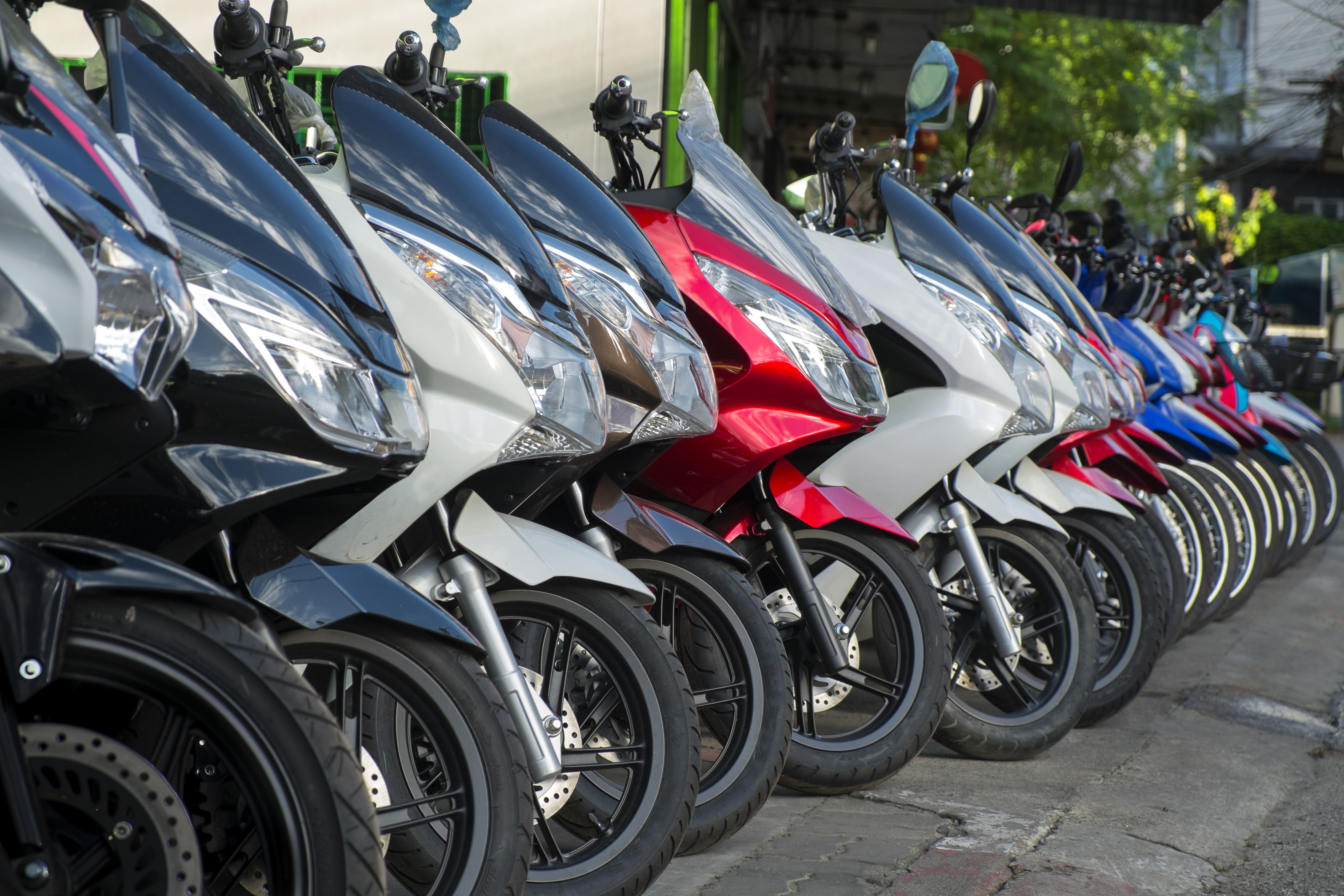
Anyone looking for information about electric motorcycle prices in 2026 usually has one very simple question in mind: how much does it cost to buy a good electric motorcycle? The answer, however, is far from straightforward. Today, the market is broad enough to include basic urban vehicles, more complete commuter models, specialist off-road bikes, and premium options with high performance. As a result, talking about “price” without distinguishing between different categories risks creating more confusion than clarity.
In 2026, prices start at very low figures for some mini electric motorcycles designed almost exclusively for city use, and go beyond €20,000 for the most sophisticated models. In between lies the most interesting segment, where range, overall quality, and performance begin to be sufficient for less restricted daily use. That is exactly where the most rational choice lies for many users.
The key point is this: an electric motorcycle should not be judged by its list price alone. The battery matters, real-world range matters, the type of route ridden every day matters, and so does the level of performance expected. An inexpensive motorcycle may be perfect for urban traffic and unsuitable for everything else. On the other hand, a more expensive model may make far more sense if it offers broader usability, a better riding experience, and more flexibility over time.
How much do electric motorcycles cost in 2026?
Looking at the market as a whole, three main segments can be identified: entry-level, mid-range, and premium. Alongside these, there is also a separate group of specialist electric motorcycles designed for trial, enduro, or light off-road use, which follow different pricing logic compared to road-focused models.
The most accessible segment is represented by small, lightweight vehicles aimed almost entirely at urban mobility. A clear example is the Motron Vizion, priced at €1,999. It is a mini naked bike homologated as a moped, with a 3.7 kW motor and a claimed range of 65 km. It is the classic vehicle designed for short trips, city commuting, and very low entry costs.
Also in the same area of the market are the Sunra Miku Max and Sunra Miku Super, priced at €2,799 and €4,799 respectively. Although both share a very compact, city-oriented design, they belong to two different levels: the first remains a very light and simple solution, while the second already moves closer to the concept of a more complete small electric motorcycle. This step alone shows how quickly the price rises when performance and product ambition increase.
Moving up a level, we enter the most interesting segment for those who want more than just a simple city vehicle. The Horwin CR6, for example, starts at €6,390 and represents the idea of an evolved urban electric motorcycle quite well: more road presence, more substance overall, and a claimed range that makes it more credible for regular use. It is not yet a fully versatile electric motorcycle, but it no longer feels like a temporary solution.
More complete still is the Niu RQi Sport, offered at €7,499. Here, the level changes noticeably: top speed up to 110 km/h, claimed range of over 100 km, two removable batteries, ABS, and traction control. It is one of the bikes that best explains what a mid-range electric motorcycle means in 2026: a product that is still relatively compact, but already capable of supporting less limited and more credible use even beyond the city center.
This group also includes the Kawasaki Z e-1 and Kawasaki Ninja e-1, priced at €8,239 and €8,839. These are interesting models not so much because they offer particularly high range — the homologated figure is 72 km — but because they bring the name of a historic brand into the electric segment. Their dual removable batteries, lightweight layout, and familiar styling make them an appealing option for people who are curious about electric mobility but do not want to move too far away from the traditional motorcycle world.
At a higher level are the new Can-Am Pulse and Can-Am Origin, with starting prices of €13,299 and €13,899 respectively. Here, the jump is clear: 35 kW platform, 8.9 kWh liquid-cooled battery, and claimed ranges of 160 km for the Pulse and 145 km for the Origin. In this segment, the electric motorcycle stops looking like an “alternative” solution and starts presenting itself as a mature product, with stronger perceived quality and a genuine product identity.
The premium segment is dominated by LiveWire, with the S2 Alpinista at €19,300, the S2 Del Mar at €19,600, the S2 Mulholland just under €20,000, and the LiveWire One at around €26,000. Here, buyers are not just paying for electrification: they are paying for high performance, larger batteries, greater technical content, and true premium positioning. The LiveWire One, for example, reaches 105 hp and uses a 15.4 kWh battery, with a claimed urban range of 235 km.
There are also more unusual models, almost high-end niche products, such as the Soriano Giaguaro, offered at €34,500. It is far outside the scale of the broader market, but it serves to show how high prices can go when a project focuses not only on electrification but also on exclusivity, styling identity, and unconventional technical solutions.
What determines the price of an electric motorcycle?
If prices vary so much, it is because the components that define a motorcycle’s value also change significantly. The first factor is the battery, which remains the single most important cost item. The greater the energy capacity, the greater the potential range and, inevitably, the higher the final price. That is why a city bike with a small battery cannot be compared directly with a premium model or a higher-end commuter bike.
Next comes range, but this must be interpreted carefully. Claimed figures are not all the same, because they depend on testing conditions. A range figure based on urban riding or constant low-speed riding does not automatically match what will be achieved on mixed or faster roads. For this reason, price must always be interpreted together with the intended use case. A motorcycle that promises impressive numbers only under favorable conditions does not offer the same value as a more balanced model in real-world situations.
Power and performance also weigh heavily on the price tag. A small urban electric motorcycle with few kilowatts and limited top speed answers a specific need and is priced accordingly. A 35 kW motorcycle like the Can-Am models, or a premium machine with more than 80 hp like the LiveWire S2 range, requires a different chassis, more refined electronics, and more expensive components. Buyers are not just paying for top speed: they are paying for an entire category shift.
Then there is the matter of technology and equipment. ABS, traction control, TFT displays, connectivity, dedicated apps, riding modes, and more advanced energy management systems all affect the final price. The Niu RQi Sport, for instance, raises its value precisely because it offers features that are not guaranteed in its segment. The Can-Am models go one step further with a 10.25-inch touchscreen display and Apple CarPlay integration.
Finally, brand, build quality, and after-sales support matter. A name such as Kawasaki, KTM, or LiveWire comes with different expectations compared to a lesser-known brand. This is not just about image: spare parts availability, service network coverage, perceived reliability, and trust in the product all form part of a motorcycle’s real value. That is why two models that look similar on paper can have different prices without either one necessarily being overpriced.
Comparing electric motorcycle prices in 2026 by category
The most effective way to think about prices is to divide the market by type of use. City electric motorcycles are the most immediate segment and, today, also the easiest to understand. This includes vehicles such as the Motron Vizion, Sunra Miku, and, at a more advanced level, the Horwin CR6. Their mission is simple: to make urban travel easy and affordable, without trying to cover every possible use case.
Mixed-use motorcycles, on the other hand, are the most interesting for people who want a bike to use every day with fewer limitations. This group includes the Niu RQi Sport, Kawasaki Z e-1, and, to some extent, the Can-Am Pulse. The price goes up, but so does the substance of the product: more usable range, more comfort, and more stability in daily use. In many cases, this segment offers the best balance between spending and real usability.
Premium motorcycles follow a different logic. A LiveWire One or an S2 Del Mar is not bought solely to save on fuel or maintenance. These are motorcycles designed for riders who also want higher quality, stronger image, quicker acceleration, more technical content, and greater riding pleasure. In this category, price becomes part of the product’s positioning, not just an obstacle to purchase.
The specialist segment must be considered separately, including models such as the Electric Motion eScape at €9,090, the Electric Motion ePure at €10,344, the KTM Freeride E-XC at €13,025, and the Sur Ron Light Bee at €4,650. Here, price mainly reflects the intended use: trial, enduro, light off-road riding, or technical learning. Comparing these with an urban naked bike would simply be misleading.
How much does it cost to maintain an electric motorcycle?
The list price is only part of the story. To understand whether an electric motorcycle is truly worth it, the running costs must also be considered.
The first factor is charging. There is no single figure that applies to everyone, because everything depends on the cost of electricity, battery size, and where the motorcycle is charged. One thing is fairly clear, though: in urban use and with home charging, the cost per kilometer can be attractive compared to a gasoline motorcycle. This is one of the reasons why a higher purchase price should not be judged in isolation.
Maintenance also tends to be simpler. That does not mean there are no costs, of course: tires, brakes, suspension, and regular servicing still remain. However, many of the typical interventions associated with traditional mechanics disappear, which can reduce long-term ownership costs.
Then there are incentives, bonuses, and commercial promotions, which can significantly lower the final price. Even though they are not technical characteristics of the vehicle, they have a concrete effect on real-world value and should always be considered before comparing models based on list price alone.
Electric motorcycles vs gasoline motorcycles: which cost more?
In terms of upfront purchase price, many electric motorcycles are still more expensive than comparable gasoline models. That is a real point, and there is no sense in ignoring it. But the correct comparison does not stop there. Once consumption, maintenance, everyday practicality, and operating costs are taken into account, the picture becomes more nuanced.
For frequent urban use, with easy charging and fairly predictable routes, an electric motorcycle can become an economically sensible choice even if it costs more at the start. On the other hand, for riders who regularly travel long distances or do not have convenient access to charging, a gasoline motorcycle often remains the more natural and easier option to manage. In short, value depends not only on the technology itself, but on how well that technology fits real life.
How to choose an electric motorcycle based on budget
With a limited budget, the most sensible choice is to focus on simple urban models that are honest about what they are. A Motron Vizion or Sunra Miku Max can make a lot of sense for someone who wants to spend as little as possible and cover short distances without expecting more than the product is designed to deliver. In this segment, consistency and practicality matter more than chasing performance the vehicle was never built to offer.
With a mid-range budget, buyers move into the liveliest part of the market. The Horwin CR6, Niu RQi Sport, and, for some riders, also the Kawasaki Z e-1 and Ninja e-1, are already more complete choices. This is where range, build quality, and versatility begin to create tangible value without reaching the very high prices of the premium segment. For many riders, this is the most balanced segment.
With a higher budget, the field opens up to Can-Am and LiveWire. In this case, buyers are purchasing far more than an electric vehicle: they are buying a technically more ambitious, more refined, and more complete product. That makes sense when the buyer genuinely wants that step up in quality; it makes less sense when the intended use remains simple and urban, because a significant part of the investment may go unused.
FAQ about electric motorcycle prices in 2026
How much do electric motorcycles cost in 2026?
It depends on the category. Prices start at €1,999 with the Motron Vizion, move through urban and commuter solutions between around €6,000 and €9,000, rise above €13,000 with the Can-Am Pulse and Origin, and exceed €19,000 with the LiveWire range.
Which electric motorcycle offers the best value?
There is no universal answer. For city riding, a Motron Vizion or Sunra Miku may be enough. For broader use, the Horwin CR6 and Niu RQi Sport are more compelling. For riders looking for a more advanced product, the Can-Am Pulse already belongs to a different value bracket.
How much does it cost to charge an electric motorcycle?
It depends on electricity prices, battery capacity, and charging method. In general, though, with home charging and urban use, the running cost can be competitive compared to a gasoline motorcycle.
Do incentives really reduce the final price?
Yes, in many cases they can make a significant difference. That is why it is always useful to distinguish between list price and actual final cost.
The electric motorcycle market in 2026 is far more varied than it may first appear. It starts with essential models such as the Motron Vizion and Sunra Miku, moves through more complete options such as the Horwin CR6, Niu RQi Sport, and Kawasaki e-1, climbs toward the Can-Am Pulse and Origin, and reaches the premium LiveWire range. Alongside this is a specialist world of trial, enduro, and off-road motorcycles, with models such as Electric Motion, KTM Freeride E-XC, and Sur Ron Light Bee.
For this reason, when evaluating electric motorcycle prices in 2026, the most useful question is not simply “how much does it cost?” but rather “how well does it fit my daily use, and how much value will it give back over time?” That is the difference between a choice that is merely interesting and one that is genuinely smart.
Purchase your EV Charger
Our expert will contact you to offer you the most suitable solution for you.