Jan 27, 2026
Free charging points for electric cars: a complete guide to cost-free charging
Where to find free charging points, how to recognize them, and how to use them correctly to reduce the costs of electric mobility.
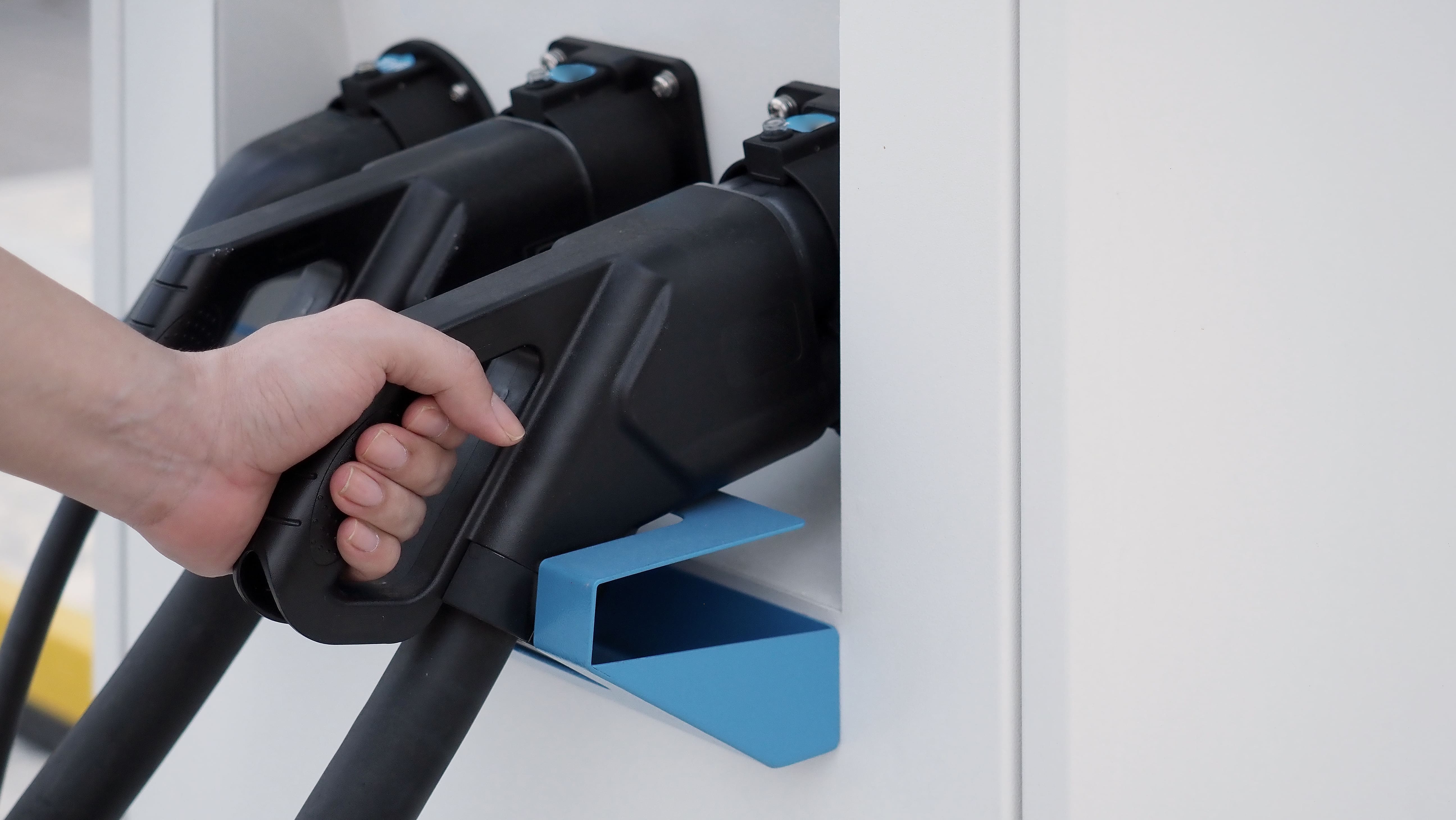
The adoption of electric vehicles is going through a phase of consolidation. While just a few years ago electric cars were perceived as a niche choice, today they represent a concrete solution for a growing number of users, both in urban and extra-urban contexts. In this scenario, charging plays a central role, not only from a technical perspective, but also from an economic and cultural one.
Among the various charging options available, free charging points continue to attract strong interest. The idea of charging an electric car without direct costs is particularly appealing, especially at a time when energy prices are under constant scrutiny. However, free charging is often surrounded by fragmented information, unrealistic expectations, and interpretations that are not always accurate.
Meaning and operation of free charging points
When talking about free charging points, the first step is to clarify what is really meant by this term. In everyday language, “free” is often used in a generic way, without distinguishing between the different ways in which charging can be offered. In technical and operational terms, however, this distinction is essential.
A free charging point is an infrastructure that allows electricity to be drawn without requiring the user to make a direct payment for the charging session. This does not mean that the energy itself has no cost, but simply that this cost is not borne by the driver at that moment. Instead, it is covered by the entity that manages or hosts the charging station.
From an operational standpoint, free charging stations do not differ substantially from paid ones. They use the same technical standards, connectors, and safety protocols. The differences lie mainly in access methods, usage limits, and available power.
What is meant by free charging for electric vehicles
Free charging should be understood as an ancillary service, rarely as a structural and continuous solution to meet the full energy needs of an electric vehicle. In most cases, it is designed to cover partial charging during stops that are already planned for other reasons.
This approach follows a clear logic: free charging is sustainable when it fits into a context where the vehicle remains parked for a period compatible with slow or semi-fast charging. Typical examples include weekly grocery shopping, dining at a restaurant, or staying overnight at a hotel.
From this perspective, free charging does not replace home charging or paid public charging, but complements them. It represents an opportunity for integration, not a total alternative.
Difference between free charging stations and charging included in services
One often overlooked aspect is the difference between truly free charging stations and charging that is included in a broader service. In the first case, users can access charging without demonstrating a specific commercial relationship, aside from complying with usage rules. In the second case, charging is only “free” in appearance, because its cost is already included in another service.
For example, a hotel may offer charging to guests as part of the stay, with the energy cost absorbed into the room rate. Similarly, a shopping center may offer charging to customers, assuming that users will spend more time inside the facility.
Understanding this distinction helps interpret access conditions correctly and avoid disappointment caused by expectations that do not match reality.
Charging without direct payment
Charging without direct payment is the most straightforward form of free charging. The user plugs in the vehicle and starts the session without entering payment details or subscribing to plans. This operational simplicity is one of the main reasons for the popularity of these solutions.
However, simplicity comes with limitations. These charging stations almost always offer limited power and clearly defined maximum usage times. The goal is not to provide a full charge, but to offer energy support consistent with the duration of the stop.
Free charging with access conditions
In many cases, free charging is subject to certain conditions. Users may need to register on a digital platform, use a dedicated app, or prove that they are customers of a specific business. These conditions do not eliminate the free nature of the service, but regulate access.
From the user’s perspective, accepting these conditions means entering an ecosystem where charging is part of a broader relationship. From the operator’s point of view, they are tools to monitor usage and prevent abuse.
Time, power, and energy limits
Almost all free charging stations impose clear limits. The most common concern maximum connection time, delivered power, and, in some cases, the amount of energy available per session. These limits are not arbitrary; they respond to economic sustainability and fairness among users.
For drivers, this means adjusting expectations. Free charging is ideal for regaining range during planned stops, but it can rarely meet the entire daily energy needs of a regularly used vehicle on its own.
Why free charging stations exist
The presence of free charging points is not the result of chance. On the contrary, it reflects precise strategies involving economic, environmental, and positioning considerations. Understanding these motivations helps interpret the phenomenon more clearly and anticipate its possible evolution.
Customer and visitor attraction strategies
In the commercial and service sectors, free charging is increasingly used as a customer attraction tool. Offering the ability to charge an electric car can influence the choice of one location over another, especially for those who use electric vehicles daily.
From an economic standpoint, the cost of charging is offset by increased dwell time and customer loyalty. In other words, electricity becomes part of the overall experience offered.
Incentives for sustainable mobility and the electric transition
In the public sector, free charging is often used as an incentive tool. Municipalities and local administrations may decide to offer this service to promote sustainable mobility, reduce emissions, and improve air quality.
These initiatives are particularly common in the early stages of electric vehicle adoption, when the primary goal is to lower entry barriers and build user confidence.
Role of companies, retail, and local administrations
Private companies, retail businesses, and public administrations play different but complementary roles. The first act mainly out of direct interest, the second for branding and corporate social responsibility goals, and the third for environmental policy purposes.
The result is a heterogeneous ecosystem in which free charging points take different forms and follow different rules, yet collectively contribute to making electric mobility more accessible and understandable.
Where to find free charging points and how to identify them
Once it is clear what free charging points are and why they exist, the next step is understanding where they can actually be found and how to identify them reliably. This aspect is crucial for those who use an electric car daily and want to integrate free charging into their routine without relying on chance.
In Italy, free charging points exist but are unevenly distributed. There is no structured national network dedicated exclusively to free charging, but rather a constellation of local, private, and public initiatives driven by different logics. Knowing these logics makes it easier to navigate and avoid false expectations.
Supermarkets and shopping centers: free charging in everyday life
Supermarkets and shopping centers are among the most common and accessible locations for free charging. The reason is simple: average dwell time is compatible with slow or semi-fast charging, and parking is already part of the customer experience.
In recent years, many large retail chains have installed charging stations in their parking areas, often as part of sustainability and service innovation strategies. In these contexts, free charging is used to enhance the overall customer experience and encourage loyalty.
Practically speaking, charging stations at supermarkets usually offer moderate power, sufficient to recover a meaningful amount of energy during shopping time. Charging may be completely free or conditional upon using a loyalty card or completing a simple registration.
It is important to note that not all charging stations in shopping center parking lots are free. In some cases, the infrastructure is managed by third-party operators applying standard tariffs. Checking conditions before plugging in helps avoid misunderstandings and wasted time.
Specialized stores and large retail chains
Beyond supermarkets, many specialized stores and large retail chains have chosen to offer free charging as an ancillary service. This choice is particularly common in stores with large premises, dedicated parking, and a customer base attentive to technological innovation.
In these cases, charging is often perceived as a brand differentiator. Offering electricity at no direct cost communicates customer focus and environmental awareness, helping to strengthen corporate image.
From the user’s perspective, free charging in these contexts is generally easy to use, but may be subject to time limits or specific access conditions. Power levels are typically aligned with short-to-medium stops.
Hotels, restaurants, and hospitality facilities: charging included in hospitality
Hospitality facilities represent one of the most interesting contexts for free charging, especially for those using electric cars for medium- to long-distance travel. In this setting, charging is almost always included as part of the service offered to guests, rather than being freely accessible to the public.
The ability to charge overnight or during a long stop is a significant added value. For many users, knowing they can leave in the morning with a full battery is a decisive factor when choosing accommodation.
From a management perspective, hospitality facilities adopt specific rules to prevent abuse. Charging may be reserved for guests, limited to certain time slots, or require prior communication. These conditions do not diminish the value of the service but ensure balanced management.
Public parking and municipal areas: local initiatives and pilot projects
In some Italian cities, free charging points can be found in public parking facilities or municipal areas. These solutions are often linked to pilot projects or temporary initiatives promoted by local administrations.
The main objective is to encourage the use of low-emission vehicles, particularly in urban centers and restricted traffic zones. Free charging may apply only to energy, while parking remains paid, or include both components.
However, public-sector free charging is subject to strong territorial variability. Rules can change quickly depending on administrative decisions or the expiration of specific projects. For this reason, it is essential to always check updated conditions through official sources or reliable digital tools.
Companies and corporate sites: charging as a benefit
Another context in which free charging can be found is corporate sites. In many cases, charging is offered as a benefit to employees, though there are also examples of stations accessible to visitors or, in some cases, to the public.
For companies, offering free charging often falls under employee welfare strategies and corporate social responsibility. From the user’s perspective, access may be less immediate, but it can still be an interesting opportunity, especially in business or industrial areas.
How to recognize a truly free charging station
One of the most delicate aspects is the ability to distinguish a truly free charging station from one that only appears to be free under certain conditions. Clear signage, transparent information, and up-to-date digital tools are essential to avoid misunderstandings.
Signage, notices, and access information
A free charging station is often accompanied by specific indications clarifying its usage conditions. These may include informational signs, stickers on the station itself, or notices within the hosting facility.
Carefully reading this information helps determine whether charging is actually free, whether it is reserved for certain user categories, and whether time or energy limits apply.
Difference between free charging and temporarily unpriced charging
A common mistake is confusing free charging with charging that is temporarily unpriced. In some cases, a station may appear free simply because the payment system is not yet active or because it is in a testing phase.
These situations do not guarantee long-term free charging and can change without notice. Relying exclusively on such opportunities may lead to inconvenience, especially during planned trips.
Apps, maps, and digital tools for locating free charging
Digital tools play a crucial role in identifying free charging points. Apps, online maps, and user communities provide access to updated information and allow filtering stations according to specific needs.
Electric charging apps
Major charging apps allow users to view available stations, check their status, and, in many cases, see whether charging is free. Filters help narrow searches and quickly identify available opportunities.
However, it is important to remember that app information often relies on user reports or data provided by operators. Verifying conditions on-site remains a good practice.
Online maps and navigation systems
Online maps and navigation systems integrated into electric vehicles can also help locate free charging points. In some cases, additional information such as reviews, comments, and photos is available, helping users better understand real conditions.
Electric vehicle communities and local reports
Online communities are a valuable resource. Forums, social media groups, and collaborative platforms allow users to share firsthand experiences, report new stations, and update outdated information.
Using these sources in combination with official tools provides a more complete and realistic picture of free charging availability.
How free charging works in practice
Understanding how free charging works in practice is essential to using it effectively and without inconvenience. Beyond theory, everyday experience shows that free charging requires some adjustment in habits and a good understanding of both implicit and explicit rules.
Operationally, free charging follows the same steps as any other charging session: connecting the vehicle, starting the session, monitoring it, and ending it. What changes are the access methods and associated constraints.
Accessing charging at no cost
In some cases, access is completely open: the vehicle is plugged in and charging starts automatically. This simplicity is typical of stations installed in private-but-public contexts, such as supermarket or retail parking lots.
In other cases, an app, badge, or QR code is required. These tools do not imply payment, but serve to identify the user, correctly start the session, and monitor its duration. For operators, they help prevent misuse and collect data for infrastructure management.
Maximum parking and charging times
Time limits are one of the most important aspects. Free charging is almost always associated with a maximum duration, which can range from 30 minutes to several hours. This limit ensures vehicle turnover and fair access for the greatest number of users.
For drivers, this means planning stops in line with available time. Leaving the vehicle connected beyond the allowed limit is not only improper, but may result in penalties or session termination.
Available power and charging speed
Most free charging points offer limited power, generally alternating current. This type of charging is well suited to medium-length stops but is not designed for fast charging.
Accepting this limitation is essential to avoid frustration. Free charging is not intended to replace high-power infrastructure, but to complement it by providing additional energy support.
Types of free charging stations for electric cars
Not all free charging stations are the same. There are different types, varying in power, access methods, and usage context. Knowing them helps choose the solution best suited to individual needs.
Slow AC charging
Slow charging is the most common type among free charging stations. It uses low power and is suited to long or unhurried stops. It is common in public parking, hospitality facilities, and corporate sites.
This option is ideal for gradually recovering range, without stressing the grid or incurring high costs for operators.
Semi-fast charging at no cost
In some contexts, free stations with slightly higher power are available, designed to reduce charging time while maintaining a sustainable model. These solutions are less common, but represent a good compromise between efficiency and free access.
Why fast charging is rarely free
Fast charging involves high costs, both in infrastructure and energy. For this reason, it is extremely rare to find fully free fast charging stations. When it does happen, it is almost always part of temporary or promotional initiatives.
Real benefits of free charging points
Free charging points offer tangible benefits, but they must be evaluated realistically. The main advantage is reduced operating costs for electric vehicles, especially when free charging is integrated into already planned activities.
Another significant benefit is convenience. Charging while doing other activities optimizes time and reduces the perception of charging as a separate, time-consuming task.
From an environmental standpoint, free charging helps encourage the adoption of electric mobility, making it more accessible and visible in urban environments.
Limits and critical issues of free charging
Alongside benefits, there are structural limitations that cannot be ignored. Availability of free charging points is limited and uneven, and not always reliable over the long term.
Another critical issue is improper occupation of charging stations. Leaving vehicles connected longer than necessary reduces service effectiveness and generates frustration among users.
Rules for correct use and turnover
Responsible use is essential to ensure the sustainability of free charging. Respecting time limits, freeing the station once charging is complete, and reporting issues are fundamental behaviors.
Regulations governing free charging points
Regulations for free charging points vary depending on context. In public spaces, rules are set by local administrations and may include parking limits, signage requirements, and penalties for misuse.
In private contexts, operators have greater freedom to define usage conditions, provided they are clearly communicated to users.
Alternatives to free charging to reduce costs
Relying exclusively on free charging is not always possible or advisable. There are effective alternatives to reduce overall charging costs, such as low-cost home charging or discounted tariffs.
Home charging and integration with renewable energy
Home charging, especially when combined with a photovoltaic system, represents one of the most efficient and sustainable solutions. In this case, energy costs can be significantly reduced, approaching a form of structural “free” charging.
Frequently asked questions about free charging points
Will free charging always be available?
Free charging depends on strategic and policy choices. It may change over time and should not be considered guaranteed.
Is it possible to charge without being a customer?
It depends on the context. In some cases yes, in others access is restricted.
How much can you really save?
Savings vary depending on usage, but can be significant if free charging is properly integrated into daily routines.
The future of free charging points
The future of free charging will likely evolve toward hybrid models. Total free access may give way to solutions combining discounted access, intelligent limits, and integration with digital services.
In this scenario, free charging points will continue to play an important role, increasingly as a complement to a mature and widespread charging network.
Purchase your EV Charger
Our expert will contact you to offer you the most suitable solution for you.