Dec 10, 2025
Labels for electric vehicles and charging stations: a definitive, effective guide
EV labels and charging points: safety, usability, and compliance with appropriate materials, QR/NFC, clear placement, and operational checklists.
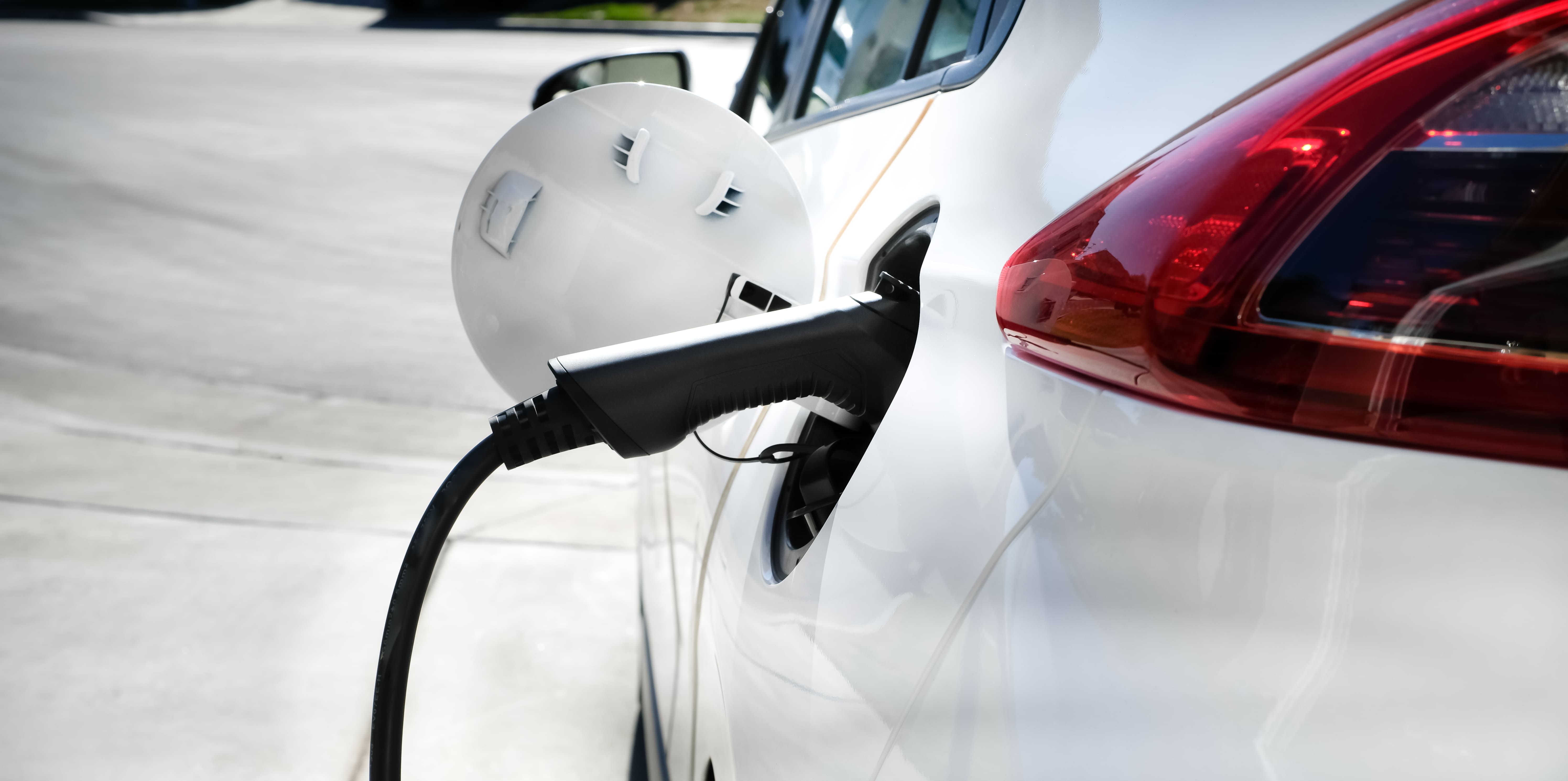
Labeling in the electric-mobility ecosystem isn’t a cosmetic afterthought—it’s a core safety and usability device. Within just a few square centimeters, critical information for users, operational guidance for installers, maintenance references, and—crucially—signals that help uphold high compliance standards all come together. This comprehensive guide takes a practical approach to every strategic and operational decision related to labels, nameplates, pictograms, and signage for electric vehicles (EVs) and for AC/DC charging stations.
Why EV labeling matters: safety, usability, and regulatory alignment (IEC 61851, ISO 7010)
Labels function as safety interfaces. With hardware and software being equal, the difference between a system that works and one that “sort of works” often hinges on seemingly minor elements: legible text, a universal pictogram, or a QR code that points to the right quick guide. The value shows up across four areas:
Safety: warnings against electrical hazards, clear emergency-stop information, environmental limits (temperature, humidity), and IP/IK protection ratings.
Usability: first-use instructions, connector recognition (Type 2, CCS, CHAdeMO), “badge or app” activation flows, LED statuses, and pricing.
Maintenance: unique IDs, serials, QR/NFC for ticketing, references to inspection plans and maintenance logs.
Compliance: markings and references to applicable requirements, aligned with standards and best practice (e.g., IEC 61851 for conductive charging systems and ISO 7010 for safety signs and pictograms).
In practice, a well-designed label reduces incidents, shortens response times, cuts support calls, and lowers lifecycle costs. It also boosts brand trust: clarity, consistency, and readability communicate quality.
Regulatory framework: labeling obligations and practical guidance (IEC 60417)
The regulatory landscape can feel daunting, so it helps to offer practical orientation, distinguishing what is typically mandatory from what is recommended.
Typically mandatory:
Electrical safety warnings and hazard signaling.
Essential electrical data (rated voltage/current, output power per socket/port).
Device and manufacturer identification where relevant.
Emergency information and references to critical procedures (e.g., emergency stop).
Recommended (best practice):
Standardized pictograms (ISO 7010, IEC 60417) to overcome language barriers.
QR/NFC linking to manuals, tutorials, ticketing, and rapid updates.
24/7 helpdesk contact for public or high-turnover sites.
It’s also advisable to maintain a concise Label Register that records what exists, where it is, why it’s there, and when it needs inspection.
Minimum fields for AC/DC chargers (as a list)
Suggested fields to show on the label:
Point ID / Serial number (unique identification and traceability).
Rated power, voltage, and current (essential technical data).
IP/IK rating (environmental suitability).
Support contact (phone or URL/QR for helpdesk).
QR to quick guide/manual (instant access to current instructions and FAQs).
Safety warnings (pictograms and concise text for hazards and emergencies).
Placement guidance:
Place user-facing labels at the point of action (connector, badge/app reader, button).
Put technical nameplates where they’re visible but protected from impacts; ensure readability at 1–2 m.
Keep support contact and QR front-facing and well lit.
Label types: user guidance, electrical safety, asset identification, and parking-area signage
Not all labels are created equal. Good design starts by mapping touchpoints and assigning the right message type to each.
Functional labels for home wallboxes and public chargers: Type 2, CCS, CHAdeMO, RFID/app
Interface recognition: clear symbols for Type 2 / CCS / CHAdeMO.
Activation flow: RFID badge or app? Say it in ≤ 8 words.
Status feedback: explain LEDs with micro-texts (“blinking = connecting”, “solid green = charging”).
Quick cues: “Release cable,” “Confirm in app,” “Stow connector.”
Safety labels: electric shock, arc flash, emergency stop, LOTO
Warnings for electric shock and arc flash.
Clear emergency-stop or isolator indication.
Concise lockout/tagout reminders where industrial procedures apply.
Identification and inventory labels: serial, charge-point ID, QR/NFC for ticketing and OCPP
Standardized ID visible from 1–2 m.
QR/NFC linked to a digital record (serial, firmware, service history, OCPP status).
Alignment with internal asset-management systems.
Public-facing information: pricing, roaming, interoperability, 24/7 helpdesk, access hours
Transparency: cost per kWh/minute/session and any additional fees.
Roaming: supported network logos and concise how-to.
Contacts: phone or QR to support; access hours for semi-public sites.
Complementary parking signage: pictograms, wayfinding arrows, reserved/accessible bays
Vertical signs: charging icons, parking limits, any penalties.
Pavement markings: color and pictograms for EV bays, accessible spaces, and safe paths.
Wayfinding: arrows and symbols for multi-level hubs or long approaches.
Standard symbols and pictograms: ISO 7010, IEC 60417, safety colors, typographic hierarchy
Humans parse symbols in a split second. Lean on standardized pictograms, avoid creative one-offs that force users to interpret.
Visual consistency: one iconographic style across the site.
Contrast: foreground and background must clearly separate.
Useful redundancy: symbol + 2–5 plain-language words.
Color coding (use sparingly): yellow/black (warning), red/white (emergency/prohibition), green/white (safe/egress), blue/white (mandatory actions).
Readability guidelines (as a list)
Use standardized pictograms and micro-texts of max 2 lines, 6–8 words per line.
Ensure strong color contrast and anti-glare finishes.
Size for readability at 1–2 m; avoid tiny body text.
Keep multilingual content to what’s strictly necessary; prioritize symbols and the local language.
Materials and finishes for indoor/outdoor: vinyl, anodized aluminum, polycarbonate, epoxy (domed)
Material choice affects service life, legibility, and total cost of ownership. There’s no universally “best” material—only the best fit for the context.
Vinyl: cost-effective, versatile, ideal for flat or slightly curved surfaces.
Anodized aluminum: robust, premium feel; excellent for technical plates and exposed posts.
Polycarbonate: impact-resistant; suited to transparent covers and high-vandalism areas.
Epoxy doming: refined look, good resistance; mind prolonged UV exposure.
Material checklist (as a list)
Pre-selection checks:
Direct sun exposure: yes/no; if yes, specify UV protection.
Presence of washes, chemicals, or salt mist: low/medium/high.
Vandalism/graffiti risk: low/medium/high; consider anti-graffiti treatments.
Surface curvature/texture: flat/curved/rough; select high-tack adhesives where needed.
Target service life: 2, 3, or 5+ years depending on context.
Context-based suggestions:
Vinyl with protective lamination for flat and lightly curved surfaces.
Anodized aluminum for technical plates and demanding outdoor conditions.
Polycarbonate where impacts or tampering are likely.
Epoxy domed badges for branding elements—monitor UV exposure.
Sizing and placement: ergonomics, recommended heights, and visibility at EV bays
A great label in the wrong spot is effectively no label. Placement follows the user’s line of sight: where the connector goes, where the badge is tapped, where pricing is checked.
Heights and visibility:
Place user-facing labels between 1.30 m and 1.60 m.
Avoid zones likely to be obscured by cables, doors, or condensation.
Verify legibility at night and in backlit conditions.
Typical scenarios:
Home: essential instructions + support contact; matte finish.
Shared parking: house rules and shared contacts; higher-robustness substrates.
Public spaces: dominant pictograms, minimal text, QR to guides and pricing.
Universal accessibility:
Clear icons, high contrast, uncluttered text.
In complex settings, consider tactile paths and heights suitable for wheelchair users.
Reduce glare: prefer matte surfaces and diffuse light.
Essential content and “smart” solutions: QR for guides, NFC for technicians, safe links, privacy by design
QR codes bridge physical and digital when they’re treated with the same rigor as any other interface.
Quick guides/manuals: front-facing QR leading to current content (not outdated PDFs).
Ticketing: QR that pre-fills asset ID for fault reports.
Network status: in complex networks, link to live availability pages.
URLs and privacy:
Use an in-house shortener on your own domain; avoid third-party services you can’t control.
Redirect legacy print assets to a landing page that explains updates.
Integrate with support portals and knowledge bases so users land on the right answer.
Labeling design process: design system, field testing, industrial-grade quality
A robust labeling system is designed like a product: requirements, prototype, testing, industrialization, maintenance.
Operational steps:
Gather requirements with HSE, facility, CPO/EMSP roles and end users.
Build a coherent library (formats, grids, palettes, icons).
Field-test in daylight/night-time and adverse weather.
Industrialize with bills of materials, part numbers, and quality-control plans.
Plan versioning and maintenance: periodic audits and scheduled replacements.
Use cases and best practices: residential, fleets, retail/hospitality, high-turnover public sites
Each scenario has distinct priorities. Treat these as ready-to-use presets.
Home & shared parking
Priorities: simplified instructions, support contact, anti-glare finish.
Materials: quality vinyl; moisture-ready for unheated garages.
QR: a photo-based quick guide; avoid encyclopedic manuals.
Fleets
Priorities: color coding for bays/power levels, large readable IDs.
Assets: serial + QR for ticketing; service history at a glance.
Maintenance: inspection cadence based on utilization (heavy cycles ⇒ more frequent checks).
Public space
Priorities: essential multilingual content, dominant pictograms, transparent pricing.
Contacts: 24/7 helpdesk, QR for reports, clear emergency cues.
Accessibility: heights and contrast designed for all users.
Retail/Hospitality
Priorities: brand coherence without sacrificing legibility.
Information: clear pricing, hours, access conditions.
CTA: “Start in app X,” “Badge Y enabled.”
Common pitfalls (as a list)
Non-standard or inconsistent symbols across the same site.
Overly long texts or unnecessary jargon.
Materials mismatched to the environment (UV, humidity, chemicals).
Poor placement obscured by cables or prone to glare.
Untested QR codes, broken links, outdated or non-mobile content.
Cost–benefit snapshot (text)
To estimate ROI, compare:
The cost of labeling kits and installation time (materials + hours).
Projected savings on support tickets, technician time, avoided incidents/downtime, and reputation.
A 12–24 month horizon works well, with quarterly ticket reviews.
Don’t ignore “intangibles” like brand trust, reviews, and clarity of information.
Selecting suppliers (as a list)
Proven materials tested for UV, salt-spray, and abrasion (accessible reports).
Customization of formats, numbering, QR/NFC, and color palettes.
MOQ and lead times aligned with the rollout plan.
Clear SLAs for replacements and nonconformities.
References for similar deployments (indoor/outdoor, public/private).
How-to: correct application (checklist)
Preparation:
Clean the surface with a neutral detergent, then isopropyl alcohol.
Let it dry completely; work at a stable ambient temperature.
Positioning:
Do a dry fit with a template or light marks.
Check there are no cables or protrusions that will cover the label.
Application:
Peel the liner gradually; apply from the center outward.
Remove bubbles with a soft squeegee and even pressure.
Finishing and verification:
Press edges to ensure proper sealing.
Verify readability at 1–2 m in different lighting conditions.
Take photos and record ID, date, and operator in the Label Register.
Planned maintenance (as a list)
Indicative frequencies:
Exposed outdoor or high-turnover sites: every 6 months.
Sheltered outdoor or indoor public: every 12 months.
Private indoor/home: every 18–24 months.
Replacement criteria:
Visible fading or loss of contrast.
Abrasion, lifted edges, partial detachment.
Content updates (pricing, contacts, procedures).
Traceability:
Use QR/NFC to log interventions (before/after photos, environmental notes, technician signature).
Label Register (free-text fields)
For each installed label, record:
Label ID
Site and position (e.g., “Charger 2, street-side”)
Type (user/safety/technical/ID)
Content (pictograms and micro-texts)
Material and finish (e.g., matte UV-protected vinyl, anodized aluminum)
Installation date and responsible person
Next scheduled inspection date
Inspection outcome (OK/Replace/Clean)
Operational notes (stored photos, anomalies)
A well-built labeling system isn’t a peripheral expense; it’s an investment that pays off in safety, operational efficiency, and reputation. With clear messages, fit-for-purpose materials, and a simple maintenance plan, every site from the home wallbox to a high-turnover public hub, becomes more intuitive, more reliable, and more compliant.
Purchase your EV Charger
Our expert will contact you to offer you the most suitable solution for you.