Apr 22, 2026
What slows down EV charging? The causes you should know
A clear guide to understanding why charging may be slower than expected and how to improve it at home and on the road.
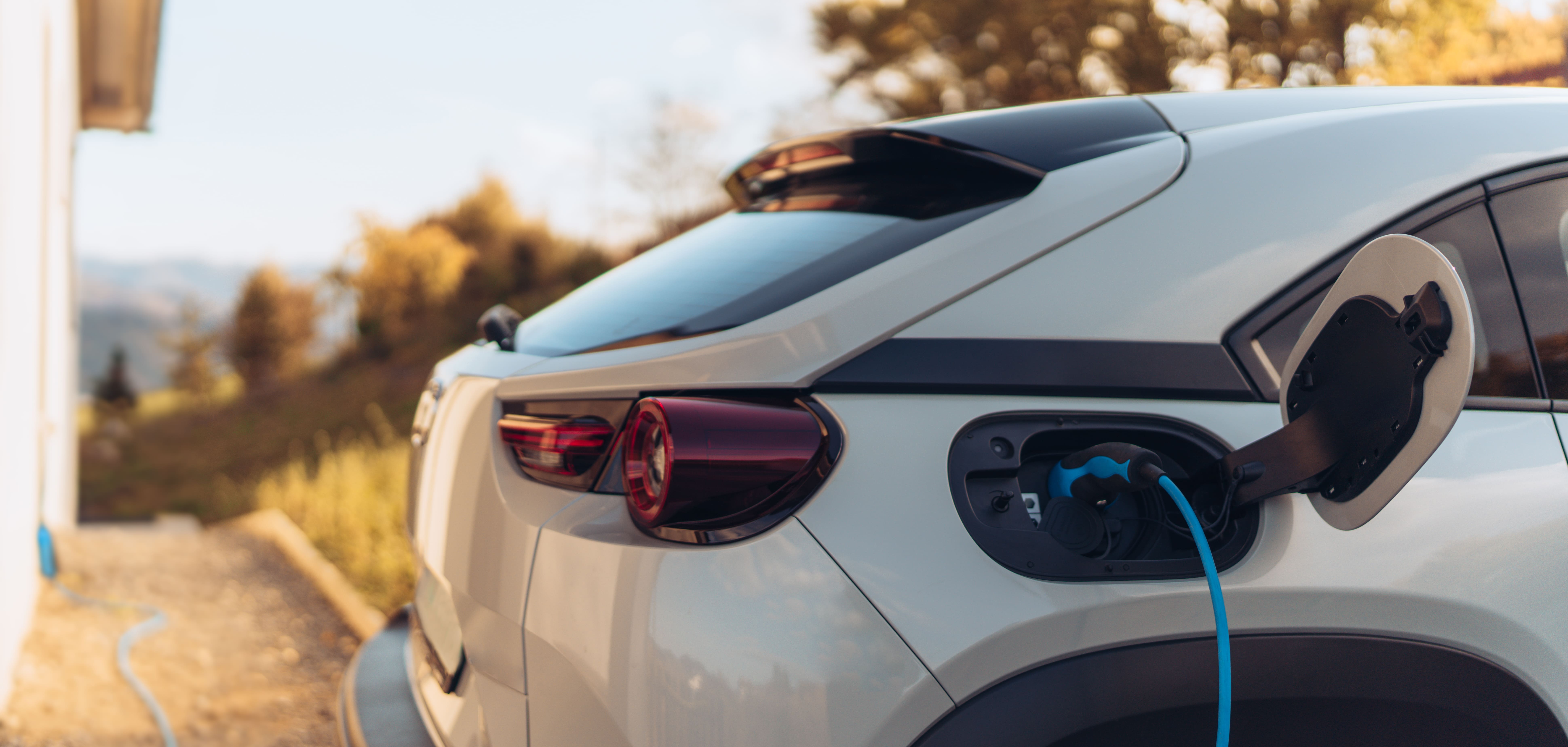
People approaching electric mobility often think about charging in a fairly linear way: I plug in the car, wait a certain number of minutes or hours, and then drive off. In reality, the process is less straightforward than it may seem. The speed at which an electric car charges does not depend on a single factor, but on a combination of variables that change according to the vehicle, the type of infrastructure, external conditions, and even the driver’s habits.
That is exactly why charging can sometimes seem slow even when, in fact, nothing is wrong. Many situations that are perceived as “abnormal” actually fall within the normal operation of the system. The key point is that the theoretical charging power stated on paper almost never matches the power actually maintained throughout the entire charging session.
Understanding what slows down EV charging helps with two very practical things: avoiding unrealistic expectations and managing time, stops, and range more effectively. It is not just a technical matter. It is also a way to use the car more consciously, making the most of what the vehicle and the charging infrastructure can really offer.
Why EV charging may seem slower than expected
The first question to ask is simple: slow compared to what? Charging may appear slow for different reasons. Sometimes it is slower than expected based on the car’s technical specifications. Other times it is slower than the power displayed on the charging station. In still other cases, it is perfectly normal, but it feels disappointing because people expect charging to be constant and linear.
The reality, however, is different. Charging is not a uniform process. It is dynamic and changes throughout the session. Power can rise, stabilize, and then drop. And this happens even under ideal conditions.
There is also one decisive aspect to keep in mind: in any charging system, the most restrictive limit always wins. If the charging station can deliver a lot of power but the car can accept less, then the vehicle will be the limiting factor. If, on the other hand, the car is ready to receive more power but the station cannot provide it, then the bottleneck is external. And if the battery is cold, hot, or already quite full, charging speed will drop regardless.
In short, real-world charging is the result of a balance. As soon as one of the elements involved becomes less favorable, charging times increase.
The main factors that slow down EV charging
Available power, wallbox, public charging station, and home electrical system
Let’s start with the basics: fast charging first requires sufficient available power. So far, so intuitive. The problem is that available power does not always match the nominal power stated by the system.
At home, for example, charging speed depends on the electrical system, the contracted power available, and the type of charging point being used. A standard household socket provides much slower charging than a wallbox, and a wallbox can only perform at its best if the home electrical system is capable of supporting it.
It is also important not to overlook household loads. If the car is charging while other high-consumption appliances are running, the available power may decrease. In some setups this limitation is managed automatically to prevent overloads. That is great from a safety standpoint, but it also means longer charging times.
At public charging stations, the logic is similar even though the context changes. A charger may have high nominal power, but it cannot always dedicate all of it to a single vehicle. In some situations, power is shared across multiple charging points or distributed according to the station’s total load. Put simply: the number shown on the charger is not a promise, but a maximum possibility.
On-board charger limits and the difference between AC and DC charging
Many people look only at the infrastructure, but part of charging speed depends on the car itself. In particular, when charging with alternating current, the on-board charger plays a major role.
This component converts energy before it is stored in the battery. And that is precisely where one of the most common technical limits lies: each car has its own maximum AC charging capacity. That is why two vehicles plugged into the same wallbox can behave very differently.
If the car has a lower limit than the wallbox, charging will simply stop at that level. There is no point expecting more. It is not a fault in the charging station, nor is it a malfunction in the vehicle. It is simply how that system is designed.
With direct current charging, the situation changes because the conversion takes place outside the car, directly in the charging station. Here, however, the role of the battery and the vehicle’s management electronics becomes even more important. Even when connected to a very powerful charger, the car may not be able to accept all the energy available.
That is why AC and DC should not be confused. They are two different charging modes, with different limits and different performance.
Battery state of charge, charging curve, and the drop in power beyond 80%
One of the most important factors is the battery’s state of charge at the start of the session. A battery does not always accept the same amount of energy at the same speed.
When it is empty or relatively low, it can receive more power in less time. As it fills up, however, the system gradually slows down. This behavior is not random. It is designed to protect the battery and preserve its efficiency over time.
This is where the charging curve comes into play, meaning the way power changes throughout the session. Put simply, charging is not a flat line. It is a curve that tends to vary and often decline as the battery percentage increases.
The final stretch is the most familiar one. From 80% onward, power tends to decrease significantly. That is why the last percentage points take much longer to complete than the early or middle stages of the charge.
Those who are not familiar with this mechanism may interpret it as a problem. In reality, it is a normal feature of EV charging. In fact, it is one of the reasons why, during a trip, it is often more efficient to stop before 100% and continue once enough range has been recovered.
Outside temperature, cold battery, and the vehicle’s thermal management
The battery is sensitive to temperature, and this has a direct impact on charging speed. If it is very cold, the battery struggles to accept energy quickly. If it is too hot, the system may limit power to avoid thermal stress and protect the components.
Cold weather is often the most noticeable factor. In winter, especially after short trips, you may reach a fast charger with a battery that is still far from its ideal temperature. In these conditions, charging starts more slowly and may improve only after some time. Or it may remain limited throughout the session if the system determines that conditions are still not optimal.
Extreme heat is not helpful either. In high temperatures or after intense use, the car may reduce charging power to protect the battery. This is a protective measure, not an anomaly.
The quality of the vehicle’s thermal management matters a lot here. Some models are better at preparing the battery by heating or cooling it when necessary. Others are less effective in this regard. And yes, the difference is noticeable, especially during fast charging.
Charging cable, system compatibility, and other technical bottlenecks
There are also more technical, less visible aspects that still matter. The cable, for example, can have more influence than many people think. Not all cables are the same, not all combinations of car and charging point perform in the same way, and not every component allows the system to make full use of the available theoretical power.
The same applies to overall system compatibility, connection quality, and any charging settings that may be applied by the vehicle or the charging infrastructure. These are not usually the main cause of slow charging, but they can contribute to a result that is less impressive than expected.
In essence, charging is always the product of a technical ecosystem. And as with all complex systems, one underperforming element is enough to lower the overall performance.
The most common mistakes that make EV charging seem slower
Always charging to 100% even when it is not necessary
One of the most common mistakes is aiming for 100% every single time, even when there is no real need to do so. It is understandable, because having a full battery feels reassuring. But it is not always the best strategy.
The final part of the charging session is the slowest. That means pushing all the way to 100% often results in more time spent plugged in for only a marginal practical benefit in everyday use. For many daily journeys, stopping earlier is a more efficient and sensible choice.
This is even more true on the road, where stop duration matters a lot. In some cases, two shorter stops can be more effective than one long one.
Using a fast charger without considering the vehicle’s charging limits
Another common mistake is assuming that a very powerful charging station will automatically guarantee shorter charging times. In reality, if the car cannot make full use of that power, the advantage will be limited.
It is a bit like buying a highly advanced device without checking whether the rest of the system can actually support it. Available power is useful only if the vehicle can accept it under real operating conditions.
That is why choosing the right charger requires a certain level of awareness. It is not enough to simply look for the highest kW number.
Confusing peak power with average charging speed
This is a very common misunderstanding. People see a high peak on the display and assume the charge will continue at that pace until the end. But that number often represents only one phase of the session, not the average as a whole.
What really matters is how much energy you can recover over a certain amount of time. In other words, effective average charging speed matters more than the maximum peak reached for a few minutes.
Understanding this difference helps people assess charging efficiency more realistically and avoid disappointment.
Arriving at a fast charger with a battery that is too cold or not preconditioned
In winter, or after a trip that is too short, this can make a major difference. A cold battery is not in the ideal condition to accept a lot of power. If the vehicle has battery preconditioning and that function is not used, charging may begin quite conservatively.
Many people interpret this as a problem with the charger or the car. In reality, it is a predictable behavior. The battery simply needs to enter its optimal temperature range.
How to understand what is really slowing down your EV charging
How to correctly read kW, kWh, charging time, and delivered power
To properly interpret a charging session, you need to start with the right data. kW indicate instantaneous power, in other words the rate at which energy is being transferred at that precise moment. kWh indicate the total amount of energy delivered. Charging time, meanwhile, should always be read together with the battery percentage at the start and end of the session.
If you focus on just one number, it is easy to draw the wrong conclusion. Instead, you need to look at the full picture: how charging begins, how it evolves, how long it lasts, and under what conditions it takes place.
How to tell whether the limit comes from the car or the charging station
The simplest way to figure this out is to compare multiple charging sessions. If slow charging occurs in different places under similar conditions, there may be a limit related to the vehicle or the battery. If the issue appears only at a specific station, then the bottleneck is probably the charger.
The charging curve itself can also provide clues. Low power from the very beginning can depend on several causes, but if the situation changes immediately when switching to another charger, the answer becomes much clearer.
When slow charging depends on the charger, not the battery
If a station shares power across multiple outlets, charging speed may be lower than expected at certain times. The same applies in the case of temporary limitations, maintenance, or heavy usage.
In those cases, the vehicle is not necessarily underperforming. It is simply receiving less energy than it would be able to accept. That is an important distinction, because it helps avoid the wrong diagnosis.
The signs that show whether the slowdown is normal or abnormal
A slowdown is generally normal when it happens with a nearly full battery, under extreme temperatures, or when using low-performance infrastructure. It may be abnormal, however, if it happens all the time, in every context, without a plausible technical explanation.
Frequent interruptions, much lower performance than usual, or inconsistent behavior from one charging session to another deserve closer attention. First to the infrastructure, and then, if necessary, to the vehicle.
How to reduce charging times and optimize EV charging at home and on the road
How to choose the right charging solution between a household socket, wallbox, and DC fast charging
The right solution depends on how the car is used. For occasional needs or short daily mileage, a household socket may be enough. For more structured everyday use, a wallbox offers greater efficiency, convenience, and control. For road trips, DC fast charging is often the most practical choice.
The important thing is not to expect each solution to do more than it can realistically provide. Using charging well also means choosing the right setup for the right situation.
How to improve charging efficiency based on temperature, trip length, and battery level
A little planning goes a long way. Arriving at a fast charger with a favorable state of charge and, where possible, with the battery already in a good thermal condition, can help reduce charging times. At home, it is useful to manage charging while taking household loads and driving habits into account.
There is no need to turn this into a complicated exercise. It is enough to understand how the car behaves and interpret its timing correctly.
Why stopping at 80% can be the most efficient choice during fast charging
During fast charging stops, going all the way to 100% is almost never the most time-efficient option. Beyond a certain threshold, power drops and every additional percentage point takes more time. Stopping around 80% often allows you to get back on the road sooner while still recovering the range needed for the next leg of the trip.
It is a different logic from the traditional idea of “filling up,” but once you understand it, it becomes extremely practical.
Best practices for more stable, faster, and more predictable charging
In the end, best practices are fairly simple: know your car’s limits, choose charging points consciously, avoid chasing 100% every time, take temperature into account, and use the vehicle’s available functions when they help, such as preconditioning or charging scheduling.
These may seem like small adjustments, but they make a very real difference.
What you really need to know to avoid EV charging that is slower than expected
Charging an electric car is the result of many factors influencing each other. Available power, vehicle characteristics, temperature, battery state, infrastructure, and charging habits all form a system that is complex, but still understandable.
The real step forward is not expecting everything to always be extremely fast, but understanding how the system works. The more familiar you are with its rules, the easier it becomes to interpret real charging times, choose better where and when to charge, and enjoy electric mobility with greater peace of mind.
In the end, that is the good news: many charging slowdowns are normal, predictable, and manageable. And once you understand the reason behind them, they stop being a problem.
Purchase your EV Charger
Our expert will contact you to offer you the most suitable solution for you.