Jan 8, 2026
Winter tires in Europe: a complete guide to thermal tires, safety, and regulations
An authoritative and up-to-date guide for choosing, using, and maintaining winter tires in Europe, with insights dedicated to electric vehicles, national regulations, and winter road conditions.
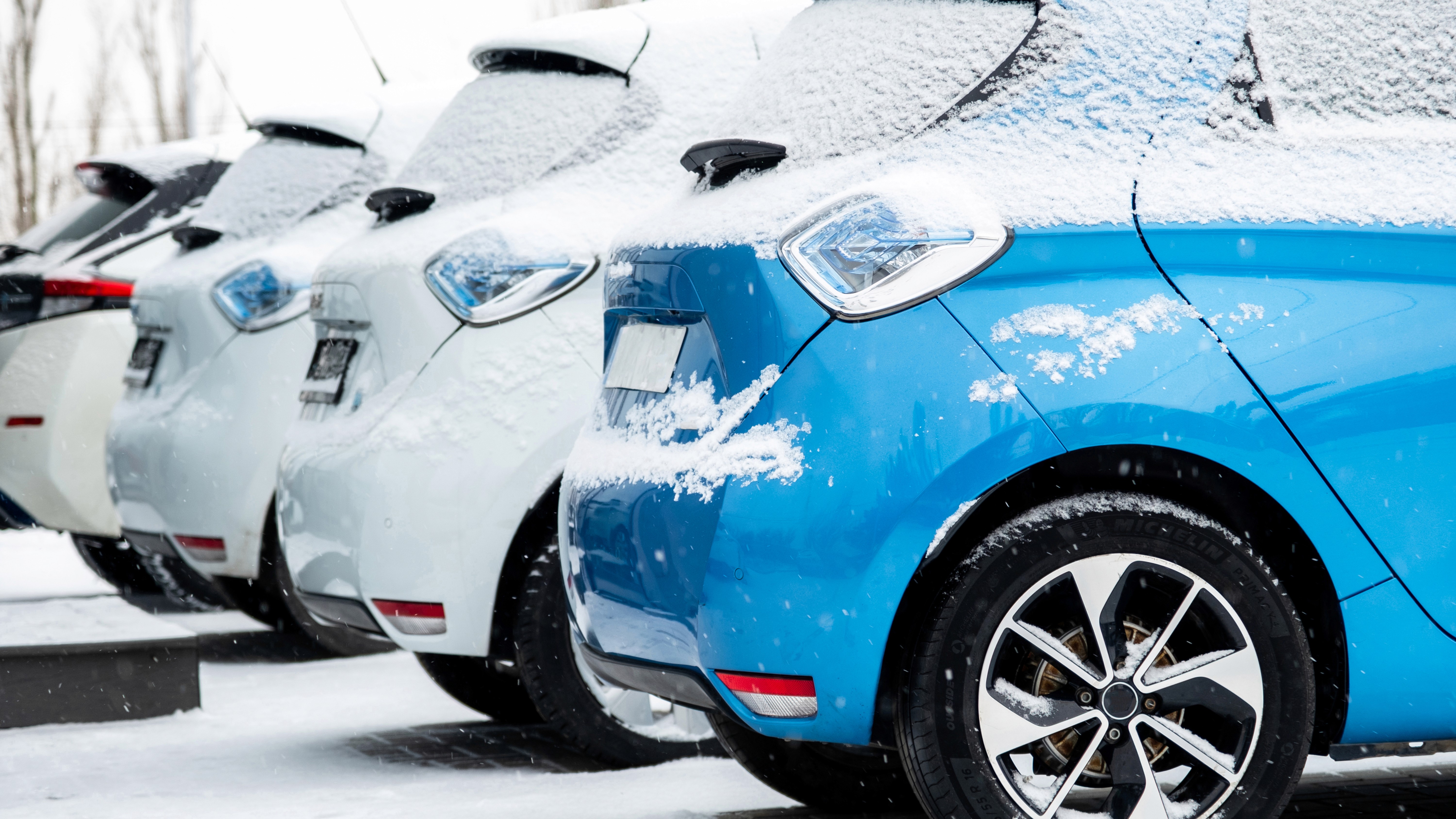
Winter brings with it road conditions that can become unpredictable: temperatures below zero, ice, snow, and cold rain put even the most experienced drivers to the test. Throughout Europe, from Scandinavia to the Mediterranean, winter tires play an essential role in ensuring safety, stability, and vehicle control. Thanks to a compound designed to remain flexible in cold temperatures and tread designed to ensure grip even on slippery surfaces, they represent the most effective solution for tackling winter roads.
For electric vehicles, which are heavier and more sensitive to loss of grip, choosing appropriate winter tires is even more important: they improve braking, traction, and range in cold conditions. This article provides a comprehensive overview of European regulations, technical requirements, performance, and best practices for selecting, using, and maintaining winter tires correctly, with an authoritative and safety-oriented approach.
What are winter tires and how do they work
Winter tires are designed to ensure maximum safety during the cold season. Their fundamental characteristic is the ability to maintain high performance when temperatures drop below 7 °C, a condition in which summer tires begin to harden and lose grip.
Special compound for low temperatures
The compound of winter tires is formulated with a higher silica content, allowing the tire to maintain elasticity even when the road is cold or icy. This elasticity allows for better contact with the road surface, reducing stopping distances and improving traction. This is a crucial aspect for electric vehicles, which are often heavier and require an appropriate compound to safely manage high torque and regenerative braking.
Tread pattern and sipes for snow
The structure of the tread is perhaps the most identifiable element:
The channels are deeper.
The design is intended to quickly expel snow and water.
The sipes increase the number of sharp edges that bite into the icy surface.
This system allows the vehicle to maintain stability even when roads and parking lots are covered by several centimeters of fresh snow.
M+S and 3PMSF markings
It is essential to distinguish the two main markings:
M+S (Mud & Snow): is a simple indication from the manufacturer, it does not represent an official certification.
3PMSF (Three Peak Mountain Snowflake): is the European standard. To obtain this marking, the tire must pass traction tests on snow defined by EU regulations.
In many European countries, especially in the north, only tires marked with 3PMSF are considered valid during winter.
European regulation: labeling and regulations
At the European level, there is no uniform obligation for the use of winter tires. However, the EU has introduced very precise legislation: Regulation 2020/740 on tire labeling.
EU label: what it indicates
Every tire sold in the European Union must display a series of information:
Energy efficiency, which directly affects the range of electric vehicles.
Wet grip, crucial in countries with rainy winters.
External noise, increasingly relevant for urban regulations and acoustic sustainability.
Symbols for snow and ice, useful to quickly identify true winter tires.
This labeling allows motorists to quickly compare different models and choose the safest ones for the cold season.
Why is there no single European obligation?
Europe has extremely variable climates:
From Finnish Lapland with temperatures as low as −30 °C,
To the Mediterranean coasts, where winter is often mild.
For this reason, each country adopts its own regulations. The European Union only requires regulation of labeling, leaving the choice of the obligation to individual states.
Obligations by country: European regulations on winter tires
The perhaps most complex part concerns the differences between countries. Regulations are indeed very different and often updated every year.
Nordic countries
Here the obligation is strict, and the use of 3PMSF tires is virtually essential.
Finland
The obligation lasts from December 1 to February 28, although it can be extended in case of particular weather conditions. Tires must be 3PMSF and have a minimum tread depth of 3 mm for cars and 5 mm for heavy vehicles. For electric vehicles, the standard is the same, but models designed to reduce rolling resistance and preserve range are recommended.
Sweden
The obligation is similar to the Finnish one, but generally lasts from December 1 to March 31. Sweden conducts frequent checks and requires tires with certified performance on snow and ice. The minimum tread depth is 3 mm.
Norway
Non-EU country, but essential for those traveling in Northern Europe. It has some of the strictest regulations, especially in the northern regions. Studded tires are still allowed in many cities, even if with an additional toll to reduce particulate pollution.
Central Europe
The regulations here are often more flexible, but still strict in winter conditions.
Germany
Germany does not set a mandatory period but speaks of a “situational obligation.” This means that when it snows, there is ice, or the road is muddy due to winter conditions, the vehicle must have 3PMSF tires.
It is also prohibited to use M+S tires produced before 2018 as an alternative.
Austria
The obligation is clear: November 1 – April 15 in case of snow on the ground. For heavy vehicles, the obligation is total on certain alpine sections.
Switzerland
There is no real obligation, but if you cause an accident with summer tires in winter, the responsibility falls entirely on the driver.
Eastern Europe
These countries experience variable winters, but often with heavy snowfall.
Czech Republic
The obligation is limited to certain road sections, marked by specific signage.
Romania
Very clear regulation: if the road is snow-covered or icy, winter tires are mandatory, regardless of the month.
Bulgaria
Obligation from November 15 to March 1, with a minimum tread depth of 4 mm.
Western Europe
France – Montagne Decree
Since 2021, some Alpine, Pyrenean, and Central Massif areas require winter tires or chains from November 1 to March 31.
Belgium and the Netherlands
There is no obligation, but the authorities advise fitting winter tires at least from November to March.
Southern Europe
Italy
National obligation November 15 – April 15, with local variations.
Spain
The obligation only applies in Pyrenean areas with specific signage.
Performance of winter tires on snow, ice and wet
Braking and behavior on cold surfaces
Winter tires offer significantly higher braking capability compared to summer tires when the temperature drops below 7 °C. Tests conducted by European bodies show that on snow, a winter tire can reduce stopping distance by up to 30%.
This difference is determined by the elastic compound and rubber structure, designed to maintain grip even on cold, icy, or wet surfaces. For electric vehicles (EVs), which weigh more due to the battery pack, this is particularly important: stable contact with the ground helps regenerative braking operate smoothly, avoiding slips and corrective interventions by electronics.
Cornering stability and traction on snow
Lateral stability is one of the main advantages of winter tires. Thanks to numerous and deep sipes, the tread can “bite” fresh and compact snow, avoiding understeer or oversteer phenomena.
In electric SUVs, which have a higher center of gravity and an immediate torque response, this type of additional traction is crucial for maintaining smooth and predictable driving.
Performance on wet, ice and slush
Winter tires are not only designed for snow. In many European regions, the most common winter condition is a mix of cold rain, thin ice, and slush (wet snow).
The deep channels of the tread help quickly expel water and avoid aquaplaning, while the compound remains elastic and maintains a good level of grip even on ice.
Energy efficiency for electric vehicles
For electric vehicles, the choice of tire directly influences range. Manufacturers are developing winter tires specifically for EVs, with low rolling resistance and reinforced structures.
These tires manage to maintain a balance between:
traction on cold surfaces,
torque control,
reduction of energy consumption,
acoustic comfort (important in nearly silent vehicles).
How to choose the most suitable winter tires
Interpreting the registration booklet
Before choosing a winter tire, it is essential to correctly read the approved measurements in the booklet:
width,
aspect ratio,
diameter,
load index,
speed index.
For winter tires, it is possible to use a lower speed index than that for summer tires (e.g., Q), provided it is permitted by local regulations.
Markings: why 3PMSF is essential in Europe
Real winter tires bear the 3PMSF marking, certified through European snow traction tests.
The only M+S marking does not represent an official certification and is no longer deemed sufficient in many Northern and Central European countries.
Nordic vs continental tires
There are different types of winter tires designed for specific climatic conditions:
Nordic tires
Optimal for extreme ice and cold temperatures. Mainly used in Scandinavia, Finland, Iceland, and parts of Norway.
Continental tires
Designed for a mix of snow, rain, light ice, and cold roads. They are the most common in Central and Alpine Europe.
When to prefer 3PMSF all-season tires
Certified 3PMSF all-season tires can be a valid solution in Southern Europe or in cities where temperatures rarely drop below zero. However, they are not sufficient for mountainous, alpine, or Nordic regions.
Specifications for electric vehicles
For EVs, it is recommended to choose tires:
with low rolling resistance,
reinforced (EV marking),
with adequate load index,
designed to reduce vibrations and noise.

Usage, mounting, and maintenance of winter tires
When to mount winter tires in Europe
Experts agree: the ideal time to install winter tires is when the temperature consistently drops below 7 °C. Many drivers wait for the first snowfall, but this is a mistake that puts safety and performance at risk.
Tire pressure during winter
In the cold, internal pressure naturally decreases. Under-inflation can lead to:
longer stopping distances,
increased energy consumption (especially in electric vehicles),
irregular tread wear.
Checking the pressure every 2-3 weeks is good practice.
Minimum tread depth and safety checks
The legal European limit is 1.6 mm, but professionals recommend at least 4 mm for winter tires. A tread that is too worn reduces the ability to drain water and grip snow.
Periodic rotation between front and rear axles
Proper tire rotation allows for even wear distribution. This is especially important for EVs, which deliver a lot of torque to the driving wheels.
Storage of tires out of season
Ideal storage conditions
cool place not exposed to sunlight,
absence of heat sources,
controlled humidity.
Correct positioning
with rims: horizontal or hung storage,
without rims: vertical storage.
Management of winter tires for companies and European fleets
Specific needs of fleets in Northern Europe
Fleets in Northern Europe exclusively use pure winter tires, often with Nordic versions designed for heavy snow and ice. Without this equipment, many services would become impossible to ensure.
Business strategies in Central Europe
In Central Europe, companies often combine:
winter tires,
high-end 3PMSF all-season tires,
mixed solutions to reduce operating costs.
The choice depends on altitude, geographical area, and number of kilometers traveled.
Company electric vehicles and tire management
Company EVs require special attention:
reinforced tires,
optimized compounds,
attention to pressure,
monitoring of range.
Fleets that adopt tires specifically for EVs see significant reductions in winter consumption.
Logistics of the dual tire train
Good management includes:
dedicated warehouse,
digital records,
planned rotations,
scheduled replacements in fall to avoid congestion in tire centers.
Common mistakes to avoid with winter tires
Using M+S thinking they are equivalent to 3PMSF
This is one of the most common mistakes. In many European areas, M+S are not legally accepted during winter.
Installing winter tires only on the driving axle
Putting winter tires only at the front or only at the back creates instability and dangerous imbalances. The rule is simple: four identical winter tires.
Using winter tires in summer
The soft compound leads to:
accelerated wear,
worse braking,
higher consumption,
overheating of the tire.
Ignoring the pressure or tread depth
A quick check every few days prevents surprises, especially in electric vehicles.
European FAQs about winter driving
Are all-season 3PMSF valid throughout Europe?
Yes, in most countries. But they do not replace pure winter tires in Nordic or alpine contexts.
Which countries require winter tires mandatorily?
Finland, Sweden, Norway, Austria, Bulgaria, and some French and Italian regions.
Are snow chains always accepted?
No. In cities or on highways, they are often not considered an alternative.
Do electric vehicles have to use specific tires?
Not mandatory, but strongly recommended.
What is the recommended minimum tread depth?
4 mm for safe driving.
Winter tires are a crucial element for safety on European roads during the cold season. From snow to ice, cold rains to frozen surfaces, they represent the most effective solution for maintaining control, stability, and performance.
Understanding European regulations, choosing the appropriate tire, ensuring proper installation and maintenance, and following best practices for electric vehicles and professional fleets means traveling safely and reducing risks.
Purchase your EV Charger
Our expert will contact you to offer you the most suitable solution for you.