Jan 20, 2026
Building photovoltaic potential: a major opportunity for the European energy transition
An in-depth analysis of solar potential on European buildings, combining open-access data, 2030 scenarios, and development prospects towards climate neutrality.
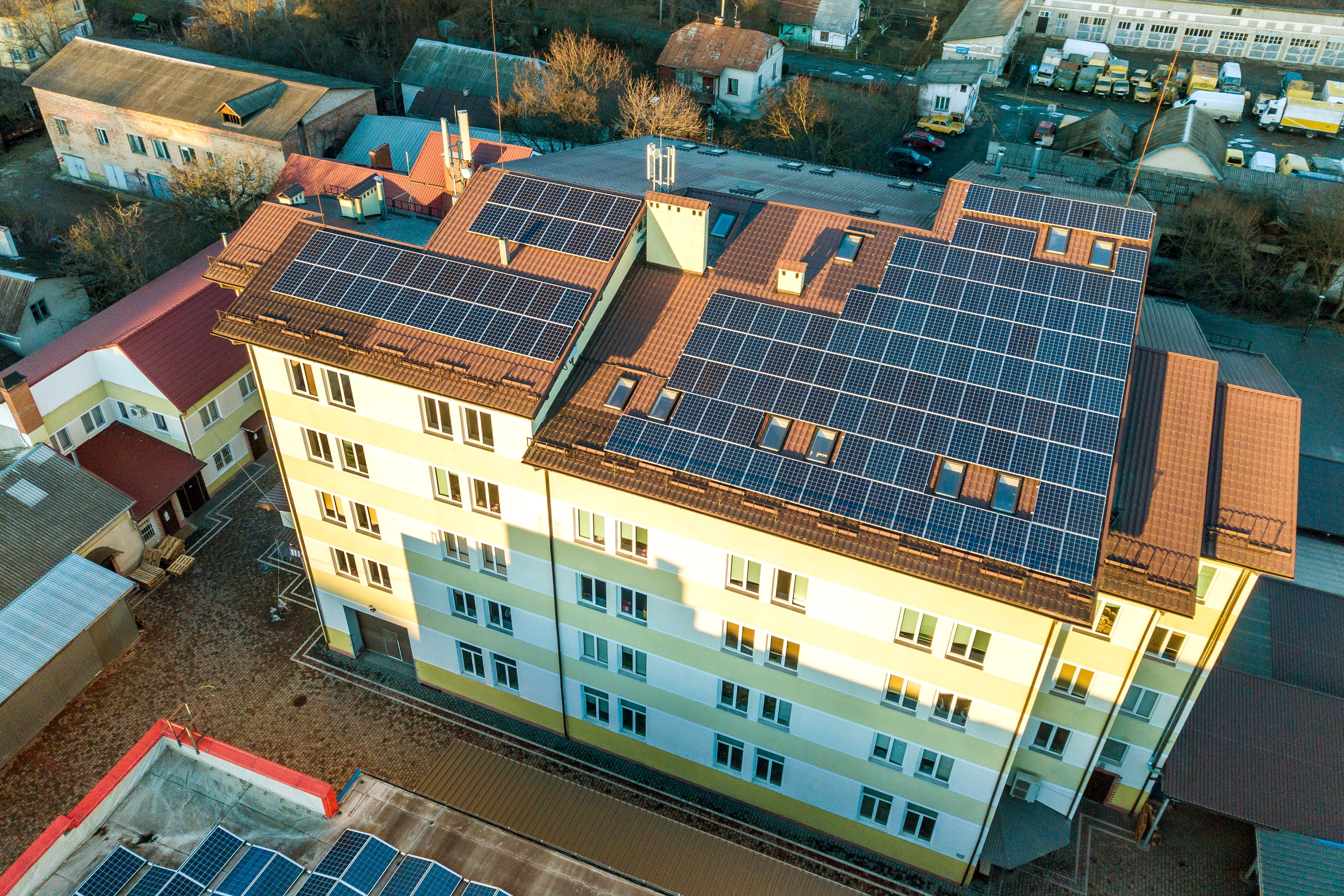
The European energy transition is increasingly linked to the building stock. Homes, warehouses, offices, schools, and public facilities are no longer merely places of consumption, but can be transformed into truly distributed energy infrastructures. In this context, building photovoltaic potential represents one of the most solid, concrete, and promising levers to accelerate decarbonisation, reduce energy dependence, and build a more resilient electricity system.
Thanks to open-access databases and high-resolution analytical models, it is now possible to accurately estimate how much rooftop photovoltaics can contribute to European energy targets, not only in the long term, but already by 2030.
The building stock as a strategic resource for solar energy
The European building stock is extensive, widespread, and already connected to electricity grids. This combination makes it an ideal resource for the production of distributed renewable energy.
The role of buildings in renewable energy generation
Buildings offer already sealed surfaces, particularly rooftops. Using them for solar energy production makes it possible to increase renewable capacity without additional land consumption, while simultaneously reducing overall environmental impact.
From energy demand to distributed generation
For decades, buildings have been designed as passive energy consumers. Today, however, they can become active nodes in a distributed generation system, producing electricity close to points of consumption and contributing to grid stability.
Advantages of building-integrated photovoltaics
Compared to other solutions, rooftop photovoltaics offer several advantages: integration with the surrounding environment, greater social acceptance, shorter implementation times, and efficient use of existing surfaces.
Solar potential applied to buildings: definitions and evaluation criteria
To fully understand the role of photovoltaics in the building stock, it is useful to clarify what is meant by “potential”.
How the energy potential of building surfaces is measured
Photovoltaic potential can be broken down into several distinct levels.
Theoretically available surfaces
These include the total set of existing rooftops, without considering technical, economic, or regulatory constraints.
Technically exploitable surfaces
At this stage, factors such as orientation, tilt, shading, and the structural conditions of buildings come into play.
Realistically usable surfaces
These represent the share of potential that can actually be developed, also taking into account economic, regulatory, and operational feasibility aspects.
Differences between rooftop photovoltaics and ground-mounted installations
Unlike ground-mounted systems, rooftop photovoltaics make use of already urbanised surfaces, reduce land consumption, and support a more distributed and resilient energy model.
Open-access databases for mapping urban photovoltaic potential
A real step change has come with the availability of ultra-high-resolution open-access databases. The DBSM R2025 database analyses 271 million geolocated buildings in the European Union, enabling a detailed rooftop-by-rooftop assessment of solar potential.
Geographic coverage, resolution, and data reliability
The total surface area of the analysed rooftops reaches 37.370 square kilometres. Each building is considered individually, overcoming the aggregated estimates used in the past and improving the reliability of the results. The analysis takes actual solar irradiation into account, providing more accurate estimates of photovoltaic energy yield.
Impact of high-resolution data on energy planning
These tools make it possible to plan targeted interventions, reduce uncertainty, and support energy policies based on scientific evidence.
Rooftop surfaces and suitability for photovoltaics
Not all rooftops have the same characteristics, but all contribute to the overall picture.
Residential rooftops and self-consumption potential
The residential sector plays a key role in the spread of photovoltaics, particularly in terms of self-consumption and reduced electricity demand from the grid.
Industrial, commercial, and logistics rooftops
Large non-residential rooftops allow for large-scale installations, with lower unit costs and faster implementation times.
Factors influencing rooftop usability
Orientation, tilt, and shading
These elements directly affect system output and overall efficiency.
Urban context and building density
In denser urban environments, planning becomes essential to maximise the performance of rooftop photovoltaics.
Installable photovoltaic capacity on European buildings
The most recent estimates show figures of major significance. The total estimated potential for rooftop photovoltaics on European buildings reaches 2,3 terawatts peak.
Distribution between residential and non-residential sectors
The largest share is attributable to residential buildings, which could contribute around 1.822 gigawatts peak. Non-residential buildings, such as industrial and commercial facilities, would add a further 519 gigawatts peak.
Electricity generation from rooftop photovoltaics
Annual production potential with current technologies
With current photovoltaic technology, estimated annual production reaches 2.750 terawatt-hours.
Relationship between installed capacity and energy yield
The combination of available surface area and solar irradiation enables high yields, particularly in urbanised and industrial areas.
Impact on the reduction of conventional energy consumption
This level of production could significantly reduce reliance on fossil fuels and increase the energy autonomy of the European Union.
Rooftop photovoltaics and coverage of energy demand
Contribution to European energy security
In a 100% renewable scenario, rooftop photovoltaics could cover around 40% of total electricity demand.
Role in the energy system by 2050
Buildings thus become one of the pillars of the European energy system, rather than a mere ancillary element.
Large buildings and concentration of potential
Surfaces above 2.000 m² as a strategic lever
By 2030, more than half of buildings with surfaces exceeding 2.000 square metres could generate 355 gigawatts peak, covering a large share of the capacity required to meet short-term targets.
Reduction of implementation timelines
Focusing on a limited number of large buildings makes it possible to significantly accelerate the growth of photovoltaic capacity.
Comparison between current capacity and future development
By the end of 2024, global cumulative photovoltaic capacity had exceeded 2,2 terawatts peak. On a per capita basis, this corresponds to around 0,270 kilowatts peak per person globally and 0,760 kilowatts peak per person in the European Union.
Photovoltaic development scenarios towards 2050
Net-zero energy transition scenarios foresee growth to 80 terawatts peak globally and 5,6 terawatts peak in the European Union. This would translate into 8 kilowatts of installed photovoltaic capacity per capita worldwide and 12,5 kilowatts per capita in Europe by 2050.
Constraints and implementation conditions
Structural and architectural limitations
Not all buildings are immediately suitable, particularly historic buildings or those with rooftops requiring structural interventions.
Urban planning and landscape constraints
Local regulations and landscape protection requirements call for a coordinated approach between energy planning and territorial conservation.
Prospects for integration between buildings, energy, and data
The convergence of the building stock, smart grids, and open-access data paves the way for a more efficient, flexible, and transparent energy system.
Building photovoltaic potential represents one of the most concrete opportunities for the European energy transition. The data show that the building stock is not a limitation, but a strategic resource. With intelligent planning, coherent policies, and conscious use of data, buildings can become key players in a sustainable, secure, and shared energy future.
Purchase your EV Charger
Our expert will contact you to offer you the most suitable solution for you.