Dec 9, 2025
Self-consumption and solar panels: how to achieve true energy independence
From solar production to smart consumption management: a complete guide for those who want to free themselves from network costs and live more sustainably.
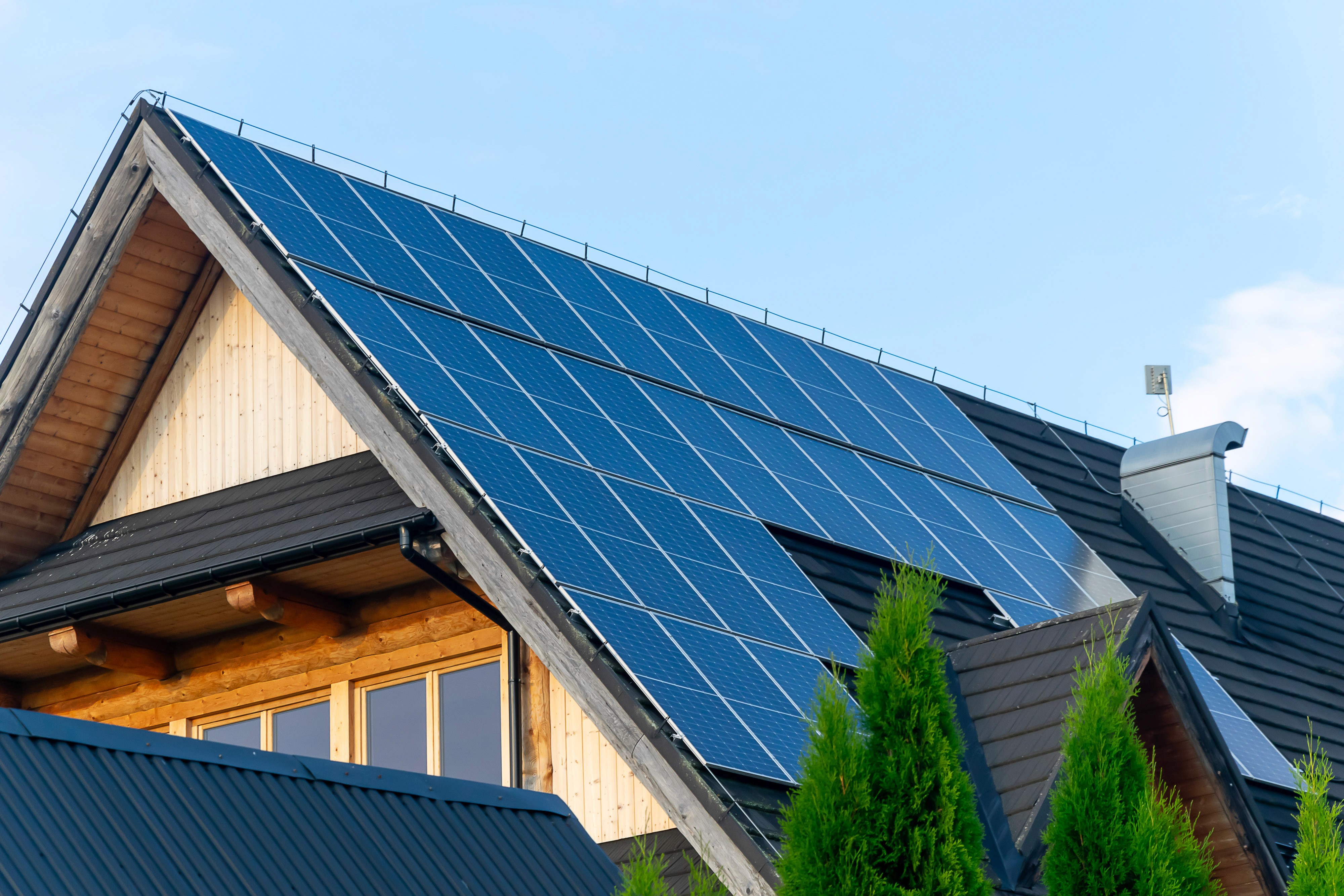
In a context of increasing energy instability and attention to sustainability, self-consumption from solar panels emerges as a concrete solution for families, businesses, and communities.
This guide explores how it works, why it is more advantageous than ever today, and what strategies to adopt to maximize the benefits.
What is self-consumption and why is it advantageous today
Choosing to produce and self-consume clean energy through a photovoltaic system means investing in a more efficient and sustainable future.
Self-consumption refers to the ability to directly use the electricity generated by one's own solar panels, without having to draw it (or only in minimal amounts) from the national grid.
Whether it is a house, an office, or a manufacturing plant, the goal remains the same: maximize the use of produced energy and reduce dependence on the grid, with both economic and environmental benefits.
How self-consumption works with solar panels
A photovoltaic system converts sunlight into electricity. Part of this energy is used immediately to power domestic or business consumption; the excess can instead be stored in a battery or fed into the grid.
Instant self-consumption
Instant self-consumption occurs when the energy produced by the solar panels is consumed at the same moment it is generated.
On average, a properly sized system allows for self-consumption of 20% to 30% of the energy produced. This value varies depending on usage habits: if the main consumption takes place during the day, the percentage increases; if it occurs in the evening, when the system does not produce, it decreases.
Deferred self-consumption
When energy is not consumed immediately but stored in a battery for later use, it is referred to as deferred self-consumption.
The batteries for solar panels allow excess energy produced during sunny hours to be accumulated and used in the evening or during peak demand times. This way, one can cover a much larger portion of their consumption — even over 70% — drastically reducing withdrawals from the grid.
Collective forms of self-consumption: sharing energy
Self-consumption is not just about the individual user. Today, there are collaborative models that allow for producing and consuming energy together.
Collective self-consumption
In this case, the energy generated by a photovoltaic system is shared among multiple users within the same building, such as an apartment building or a shopping center. Each user instantly utilizes part of the produced energy, reducing common costs.
Renewable energy communities
A further step is represented by the Renewable Energy Communities (REC), where groups of citizens, businesses, or public entities come together to produce and share renewable energy.
Users can also be in different buildings, but within the same network area. It is a model of energy cooperation that allows to multiply the economic and environmental benefits of self-consumption.

How to calculate self-consumption
Self-consumption is the difference between the total energy produced by the photovoltaic system and the energy fed into the grid.
Basic formula:
Energy produced – Energy fed into the grid = Energy self-consumed
Data is easily read from the meters:
The production meter measures how much energy is generated;
The bidirectional meter measures how much is fed into or withdrawn from the grid.
Practical example:
If a system produces 3,500 kWh in a year and feeds 2,000 kWh into the grid, the self-consumption will be 1,500 kWh, equal to 42.8% of the total.
The concrete advantages of self-consumption with solar panels
Financial savings on bills
The self-produced energy consumed directly does not pass through the grid, hence it does not incur transmission costs, system charges, or taxes.
This allows to significantly reduce the bill and protect oneself from fluctuations in electricity prices.
Integration with a battery for solar panels further increases savings, as it allows to also utilize energy produced during non-daylight hours.
Clean and sustainable energy
Using solar panels for self-production means reducing dependence on fossil fuels and contributing to the energy transition. Every kWh of solar energy consumed avoids CO₂ emissions and supports a more environmentally-friendly model.
Reduction of environmental impact
Self-consumption with photovoltaic energy concretely reduces the carbon footprint of families and businesses, contributing to the decarbonization goals for 2030.
A 6 kW system, for example, can avoid the emission of several tons of CO₂ every year.
How to maximize self-consumption and reduce costs
Install a storage battery
The first strategy to increase self-consumption is to equip the system with a battery.
Besides serving as a “reserve of energy,” the battery acts as an energy manager, optimizing energy use and improving living comfort throughout the day.
Monitor production and consumption
“Knowing to optimize” is the golden rule: through apps and monitoring systems, it is possible to analyze production and consumption data to verify the correct sizing of the system and identify any energy waste.
Adopt good consumption habits
Small daily actions can make a big difference:
Use appliances during daylight hours;
Avoid standby mode on devices;
Correctly adjust heating and air conditioning;
Utilize smart plugs and home automation systems to control loads even remotely.
The role of the battery for solar panels in long-term savings
Integrating solar panels and a battery is not just a technological choice, but also an economic one.
While increasing the initial investment, the battery allows to minimize withdrawals from the grid, prolong the life of the system, and maximize economic return.
In the medium to long term, the costs of solar panels with storage are largely compensated by energy savings and the independence obtained.
Toward a future of conscious energy
Self-consumption today represents the most direct path towards true energy independence.
With solar panels, the integration of a storage battery, and intelligent monitoring of consumption, it is possible to drastically reduce costs on bills and actively contribute to a sustainable future.
Purchase your EV Charger
Our expert will contact you to offer you the most suitable solution for you.