Apr 14, 2026
Do you still need an RFID card to charge an electric car in 2026?
Between public charging stations, charging apps, and contactless payments, the RFID card still remains a practical solution in many cases, even in 2026.
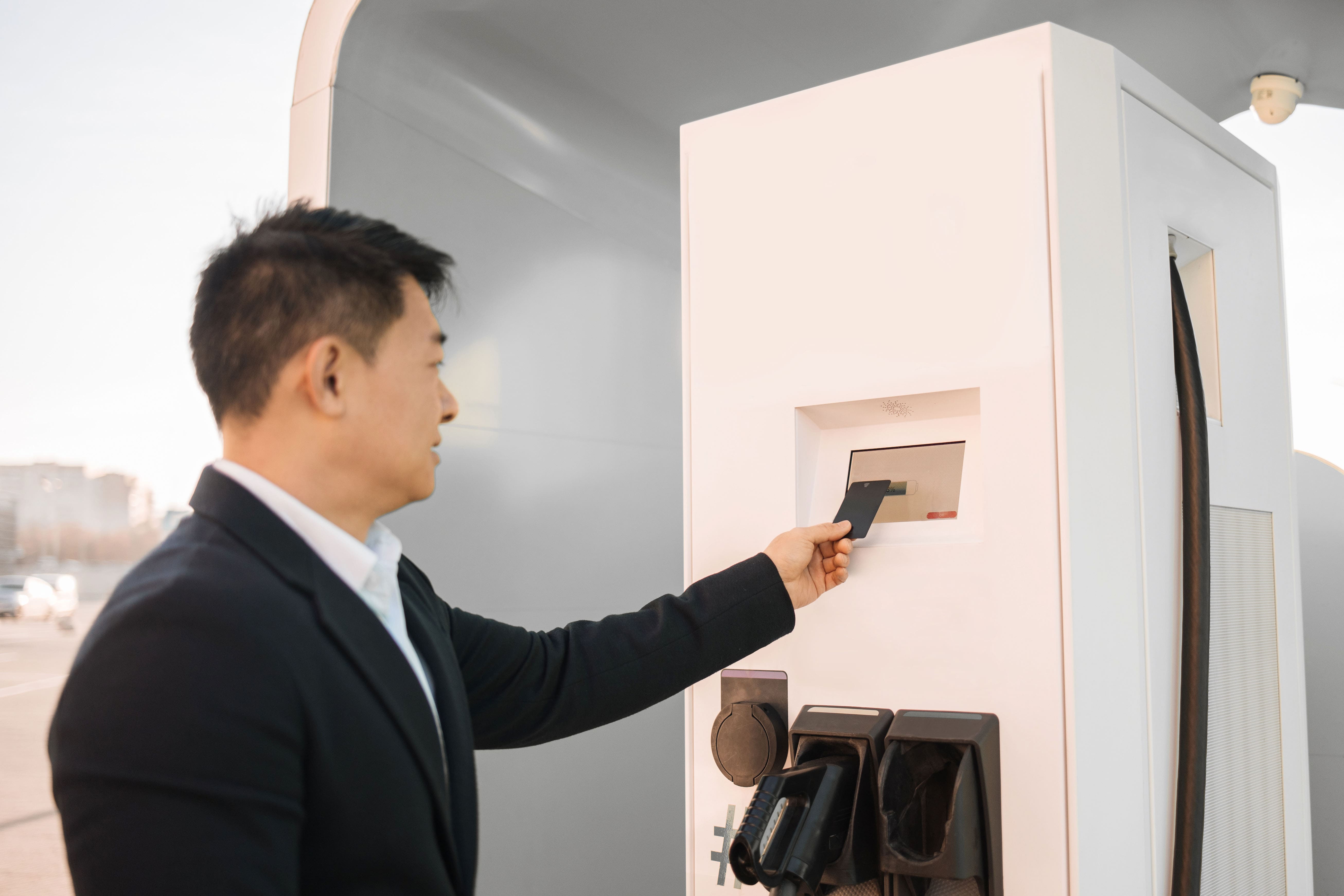
In 2026, charging an electric car has become easier than it was a few years ago. Apps are more widespread, contactless is becoming more common, and the user experience, at least in theory, is more straightforward. And yet, in this increasingly digital landscape, the RFID card still holds a concrete role.
So the question is completely fair: do you still need an RFID card to charge an electric car in 2026? The answer is yes, but with one important clarification: it is not equally necessary for everyone.
It is no longer the only way to start a public charging session, and in many cases it is not even essential. Still, it remains a practical, fast, and reliable solution, especially when the goal is to avoid unnecessary steps or when the alternatives are not quite as seamless as they promise to be.
In other words, the RFID card is not an outdated tool that has survived simply out of habit. More simply, it is an option that still makes sense in many real-life situations. Not for everyone, of course. But for many people, yes.
RFID card for electric cars: is it still really useful in 2026?
To answer this properly, it helps to start from a simple idea: public charging is not only about the technology available, but also about ease of use.
On paper, today everything can be done from a smartphone. You search for a charging station, check whether it is available, view prices, start charging, and pay. Convenient, absolutely. But everyday reality is not always that smooth. Sometimes the app is slow, sometimes the connection is weak, and sometimes too much time is lost between logins, updates, and less-than-intuitive screens.
And this is exactly where the RFID card keeps its value. Not because it is more advanced, but because in many situations it is simply more direct. You tap it on the reader, authorize the session, and get started. No menus to open, no station to search for, no extra steps.
For people who use public charging often, that immediacy matters. For those who charge almost exclusively at home, much less so. That is why the right answer is not a hard yes or a definitive no, but a more realistic one: it depends on how the electric car is actually used.
Why the RFID card is still useful for charging at public stations
Some tools remain relevant not because they are the newest, but because they continue to work well. The RFID card is one of them.
Starting a charging session in a simple and fast way
The first advantage is simplicity. Using an RFID card means making one immediate gesture: tap it on the charging station and authorize the session. That is all.
It may sound minor, but in practice it makes a difference. When time is tight, when arriving at a charging point in the rain, or when the goal is simply to start the session without wasting time, a physical and immediate solution can be more effective than a smartphone.
It is not a question of preferring old tools over new ones. It is a question of removing friction from an action that should be simple from the start.
More practical than an app in some situations
Apps have many advantages, and that should be acknowledged. They offer useful functions, help with planning, allow users to monitor consumption, and manage payments. But they are not always the most practical option when the only goal is to start charging.
In some situations, the RFID card is simply more immediate. It does not require unlocking the phone, opening the right app, finding the correct station, and waiting for everything to respond. For many users, especially in their daily routine, that difference is noticeable.
Sometimes the goal is not to have more features. Sometimes the goal is just to get going faster.
Useful when the connection is weak
One of the reasons the RFID card still makes sense is very practical: mobile signal is not always reliable.
This can happen in underground parking garages, in less-covered areas, or simply in places where the signal is unstable. In those moments, relying only on the app can become frustrating. The card, on the other hand, reduces dependence on the smartphone and makes access more straightforward.
It will not solve every issue, of course. But it can help avoid several headaches exactly when they are least welcome.
A reliable backup for public charging
There is another point worth highlighting: the RFID card is also an excellent backup.
Even people who almost always use an app can find themselves in situations where the phone battery is low, the platform is not responding, the login needs to be repeated, or the payment system is not cooperating. That is why keeping a card available at all times can be a smart choice.
It does not need to be used every day for its value to be clear. Sometimes it is enough just knowing it is there when needed.
When an RFID card may not really be necessary to charge an electric car
Of course, it would make little sense to present the RFID card as essential for everyone. In many cases, users can do perfectly well without it.
If the same charging app is almost always used
Anyone who already has a reliable, well-configured app that works with the charging stations they use most may not feel any need for a card.
If the experience is smooth, the account is already set up, the payment method works, and the process is quick, the app may be more than enough. In this case, the RFID card does not become useless, but it stops being central.
If charging happens mainly at home or at work
For people who charge mostly at home or at their workplace, the issue of the RFID card becomes much less relevant. If public charging is only occasional, it is normal for the tools associated with it to play a smaller role in the routine.
In this situation, the card may still be useful as a backup, but it may not be necessary on a daily basis.
If the charging stations used support contactless well
Contactless payment is becoming more common in the charging world too. When it is available and works well, it can make the RFID card less necessary, especially for those who prefer a quick access method without activating dedicated services.
That said, the situation is still not fully consistent. Not all charging stations support it in the same way, and not all networks offer the same experience. Still, it is clear that where contactless is well integrated, the need for a dedicated card may decrease.
RFID card, app or contactless: which charging method makes the most sense?
At this point, the question becomes broader: it is no longer only about whether the RFID card is still useful, but also about how it compares with the other available options.
RFID card: fast and immediate access to the charging station
The RFID card is all about simplicity. It is a physical, intuitive, immediate solution. It works well for those who want quick access without too many steps.
It does not offer the same range of functions as an app, of course. But when the goal is simply to get started quickly, it remains one of the most straightforward options.
Charging apps: more control and more features
The app, on the other hand, is the most complete tool. It allows users to search for stations, check availability, plan stops, monitor the session, and manage charging history. For many people, it is the center of the entire charging experience.
The downside is that, precisely because it does more, it also requires more steps. And what is more complete is not always what is more immediate.
Contactless: convenient, but not yet universal
Contactless may be the most familiar solution for many users, because it mirrors a gesture already common in everyday life. When available and well implemented, it is convenient and quick.
Its current limitation is that it is not yet found everywhere with the same consistency. For that reason, it is a good option, but not yet so widespread that it can completely replace both apps and cards.
In the end, the most balanced answer is this: there is not always one single best tool in every situation. Often, the best choice is simply the one that fits the context.
In which cases does it still make sense to have an RFID card in 2026?
The RFID card is not essential for everyone, but there are user profiles for whom it still makes a great deal of sense.
For people who travel frequently with an electric car
People who move around often, especially outside their usual routes, know very well how important it is to reduce unexpected issues. While traveling, a simple and immediate system can make charging less stressful and more manageable.
In those cases, having an RFID card can be a small precaution that makes the experience noticeably easier.
For people who use multiple public charging networks
When switching often between different charging networks, practicality becomes even more important. A card linked to a reliable service can help make everything smoother, especially when there is no desire to manage every charging session only through an app.
For people who want to reduce waiting time and unexpected issues
Not everyone wants to depend on their phone all the time. Not everyone wants to go through screens, updates, or extra steps every single time. For many users, the RFID card remains simply a matter of common sense: nothing revolutionary, but very useful when it actually matters.
How many RFID cards make sense for public charging?
Here it is best to stay practical. In most cases, one well-chosen card is enough.
For the average user, having one solution compatible with most of the networks they regularly use is more than sufficient. Filling a wallet with different cards risks complicating what should stay simple.
That said, people who travel often or use a wide range of networks may want to consider a second option. Not out of excessive caution, but simply to have an extra margin of security. The best approach remains the same: a few solutions, but genuinely useful ones.
RFID card for EV charging stations: is it still a useful choice?
At this point, the answer is fairly clear: yes, in 2026 the RFID card is still a useful choice.
It is no longer the only way to start a public charging session. It is not essential for everyone. And it is not even the center of the charging experience the way it may have been a few years ago. But it still offers something very concrete: simplicity.
In a context where apps, contactless payments, and digital tools coexist, the RFID card remains a practical solution for those who want immediacy, speed, and a reliable alternative always ready to use. For some users, it will be essential. For others, it will simply be a backup. For others still, it will be an occasional convenience. But dismissing it as outdated would be a mistake.
The real question, after all, is not whether it is still modern. It is whether it is still useful. And in many cases, the answer is still, quite simply, yes.
Purchase your EV Charger
Our expert will contact you to offer you the most suitable solution for you.