Apr 9, 2026
How far can an electric car go on a single charge? The ultimate guide
Real-world range, consumption, and simple strategies to drive with more peace of mind both in the city and on the highway.
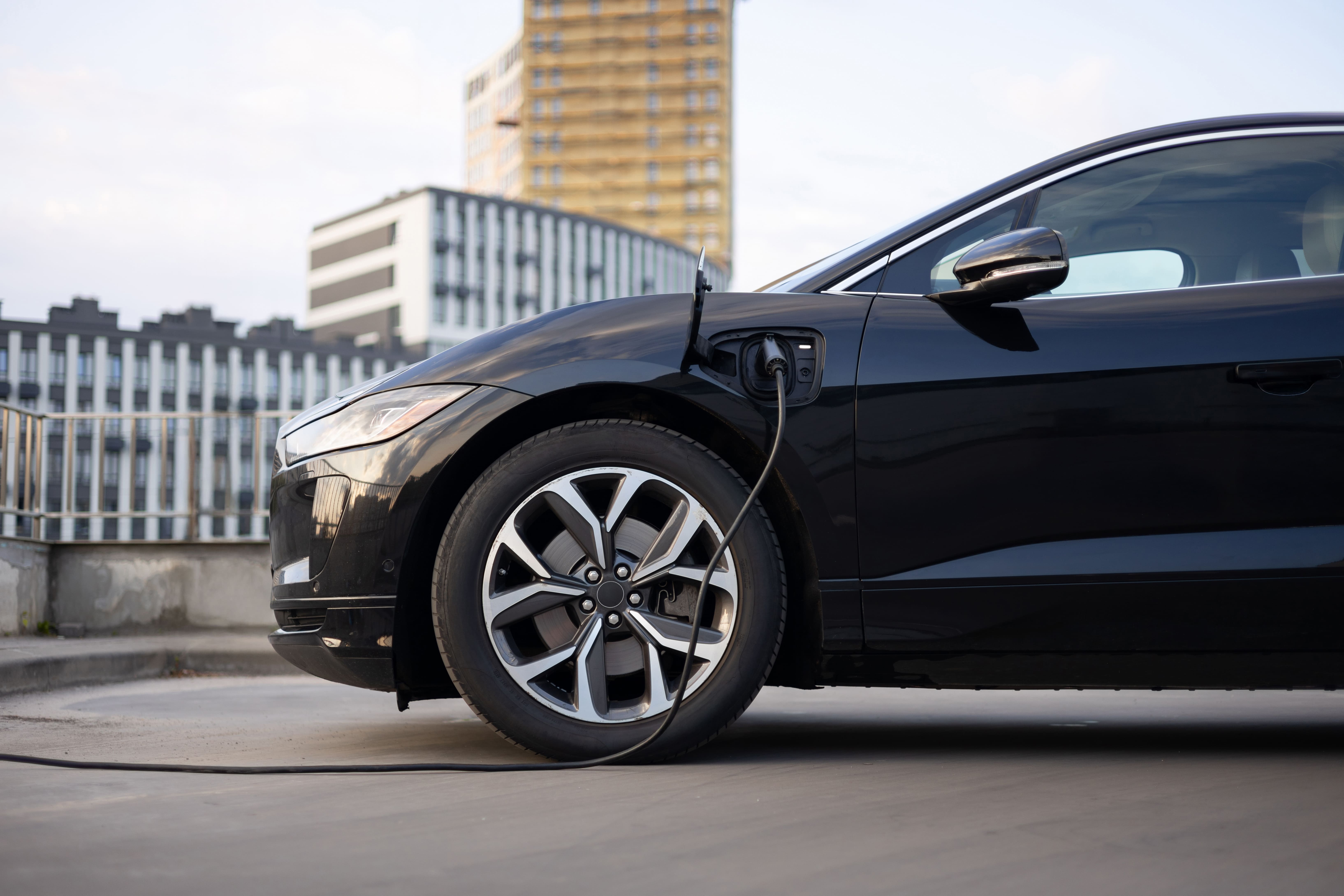
The question sounds simple: how many kilometers can an electric car drive on a single charge? In reality, the answer is closer to “it depends, but you can calculate it accurately.” Range is not a fixed value: it changes with speed, temperature, route, load, and driving style. The good news is that, with a few practical reference points, you can predict quite reliably how far you’ll be able to go and, above all, how to go a bit farther when you need to.
To get oriented right away, here’s a clear rule of thumb:
Estimated range = usable energy (kWh) / real-world consumption (kWh/100 km) × 100
In other words, range isn’t magic. It’s the direct result of how much energy you have available and how quickly you use it.
What “range” really means and which numbers are worth watching
Official range vs. real-world range
The “on-paper” range is measured under controlled conditions and serves as a common benchmark. It’s useful for comparing different vehicles, but it doesn’t capture everyday driving down to the last detail. Real-world range is what you get in your own context: city or highway, winter or summer, short trips or long journeys.
Here’s the key point: range is not a promise, it’s an estimate. And like any estimate, it improves when you use the right data.
Battery capacity: stated kWh vs. usable kWh
Battery capacity is shown in kWh, meaning the amount of energy the battery can store. However, not all the nominal capacity is always available: a portion is often kept in reserve by the system to protect the battery over time. For more realistic calculations, it helps when possible to consider usable capacity.
Consumption in kWh/100 km: the real “steering wheel” of range
If you had to track just one number, it would be consumption. It translates driving behavior and external conditions into a concrete outcome.
kWh/100 km: energy required to drive 100 km (the lower, the farther you go).
km/kWh: kilometers per kWh (the higher, the better).
They’re equivalent, but kWh/100 km is usually more practical for calculations.
State of charge and remaining range: why the kilometers on the display change
The percentage (SoC) is a stable value. The estimated kilometers are a calculation that shifts based on recent consumption. So yes: it’s normal to see range drop faster after a fast stretch, or “recover” when you enter the city or slow down.
Buffer: the simplest way to travel with confidence
Keeping a buffer (for example, arriving with a small reserve) is a pragmatic choice. It helps you handle detours, traffic, wind, and cold temperatures without stress. In short, better a bit of caution than arriving by the skin of your teeth.
WLTP and range: how to interpret the official figure correctly
What WLTP is
WLTP is a standardized test used to measure, among other things, energy consumption and range. Its main advantage is that it provides a common yardstick, allowing vehicles to be compared on similar terms.
Why it may differ from real life
In the real world, factors come into play that a test can’t reproduce with perfect accuracy:
highway driving at sustained speeds,
intense cold (with heating on),
wind and rain,
heavy loads and external accessories,
more “spirited” or more gentle driving.
The result is that two people with the same car can achieve different ranges. That’s not a flaw, it’s simply how a system behaves when conditions change.
How to use it in a practical way
Read WLTP as:
an indicator for comparing models;
a baseline to adjust to your own use, especially if you do a lot of highway driving or live in colder areas.
Why range changes: what affects consumption
Speed: the highway is the real test
As speed increases, air resistance grows. That’s why, on the highway, consumption is often higher than on smooth extra-urban roads or in the city.
Tires and road friction
Tire type, size, and especially tire pressure affect the energy needed to move forward. Incorrect pressure can increase consumption, and it’s not great for safety either, so checking it is simply a smart move.
Weight and load: passengers, luggage, accessories
More weight means more energy, especially when accelerating and climbing. External accessories have a special drawback: on the highway they can hurt range significantly because they worsen aerodynamics.
Traffic and regenerative braking: the city can be your friend
With regenerative braking and lower speeds, city driving can be efficient. However, in very cold weather or on short trips, heating and thermal management can become the main drivers of consumption.
Elevation changes: uphill and downhill don’t balance perfectly
Going uphill uses a lot of energy; going downhill you recover some, but not all. Also, if the battery is very full, regeneration may be limited. So it’s wise to estimate mountain routes with a bit of caution.
Climate control: winter and summer are not symmetrical
Heat has an impact, but cold often has a bigger one: heating requires energy and, in some cases, the battery and components also need to be brought into their optimal temperature window.
Range in different scenarios: what to expect
In the city
Often efficient thanks to moderate speeds and energy recovery while braking.
Potentially less favorable in winter, especially with short trips and frequent heating.
In mixed driving
In many cases, this is the most balanced scenario: steady driving without long stretches of high speeds.
On the highway
This is where range tends to drop the most: speed acts as a “multiplier” of consumption, and wind/rain become more significant.
In winter
The system has to manage comfort and operating temperatures, so consumption can rise and range can fall.
In summer
Air conditioning matters, especially in slow traffic or long stops, but its impact is usually more manageable than winter heating.
How to estimate kilometers per charge: a clear method
1) Decide how much energy you plan to use
You need three pieces of data:
usable capacity (if available),
starting charge percentage,
the minimum percentage you want to have left at arrival.
Available energy (kWh) = capacity × (starting SoC − reserve) / 100
Illustrative example:
60 kWh capacity, 80% starting SoC, 10% reserve
available energy = 60 × 0.70 = 42 kWh
2) Choose a realistic consumption value
The best approach is to use your real average consumption on the same type of route. If you move into a more demanding context (highway or cold), it’s sensible to assume higher consumption.
3) Calculate estimated range
Range (km) = (available kWh / kWh/100 km) × 100
With 42 kWh and 17 kWh/100 km:
range ≈ 247 km
4) Make the estimate personal and reliable
After a few weeks, simply note typical consumption by scenario:
city,
mixed,
highway,
winter.
From that point on, range becomes predictable and surprises shrink dramatically.
How to extend range: simple actions that work
1) More consistent and slightly lower highway speed
This is often the most effective lever. You don’t need to “drive slow”: you just need to avoid very high speeds and keep a steady pace, consistent with safety and traffic conditions.
2) Smooth driving: fewer spikes, better efficiency
Gradual acceleration and anticipating braking reduce waste. A more relaxed driving style often delivers real benefits.
3) Climate and comfort: sensible settings and preconditioning
When possible, pre-heating or pre-cooling while plugged in saves battery energy. Even small choices (temperature setting, smart use of onboard systems) can make a difference.
4) Tires: correct pressure and appropriate choice
It’s a low-effort, high-return action: consumption, safety, and comfort improve together.
5) Load and external accessories: remove what you don’t need
Taking off unnecessary items, especially anything mounted on the roof, helps noticeably on fast routes.
Long trips: managing range and charging without the stress
On longer journeys, it helps to shift perspective: it’s not about “setting a record,” but about arriving well, with total travel time optimized. A steady pace, a reasonable buffer, and well-planned stops make a big difference.
In many cases, shorter and more targeted charging stops (instead of very long sessions) make the trip more flexible. And when it’s cold, preconditioning can improve_toggle the predictability of the experience.
Range over time: does the battery change?
Over the years and with use, capacity can gradually decrease. However, the size and speed of that change vary widely. In general, balanced use, attention to temperature, and sensible habits help keep performance stable.
How much range do you really need? It depends on how you drive
City use and commuting: ease of daily charging often matters more than maximum range.
Mixed use and weekends: a comfortable buffer for typical trips is key.
Frequent highway driving: predictability at high speed and in cold weather, plus planning, becomes important.
Professional use and fleets: efficiency, operational uptime, and charging infrastructure are critical.
FAQ
Why does range change from one day to the next?
Because temperature, average speed, wind, traffic, and climate control usage change. Even small differences can add up.
Does regenerative braking really increase range?
Yes, it recovers energy during deceleration. But it can’t eliminate consumption caused by speed, heating/cooling, and hills.
How can you quickly calculate remaining range?
Estimate available kWh (keeping a reserve), divide by consumption in kWh/100 km, then multiply by 100.
Electric-car range isn’t a number carved in stone, but it is a predictable figure if you use the right parameters. Once you understand available energy and real-world consumption, it becomes natural to estimate how far you can go and which levers to pull to extend range. And, honestly, it’s this very real, measurable sense of control that makes the EV experience so rewarding.
Purchase your EV Charger
Our expert will contact you to offer you the most suitable solution for you.