May 12, 2026
Plug and play solar panels: the ultimate guide to saving money for real
A practical, complete guide to understanding whether a compact solar kit is truly suitable for your home, your outdoor space, and your energy needs.
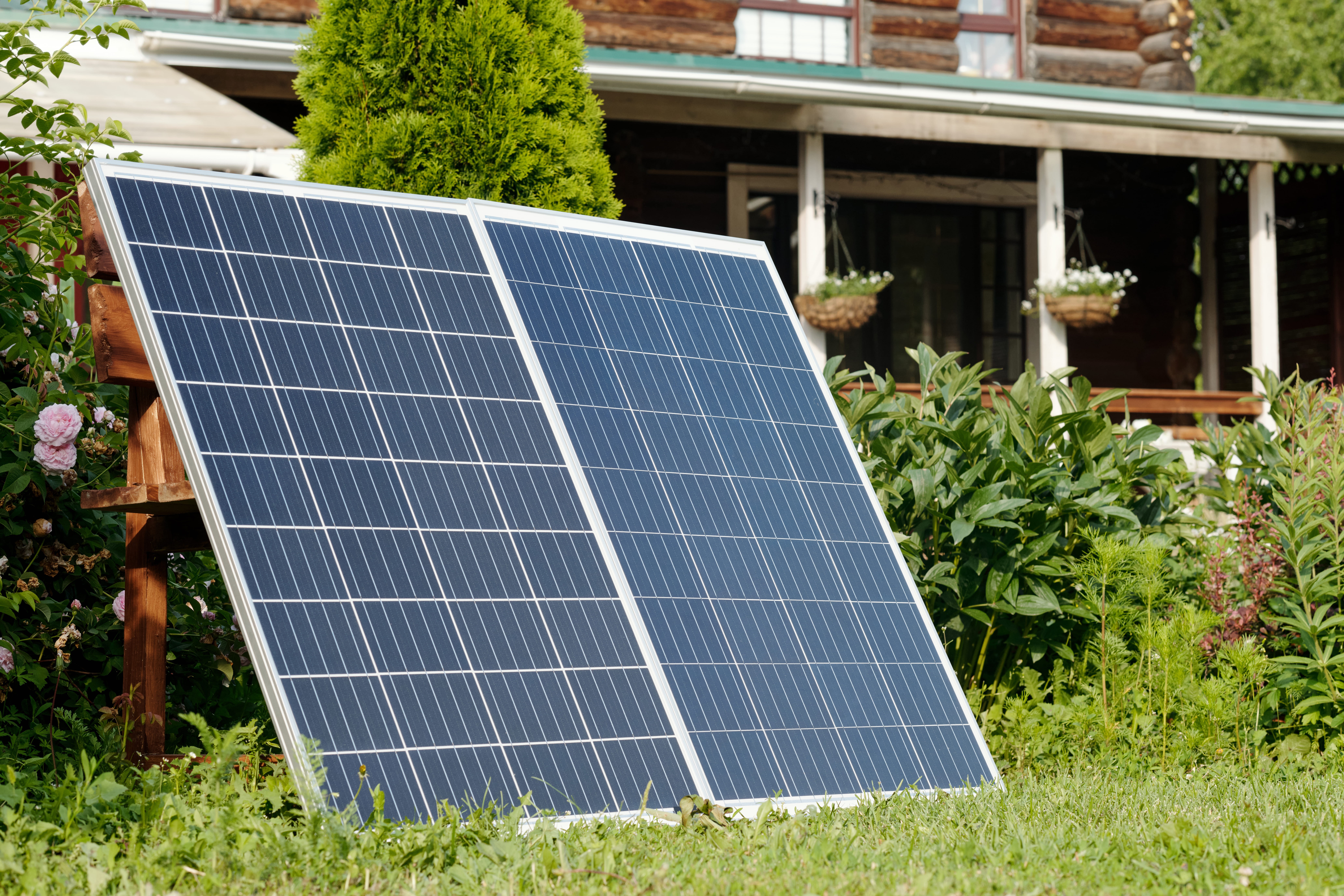
Plug and play solar panels are attracting growing interest because they make solar power more accessible, even for people who live in apartments or do not have a private roof. For many users, they represent a concrete first step toward self-consumption: a simpler, more compact, and less demanding solution than a traditional solar system, yet still capable of making a difference in everyday energy use.
Their appeal is easy to understand. The idea of installing a small kit on a balcony, terrace, or in a garden and starting to generate part of the electricity used at home is highly attractive. However, as is often the case, behind what seems like a simple promise lie a few crucial questions: how do they really work? How much do they produce? How much do they actually save? And above all, are they suitable for everyone?
The most honest answer is no: they are not the right choice in every situation. They can be very useful, but only when they are installed in the right place, with realistic expectations and with a consumption profile that matches their output. That is exactly what this guide is about: a complete, clear, and practical overview to help you understand whether plug and play solar panels truly make sense in your case.
What are plug and play solar panels
Plug and play solar panels are small solar power systems designed to generate electricity for direct household self-consumption. In most cases, a kit includes one or more solar modules, a microinverter, connecting cables, mounting hardware, and, in many cases, a monitoring system to track production.
Unlike a traditional rooftop solar installation, these systems are smaller in scale and are mainly designed to cover part of a home’s base electricity consumption, especially during daytime hours. They are not meant to power an entire house, nor to replace a full-scale rooftop system. Their goal is more targeted: to reduce a share of the electricity drawn from the grid when sunlight is available.
One important point should also be clarified. The term “plug and play” is often used very broadly, almost as a synonym for “simple kit” or “balcony solar.” In reality, the technical requirements, power thresholds, and connection methods may vary depending on the country and the local regulatory framework. For that reason, when evaluating a product, it is always wise to distinguish between marketing language and the actual technical or administrative classification.
Why more and more people are choosing them
The popularity of these systems comes from a mix of practicality and context. On the one hand, there is growing interest in cutting energy costs; on the other, many people simply do not have access to a private roof, but they do have a balcony, terrace, or small outdoor area they can use.
For people living in cities, a plug and play kit is often one of the few realistic ways to enter the world of solar power. It does not necessarily require a complex project, it may involve a lower initial investment, and it allows users to explore self-consumption gradually. In that sense, it is not just an energy product; it is also a practical solution for people who want to get started without making too big a leap.
There is also another, less obvious but very interesting aspect. People who install a small solar system often become more aware of their own consumption habits. They begin to notice more carefully when they use electricity, which devices draw the most power, and how solar production can be used more effectively. In other words, these kits do not just change the electricity bill; they also change the everyday relationship with energy.
How a plug and play solar system works
The basic operation is fairly simple. The solar panel captures sunlight and converts it into direct current electricity. That energy is then converted by the microinverter into alternating current, which is compatible with the home electrical system and with the appliances we use every day.
Once converted, the electricity produced is used first by the loads already running in the house. This means that if the fridge, modem, computer, or other devices are on at that moment, part of their demand can be covered directly by the kit. And this is exactly where the most important concept comes in: instant self-consumption.
In fact, the system performs best when production and consumption happen at the same time. If the sun is shining but there are hardly any active loads in the home, the economic benefit drops. That is why the real question is not only “how much does it produce?” but also “how much can I use while it is producing?” It may sound like a subtle distinction, but in reality it determines a large part of the overall value.
Instant self-consumption: the real deciding factor
Many people focus on panel power or kit price, but the real heart of the value proposition is something else: the ability to use the energy at the exact moment it is generated. A small plug and play solar system is particularly well suited to homes where there are continuous or easily shiftable daytime loads.
You do not necessarily need very large loads. In many cases, the usual background consumption already present in daily life is enough, such as:
fridge
modem and router
computer
small appliances used during the day
other devices that are always or often running
If, on the other hand, the house remains empty for most of the day and electricity use is concentrated almost entirely in the evening, the real benefit tends to be lower. In that case, the system is producing, yes, but it does not find enough real-time demand to offset. That is why the household’s consumption profile matters at least as much as the quality of the kit itself.
The main components of a kit
A plug and play solar kit is small, but that does not make it simple in a trivial sense. The final quality of the system depends on the balance between all its components, not just the panel.
The first element is the solar module, which converts sunlight into electricity. Efficiency matters, but so do robustness, durability, weather resistance, and overall build quality.
The second element, often underestimated, is the microinverter. This is what makes the electricity produced actually usable in the home system. A good microinverter affects reliability, performance, and long-term durability.
Finally, there are the mounting structures, wiring, and monitoring tools. Mounting systems determine stability and influence the panel’s orientation and tilt. The wiring must match the intended use and be properly protected. Monitoring is also more useful than it may seem: it makes it easier to understand whether the kit is performing well and helps users make smarter use of the electricity produced.
If we had to sum it up, the three things to always check are:
panel quality
microinverter reliability
solidity of the mounting system
Everything else completes the picture, but these are the foundations.
Where they can be installed
One of the major strengths of these systems is flexibility. In most cases they can be installed on balconies, terraces, gardens, courtyards, or exterior walls, as long as the chosen location offers good exposure and adequate safety conditions.
The balcony is the most common option, especially in urban settings. It is easily accessible, visible, and often allows relatively straightforward mounting. However, not all balconies are equally suitable: if it is very deep, badly oriented, or heavily affected by nearby buildings, the output may be modest.
The terrace usually offers greater freedom in terms of orientation and tilt. That can make a major difference, because it makes it easier to find a more favorable position than the one imposed by a railing or parapet.
A garden or courtyard can also be an excellent solution, provided the panel receives useful sunlight, the wiring is managed properly, and the system is protected from impacts, tampering, or future shading.
In every case, the rule is simple: the best location is not the one that is most convenient in general, but the one that offers the best balance between sunlight, safety, stability, and practicality.
Exposure, orientation and shade: what really affects performance
This is an area where it is worth being very clear. A good kit installed in the wrong place produces little. A kit that may not be outstanding on paper, but is mounted in a well-exposed location with very little shade, can produce surprisingly better results. In other words, the installation context matters enormously.
The ideal exposure is one that provides a good amount of sunlight during the central hours of the day. In many situations, orientations close to south tend to support more regular production, but east and west can also be interesting if the household consumption profile aligns with production timing. What really hurts output, however, is persistent shading.
Solid parapets, awnings, upper balconies, side walls, trees, or nearby buildings can reduce production significantly. This is exactly where many people go wrong: they look at the kit, but they do not look carefully enough at their actual space. Before buying, it is worth taking a few days to check how many hours of real sunlight the intended installation point receives. It is a simple step, but often a decisive one.
How much energy they really produce
This is one of the most common questions, but also one of the hardest to generalize. The real production of a plug and play kit depends on several factors: exposure, orientation, shade, tilt, temperature, season, panel quality, and installation quality.
For that reason, rated power should not be confused with actual output. The declared value helps define the general size of the system, but it does not by itself tell you how many kilowatt-hours will actually be generated on your balcony or terrace.
The smartest way to think about it is in terms of scenarios. A well-installed kit, with regular sunlight and little shade, can provide useful and fairly stable production during the central hours of the day. The same kit, placed in an unfavorable context, may offer a much more limited contribution. In short, there is no universal output that applies to everyone; there is only output that makes sense in relation to the specific real-world case.
How much you can really save on your electricity bill
Savings depend on a balance between three factors: how much energy the kit produces, how much of that energy is self-consumed, and how much electricity drawn from the grid costs. In small plug and play systems, the second factor is almost always the most important.
A home with daytime consumption is normally able to benefit more from the system. People who work from home, use electronic devices during the day, or can schedule some appliances when the sun is out tend to achieve better results.
By contrast, people who consume almost all their electricity in the evening or on weekends may see a more limited financial impact. That is why these kits make the most sense when three conditions come together: a well-exposed location, daytime consumption, and realistic expectations. When these three elements line up, the system can be a very sensible choice; when they do not, the value weakens.
How much plug and play solar panels cost
When it comes to price, it is easy to be misled. A small kit can seem like an immediate purchase, almost as simple as choosing a household appliance. In reality, cost should always be evaluated together with the system’s overall value.
It is not just about the panel. The quality of the microinverter, the sturdiness of the mounts, the availability of monitoring, the clarity of the documentation, the level of customer support, and the warranty duration all matter. A very cheap kit may look attractive at first glance, but turn out to be less reliable or less transparent in the medium term.
It is better, then, to think about it like this: not “how much does it cost in absolute terms?” but “how much real value does it offer in my case?” Sometimes paying a little more for a system that is clearer, sturdier, and better documented is the most sensible choice.
Regulations and requirements to check in your country
This is the section that varies the most from one market to another. Power thresholds, connection methods, registrations, notifications, technical requirements, building constraints, and possible incentives can all differ depending on the country.
That is why a serious international article needs to remain cautious: not all kits marketed as “plug and play” are treated the same way everywhere. In some markets there are very specific rules for small balcony solar systems; in others the framework is more closely tied to general self-consumption regulations or local building requirements.
Before buying, it is wise to check at least these points:
permitted power range for small kits
allowed connection methods
any required notifications or registrations
electrical safety requirements
any condominium, building, or insurance constraints
This is not just bureaucratic detail; it is an essential part of making a smart decision.
Condominium, facade and practical constraints
Even when a kit is technically suitable, that does not mean it can be installed everywhere without further considerations. In many cases, there are issues related to apartment buildings, façade appearance, architectural consistency, or visibility from outside.
This is especially true when the panel is mounted on railings, parapets, or other highly visible points. Even if the system is small, it is always worth checking whether there are specific restrictions or whether it would be wise to consult the building manager, a technician, or the installer.
It is far better to deal with these questions before making the purchase than to discover afterward that the chosen location is not compatible with the building context or local rules.
Safety and reliability: aspects not to overlook
Simplicity should never be confused with carelessness. A plug and play kit is still an electrical system installed outdoors, exposed to rain, wind, temperature swings, and mechanical stress. That is why component quality and proper installation matter a great deal.
Safety has two main dimensions. The first is electrical: the system must be compatible with its intended use and meet the requirements of the country where it is installed. The second is mechanical: the panel and its support must be stable, robust, and appropriate for the chosen installation point.
A good kit is often recognizable through very practical signs: clear documentation, well-identified components, readable instructions, credible warranties, and available support. When everything is reduced to vague marketing claims, it is better to slow down and dig deeper.
How to choose the right kit
The best choice starts with the reality of your home, not with the catalog. First, look at the space: how many hours of sunlight does it receive, how much shading is there, and how safe and stable is it for mounting? Then consider your energy use: are there daytime loads? Is there room to shift some electricity use into the central hours of the day?
Only after that does it make sense to compare products. At that stage, it is worth evaluating component quality, documentation clarity, sturdiness of the mounting system, and whether monitoring is included. If one of these basics is missing, the risk is buying something that sounds attractive in theory but does not suit your actual situation.
A practical mini-checklist can help:
truly suitable outdoor space
consumption that matches daytime production
reliable, clearly described components
mounting system appropriate for the installation point
realistic expectations about production and savings
Advantages of plug and play solar panels
The advantages of these systems are very concrete. The first is accessibility: they allow people to approach solar power with an investment that is generally lower than that of a traditional system. The second is flexibility: they are suitable even for people living in apartments who only have a small outdoor space. The third is ease of use: they help cover part of the base electricity demand without requiring a complex installation.
There is also another benefit that is less obvious but very valuable: they help people better understand their own energy use. They encourage users to pay closer attention to their household habits, to schedule some activities during sunny hours, and to think in terms of self-consumption rather than simply drawing power from the grid. For many users, that shift in awareness is almost as valuable as the financial savings themselves.
Limitations and drawbacks to consider
Of course, these systems should not be idealized. A plug and play kit has limited output compared with a larger solar installation and cannot provide the same level of coverage. Its value also depends heavily on exposure, shading, and how the home uses electricity.
Another limitation is that the market often oversimplifies things. Some products are presented as if they were almost universal solutions, while in reality performance and day-to-day practicality vary greatly from one case to another. That is why realistic expectations are essential: if the system is bought for what it really is, it can be satisfying; if too much is expected from it, disappointment is likely.
When they really make sense
Plug and play solar panels make the most sense when a specific combination of factors is present: a well-exposed location, daytime electricity use, a desire to start with a gradual investment, and expectations that are aligned with the scale of the system.
They work well as a first step toward self-consumption, as a way to support base electricity demand, and as a solution for people who want to begin producing part of the energy they use every day. They make less sense when the balcony is almost always shaded, the home is empty during the day, or expectations involve a very large reduction in the electricity bill.
They are not a universal solution, but they can be a very smart one when the context is right.
Mistakes to avoid
There are a few recurring mistakes worth keeping in mind. The first is choosing a kit based only on price or declared power. The second is underestimating shade, orientation, and the quality of the mounting system. The third is failing to check local rules and assuming everything works the same way in every country.
Another common mistake is expecting a small kit to deliver results comparable to those of a full-size solar installation. That almost always leads to unnecessary disappointment. A small system that is well chosen and well understood is far better than one bought in haste because of overly generic promises.
Plug and play solar panels are an interesting option for people who want to approach solar power in a simple, gradual way that fits limited household space. They are not a miracle fix, but they can make a real contribution when they are chosen and installed carefully.
The key lies in four things: evaluating the available space properly, understanding your energy use, choosing a reliable kit, and checking the requirements that apply in your country. When these elements are aligned, the outcome can be genuinely positive. When one of them is missing, it is worth pausing and reconsidering the decision.
Ultimately, the right question is not “do they work?” but “do they work well in my case?” If the answer is yes, then these small systems can become a smart step toward a more efficient and energy-aware home.
Purchase your EV Charger
Our expert will contact you to offer you the most suitable solution for you.