May 18, 2026
Benefits of solar PV: 10 great reasons to install a system in 2026
A clear and complete guide to understanding why installing a solar PV system can be a convenient, sustainable, and forward-looking choice for the future.
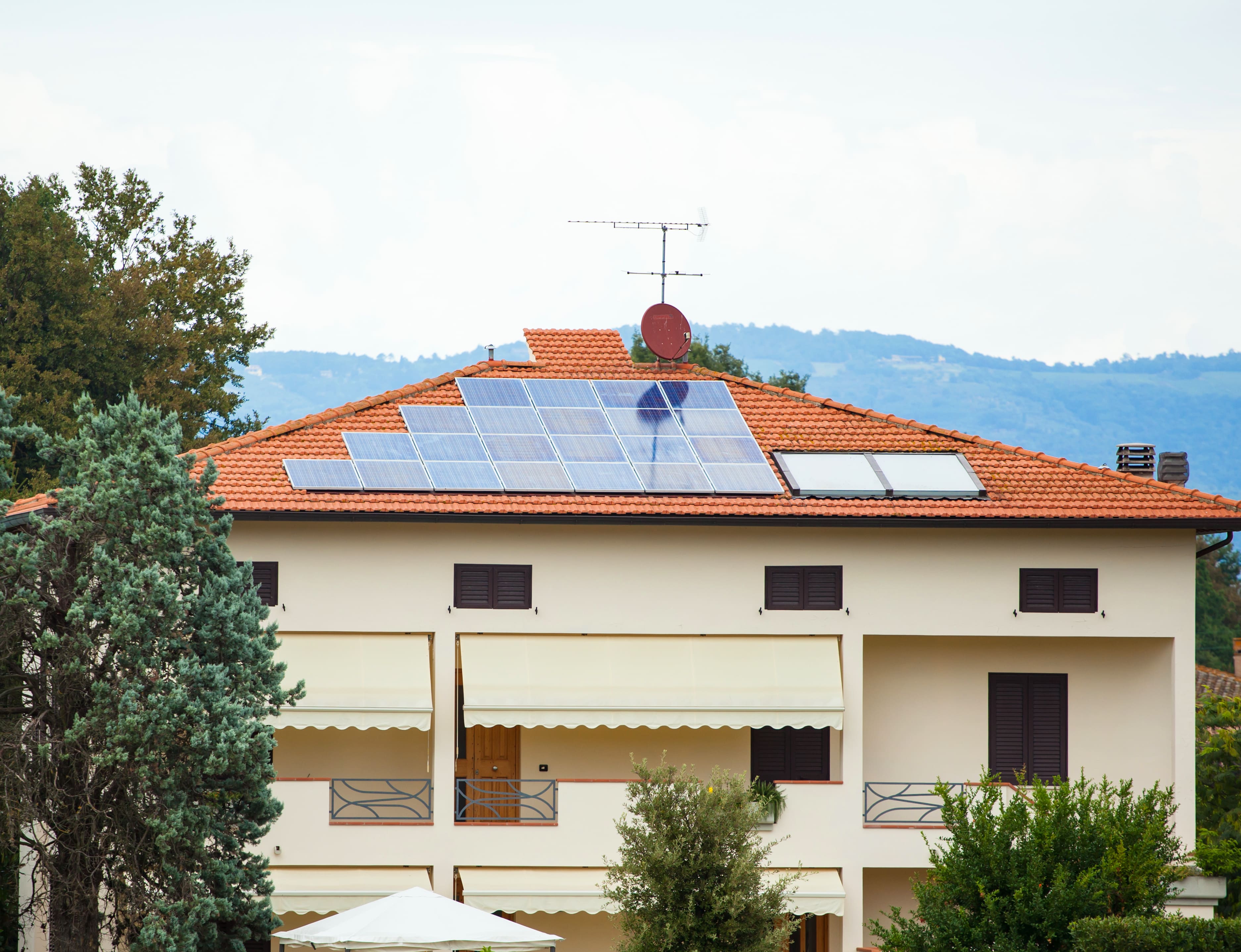
Installing a solar PV system in 2026 is not just about placing solar panels on a roof. It means rethinking the way a home, business, or building uses energy every day. In a world where electricity costs increasingly influence household and business decisions, producing part of your own power has become a practical, measurable, and increasingly attractive choice.
Solar PV combines three benefits that are hard to ignore: it can reduce electricity bills, support the use of clean energy, and make a property more modern, efficient, and ready for future energy needs.
In this guide, we’ll look at the main benefits of solar PV and explore 10 good reasons why installing a system in 2026 can be a smart decision. We won’t talk only about savings, but also about self-consumption, battery storage, sustainability, property value, available incentives, electric vehicle charging, and energy monitoring. In short, everything you need to understand whether solar PV could really be the right solution for your home or business.
Before we start: how a solar PV system works
A solar PV system converts sunlight into electricity. Solar panels installed on a roof, canopy, ground-mounted structure, or commercial building capture solar radiation and produce direct current electricity. This energy then passes through an inverter, which converts it into alternating current, the type of electricity used by household appliances, office equipment, industrial machinery, and most business systems.
In simple terms, during the day the system produces electricity. If you are using a washing machine, air conditioner, computer, heat pump, or business equipment at that moment, part of the electricity produced is consumed directly. This is usually the most beneficial situation, because every kilowatt-hour you use from your own system is a kilowatt-hour you do not need to buy from the grid.
Electricity that is not consumed immediately can usually follow two paths: it can be exported to the grid, depending on local rules and utility agreements, or it can be stored in a battery system if one is installed. This is where self-consumption becomes important. Self-consumption means using the electricity generated by your own renewable energy system directly within the same home, building, office, or production facility.
It is also important not to confuse solar PV with solar thermal. Solar PV produces electricity. Solar thermal, on the other hand, produces hot water or supports heating systems. Both use solar energy, of course, but they serve different purposes. If your goal is to reduce electricity consumption, power appliances, heat pumps, offices, machinery, or electric vehicles, then you are talking about a solar PV system.
1. You can reduce your electricity bills
The first major benefit of solar PV is also the easiest to understand: by producing electricity yourself, you buy less energy from the grid. And buying less electricity usually means lowering your electricity bills.
The key to savings is self-consumption. When your system produces electricity and that same electricity is used directly in the building, the economic benefit is stronger. The more solar energy you use on-site, the less you rely on electricity purchased from your energy supplier.
Let’s take a simple example. A family uses most of its electricity in the evening, but the solar PV system produces most of its energy during the day. If no habits change, part of that solar energy may be exported to the grid. But if the family schedules the washing machine, dishwasher, air conditioning, or electric vehicle charging during the middle of the day, the self-consumption rate increases. And when self-consumption increases, savings usually increase too.
For businesses, the advantage can be even more visible. Many companies operate during daylight hours, exactly when solar panels produce the most. Offices, shops, workshops, farms, warehouses, laboratories, and production facilities can often use a significant share of the energy generated by their own system. In these cases, solar PV is not only an environmental choice. It becomes a practical cost-control tool.
2. You produce clean energy directly at home or at work
Solar PV allows you to produce electricity from a renewable source that is available every day: the sun. This does not mean that the system produces the same amount of energy in every season or at every hour of the day. However, it does mean that part of your energy needs can be covered without directly relying on fossil fuels during operation.
The environmental benefit is one of the main reasons solar PV is so widely appreciated. Using solar energy helps reduce the impact of electricity consumption and supports the global energy transition. For households, this means living in a more sustainable home. For businesses, it also means strengthening their brand image and making their environmental commitment more credible.
Today, many companies talk about sustainability. Solar PV helps turn those words into a concrete, visible, and measurable action. It can support environmental reporting, corporate sustainability goals, and a more responsible approach to energy use.
There is also a cultural aspect that should not be underestimated. Installing solar panels changes your relationship with energy. You start paying attention to when you produce, when you consume, and when you waste electricity. Little by little, you become more aware of your habits. And that matters.
3. You become less dependent on rising energy prices
No grid-connected residential or commercial solar PV system completely eliminates your relationship with an electricity supplier. However, the more energy you can produce and consume yourself, the less exposed you are to fluctuations in energy prices.
This is one of the most strategic benefits of solar PV. Electricity bills depend on many factors: energy prices, grid charges, taxes, consumption levels, contract conditions, and time-of-use tariffs. With a well-designed solar PV system, part of your consumption is covered directly by solar production. As a result, that portion of electricity does not need to be purchased from the grid.
For a household, this can mean greater peace of mind. For a business, it can mean more predictable operating costs. And anyone who runs a business knows how important that is: when energy costs are less unpredictable, it becomes easier to plan investments, pricing, and margins.
Of course, solar PV is not a magic wand. Its convenience depends on the quality of the project, roof exposure, real energy consumption, and the ability to use electricity when the system is producing. Still, the basic principle is clear: producing part of your own electricity is a concrete way to depend less on the energy market.
4. You can increase the value of your property
A home with a well-designed solar PV system is more efficient, more modern, and often more attractive. This is especially true if the system is recent, properly documented, well maintained, and sized according to the real energy needs of the property.
People buying or renting a property increasingly pay attention to running costs. A home that can produce part of its own electricity offers a clear practical advantage: lower energy costs and better overall efficiency. If the solar PV system is combined with battery storage, a heat pump, or an EV charger, the perceived value may increase even further.
Solar PV also communicates the idea of a future-ready home. A property where you can cook with induction, heat and cool with efficient electric systems, charge an electric car, and monitor energy consumption is better aligned with modern energy needs.
However, it is important to be realistic. Simply “having solar panels” does not automatically increase property value. Installation quality, warranties, documentation, maintenance, real production, and compatibility with the needs of future occupants all matter. A well-built system is an asset. A poorly planned one can become a problem.
5. You can increase self-consumption with battery storage
One of the natural limits of solar PV is that it produces most of its electricity during the day, while many households use a lot of energy in the evening. This is where battery storage comes in.
A battery storage system allows you to store electricity that is produced but not consumed immediately, so you can use it later. In practice, if your solar PV system produces more electricity during the day than you are using, the battery can store the excess. In the evening, instead of buying all your electricity from the grid, you can use part of the stored solar energy.
This benefit is especially interesting for people who are away from home during the day, households with high evening consumption, homes with heat pumps, and anyone who wants to charge an electric vehicle more intelligently. A battery is not always essential, but in many cases it can increase self-consumption and make the system more flexible.
One point should be made very clear: battery storage and backup power are not the same thing. Having a battery does not automatically mean that your home will have electricity during a blackout. To power the home when the grid goes down, a specific backup configuration is usually required, often with backup functionality, an emergency power supply output, or a dedicated circuit for essential loads. This is something you should always ask your installer: “What happens if the grid goes down?”
6. You make better use of heat pumps, induction cooking and electric vehicles
Solar PV becomes even more interesting when a building uses more electricity instead of gas or traditional fuels. Think of heat pumps, induction cooktops, and home EV charging.
With a heat pump, electricity is used for heating, cooling, and in some cases domestic hot water. If part of that electricity comes from solar PV, the system becomes more efficient from an economic point of view and more consistent from an environmental perspective. Naturally, the result depends on the building’s quality, insulation, local climate, and how the system is managed.
Induction cooking also fits well into a home that is gradually shifting toward electrified energy use. One appliance alone does not change everything, but the overall direction does: less gas, more controlled electricity consumption, and more opportunities to use the energy produced on-site.
Then there is the electric car. Charging an EV at home with solar energy is one of the most interesting scenarios for anyone with a solar PV system. A smart EV charger can help adjust charging based on available solar production, reducing unnecessary grid consumption. That’s the point: solar PV is not just an isolated system. It can become the center of a broader home or business energy ecosystem.
7. You gain greater control over your energy consumption
One of the less discussed benefits of solar PV is monitoring. Most modern systems allow you to track production, self-consumption, energy imported from the grid, energy exported to the grid, and, if present, battery status.
This makes a big difference. Before installing solar PV, an electricity bill arrives at the end of the billing period and tells you what has already happened. With monitoring, you can see almost in real time how you are using energy. You can notice whether you are importing too much electricity from the grid, whether the system is producing properly, whether the battery is charging correctly, or whether there are any issues.
It is a bit like moving from driving without a dashboard to driving with all the key information in front of you. You may not change your habits on day one, but over time it becomes natural to shift some energy use to the most convenient hours.
For example, you can schedule washing machines and dishwashers around midday, cool the house when solar production is higher, charge the car during periods of solar surplus, or avoid switching on too many high-power appliances at the same time. Small habits, yes, but over time they can make a real difference.
8. You may access incentives and opportunities available in 2026
In 2026, incentives remain an important topic, but they need to be considered carefully. Solar incentives vary widely from country to country, and sometimes even by region, state, municipality, utility provider, or type of customer. What applies in one market may not apply in another.
Depending on where the system is installed, possible support mechanisms may include tax credits, rebates, grants, low-interest loans, feed-in tariffs, net metering, net billing, accelerated depreciation for businesses, or special programs for low-income households and community energy projects. Some countries reward energy exported to the grid, while others focus more on self-consumption or battery storage.
For residential solar PV systems, local policies may reduce upfront costs or improve the payback period. For businesses, incentives may be linked to renewable energy investment, energy efficiency, sustainability programs, or industrial decarbonization targets.
There are also opportunities related to shared solar, community solar, energy communities, and collective self-consumption models. These solutions can be useful when a single building cannot install enough panels, when tenants want to benefit from solar energy, or when multiple users want to share the benefits of a renewable energy project.
This does not mean every solar PV system automatically qualifies for an incentive. It means that, in 2026, available programs should be checked carefully before signing a contract. The key word is verification: check eligibility, deadlines, documentation, technical requirements, grid connection rules, and the real economic benefit.
9. You reduce waste and improve energy efficiency
Solar PV works best when it is part of a broader energy efficiency strategy. First, you reduce waste. Then, you size the system correctly. Finally, you optimize the use of the energy produced.
A common mistake is thinking: “I consume a lot, so I’ll just install more panels.” Sometimes that makes sense, but not always. If a home loses heat easily, uses old appliances, or has poorly managed consumption, it may be smarter to improve efficiency as well. A well-designed solar PV system should not simply cover unnecessary waste. It should power useful, well-managed consumption.
Several improvements can increase the benefits of solar PV: better building insulation, replacement of old appliances, efficient heat pumps, smart load management systems, LED lighting, and regular maintenance of existing equipment.
The same applies to businesses. First, you analyze when and how energy is used. Then, you choose the right system size. Finally, you try to align production and consumption as much as possible. This is where solar PV performs best: not as a stand-alone feature, but as part of a more organized energy strategy.
10. You make a useful long-term investment
A well-sized solar PV system can produce electricity for many years. This is one of the reasons it is often considered a long-term investment: the initial cost is paid once, while the benefits continue over time through energy production, self-consumption, and reduced grid electricity purchases.
The return on investment depends on many factors: system cost, annual consumption, roof exposure, orientation, tilt, shading, electricity prices, self-consumption rate, battery storage, maintenance, and available incentives.
The most important thing is to start from real consumption data. A system that is too small will cover only a limited share of your energy needs. A system that is too large, if not matched with suitable consumption or battery storage, may produce a lot of electricity that is not used directly. And as we’ve seen, self-consumption is often one of the strongest drivers of economic convenience.
This is why solar PV should not be purchased as a generic package, as if one solution worked for everyone. Every home and every business has a different energy profile. The right system is based on a serious analysis, not on a standard size.
When does installing a solar PV system really make sense?
Solar PV is especially convenient when certain favorable conditions are present: medium to high electricity consumption, a well-exposed available surface, limited shading, a good match between production and consumption, and the willingness to use energy more intelligently.
For a household, solar PV can be particularly beneficial when there is significant daytime consumption, when a heat pump is planned, when an electric vehicle is already in use or expected in the future, or when the goal is to increase energy independence.
For a business, solar PV can be very attractive when electricity consumption is concentrated during working hours. In these cases, the energy produced by the system is often used directly, reducing grid consumption exactly when the business is operating.
There are also situations that require more caution: heavily shaded roofs, very low electricity consumption, rented properties, technical restrictions, or a very limited budget. In these cases, solar PV should not necessarily be ruled out, but it should be evaluated more carefully.
How to choose the right solar PV system
Choosing the right system starts with electricity bills. Analyzing consumption over the last 12 months helps you understand how much energy is used, in which seasons, and, where data is available, during which time periods. This is the first step to avoid sizing mistakes.
The second step is evaluating the available surface. Orientation, tilt, and shading all affect production. A well-oriented roof with few obstacles and enough space allows the system to perform better.
Then come system size and components: solar panels, inverter, optional battery storage, monitoring tools, electrical protections, and distribution boards. Not all components are the same, and not all systems offer the same functions. For example, someone who wants to increase evening self-consumption may need to consider storage. Someone who wants power continuity during a blackout must check whether dedicated backup functions are included.
The quotation should also be reviewed carefully. It is not enough to look at the final price. You need to check what is included: design, permits, grid connection support, installation, warranties, monitoring, after-sales service, electrical works, documentation, and ongoing support. A clear quote is far more valuable than a low price with unclear conditions.
Mistakes to avoid when considering solar PV
The first mistake is choosing only on the basis of the lowest price. Of course, cost matters. But a solar PV system is expected to last many years, so component quality, installation care, and support are essential. Saving too much at the beginning can mean spending more later.
The second mistake is failing to analyze consumption. Without real data, the risk is installing a system that is too large, too small, or poorly suited to the user’s habits. Solar PV works best when it is tailored to actual needs.
The third mistake is confusing production with savings. A system may produce a lot of electricity, but if that energy is not used effectively, the economic benefit may be lower than expected. Producing a lot is good. Using what you produce well is even better.
The fourth mistake is forgetting maintenance and monitoring. Solar panels usually require limited maintenance compared with many other systems, but that does not mean they should be ignored. Periodic performance checks help identify production drops, inverter issues, communication problems, or other anomalies.
Solar PV for homes and solar PV for businesses: comparing the benefits
Residential solar PV mainly responds to household needs: reducing electricity bills, increasing energy independence, improving property value, and integrating battery storage, heat pumps, or electric vehicles. The benefit depends heavily on daily habits: when energy is used, how much is used, and how much consumption can be shifted to production hours.
Commercial solar PV often has a more operational and financial logic. Businesses look at lower operating costs, more stable energy expenses, sustainability goals, and the opportunity to use large surfaces such as warehouse roofs, factory roofs, parking structures, or commercial buildings.
The main difference lies in the consumption profile. A household may consume a lot in the evening, while a business may consume mostly during the day. This often makes self-consumption more immediate for commercial and industrial users. However, with good design, residential systems can also deliver strong benefits, especially when combined with storage and smart energy management.
Frequently asked questions about the benefits of solar PV
Is solar PV still worth it in 2026?
Yes, it can be worth it, especially when the system is designed around real consumption and allows a good level of self-consumption. However, convenience should always be evaluated case by case, considering the roof, consumption habits, system cost, available incentives, and possible battery storage.
How much can you really save with a solar PV system?
Savings depend on how much electricity the system produces and, above all, how much of that electricity you use directly. Two homes with the same system can achieve different results if their consumption habits are different.
How long does it take to recover the cost of solar panels?
The payback period varies depending on upfront cost, consumption, self-consumption rate, incentives, electricity prices, and system quality. A realistic estimate requires a personalized analysis.
Is it better to install solar PV with or without battery storage?
It depends on consumption habits. If you use a lot of energy in the evening, storage can be useful. If you consume mostly during the day, you may achieve good results even without a battery.
Do solar panels work when it is cloudy?
Yes, solar panels produce electricity even when the sky is cloudy, but less than on a sunny day. Production varies according to sunlight, season, orientation, and tilt.
Does a solar PV system require a lot of maintenance?
Generally, maintenance requirements are limited. However, it is important to monitor production and periodically check that the system is operating correctly.
Can I install solar PV if I have a small roof?
Yes, but available space, exposure, and consumption must be assessed carefully. Even a small roof can host a useful system if it is designed properly.
Can I use solar PV to charge an electric car?
Yes. With a smart EV charger and good energy management, an electric car can increase the self-consumption of the electricity produced by the panels.
Does solar PV increase the value of a home?
It can help make a property more attractive, especially if the system is recent, well installed, properly documented, and integrated with efficient energy solutions.
What happens to the solar energy I do not use?
Depending on the system and local regulations, unused solar energy can be exported to the grid, compensated through a local tariff or credit mechanism, or stored in a battery if the system includes one.
Can solar PV completely eliminate my electricity bill?
In most cases, no. It can significantly reduce the amount of electricity purchased from the grid, but fixed charges, nighttime or seasonal consumption, and contract-related costs may still remain.
Conclusion: why installing a solar PV system in 2026 can be a smart choice
Installing a solar PV system in 2026 can be a smart choice because it combines savings, sustainability, and greater control over energy use. The benefits are concrete: lower electricity bills, less dependence on the grid, clean energy, increased property appeal, battery storage options, integration with heat pumps and electric vehicles, consumption monitoring, and access to local incentives or support programs where available.
The key point, however, is this: solar PV works best when it is properly designed. There is no perfect system for everyone. There is only the right system for a specific home, a specific business, specific consumption patterns, and specific goals.
That is why, before choosing, it is worth starting with a personalized analysis: annual consumption, energy habits, available surface, exposure, battery storage options, grid connection rules, local incentive programs, and future needs. Only then does solar PV stop being a simple expense and become what it should be: a useful, sustainable, future-oriented investment.
Purchase your EV Charger
Our expert will contact you to offer you the most suitable solution for you.