Apr 28, 2026
How much does an electric vehicle charging station cost? The ultimate guide to choosing wisely
Price, installation, additional costs, and practical criteria for choosing the most suitable charging solution for your home or business.
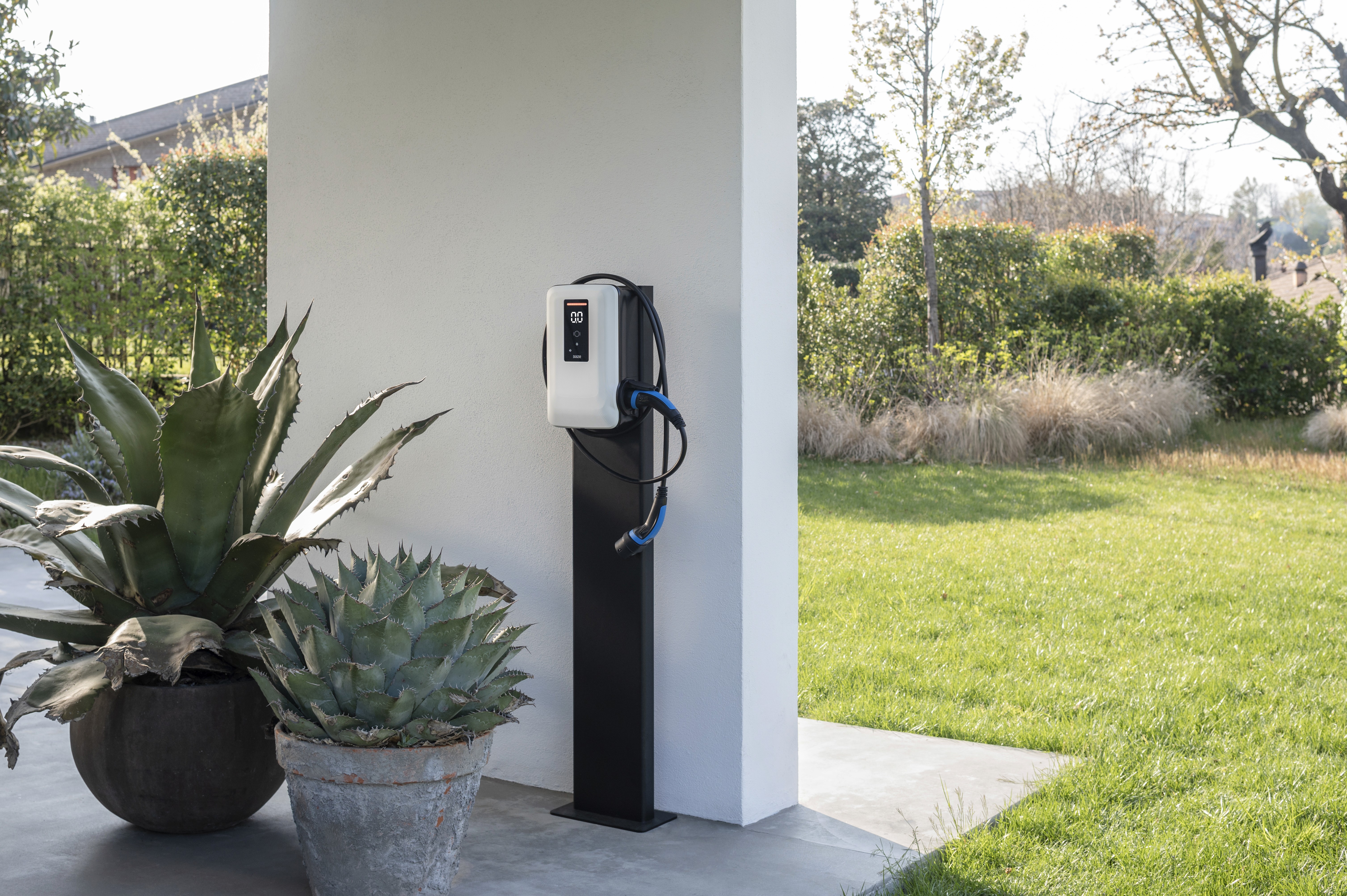
Understanding how much an electric vehicle charging station costs is one of the first steps for anyone considering a charging solution for their home, business, or a public-facing facility. It is a practical, understandable, and increasingly relevant question. After all, with the growth of electric mobility, charging is no longer just a technical matter: it is a choice that involves convenience, energy management, and long-term planning.
The answer, however, cannot be reduced to a single fixed number. The final price of a charging station depends on several factors: power output, available features, product quality, installation complexity, and the context in which it will be used. A private home with a single vehicle has very different needs from a hotel, a corporate parking area, or a site that must manage multiple users.
For this reason, when evaluating the cost, it is worth considering the entire project and not just the device itself. In this guide, we take a closer look at the main cost items, what really affects the quote, which additional costs should be taken into account, and how to choose a charging solution that matches your needs.
Electric vehicle charging station price: how much does it cost on average?
When talking about the price of an electric vehicle charging station, it is important to start with one essential point: there is no single cost that applies to every situation. The market offers very different solutions designed for different use cases.
A basic home setup, for example, usually requires a lower investment than a station equipped with advanced smart features. Likewise, infrastructure designed for businesses or hospitality venues almost always involves more complex planning, with a higher overall cost.
The most important distinction, however, is another one: there is the price of the product, and there is the total cost of the solution. And it is the latter that truly matters.
Electric vehicle charging station price: cost of the device alone
The cost of the device itself varies based on several elements, including available power, the presence of smart features, the level of connectivity, and build quality.
A simpler solution designed for standard residential use may be more affordable. A station designed to offer consumption monitoring, dynamic power management, remote control, and integration with other energy systems will instead fall into a higher range.
The main factors that affect the price include:
charging power;
load management;
app connectivity;
integration with solar power;
access control features;
material durability and outdoor resistance.
In other words, two products that appear similar at first glance can offer very different levels of user experience, control, and reliability.
Wallbox and EV charging station installation cost
The installation cost of a wallbox or EV charging station is a key item, and it is often what makes the difference between a rough estimate and a realistic quote.
Installation may include a site survey, electrical connections, dedicated protections, inspection of the existing system, possible electrical panel upgrades, and the initial configuration of the station. If the setting is simple, the work is more straightforward. If there are technical constraints, long distances, or additional construction work involved, the cost increases.
That is why the product price alone is never enough to give the full picture.
Turnkey price for electric vehicle charging
The turnkey final price is the result of all the project components combined: hardware, installation, materials, configuration, and any necessary work on the electrical system.
Evaluating a charging station this way makes comparison much more meaningful. A solution that seems inexpensive at first may actually require major additional work. On the other hand, a more comprehensive option may prove more cost-effective in the medium term thanks to better integration and greater efficiency.
What does the cost of an EV charging station depend on?
To truly understand what the cost of an EV charging station depends on, you need to look beyond the price list. The price is the result of a series of technical and functional choices that define the real value of the solution.
Available power and charging speed
One of the first elements to consider is available power. Generally speaking, higher power allows faster charging times, but it may also require more structured infrastructure and therefore affect the overall cost.
This does not mean that the best choice is always the most powerful one. Much depends on usage habits. If the vehicle remains parked for many hours, a properly sized solution may be perfectly suitable even without aiming for the highest possible power.
The right choice, in short, is the one that fits your daily scenario.
Number of sockets and charging points to manage
The number of vehicles that need to be served has a direct impact on the project. A single charging point has very different requirements from infrastructure with multiple charging points, possibly intended for different users.
In a residential setting, one unit is often enough. In a business or hospitality setting, on the other hand, it may be necessary to manage access, charging priorities, power distribution, and consumption tracking. As complexity increases, so does the technological value of the solution.
Smart features, consumption monitoring, and energy management
Smart features are now among the most relevant elements in the evaluation of a charging station. It is no longer just about delivering energy, but about doing so intelligently, efficiently, and under control.
The most requested features include:
charging scheduling;
consumption monitoring;
dynamic load management;
app-based control;
user authorization;
communication with solar systems;
reporting and supervision.
These characteristics raise the level of the solution, but they also increase its practical value, especially for those who want more control over energy use and more advanced management.
Material quality, safety, and long-term durability
A charging station must operate reliably over time. That is why material quality, electrical safety, and resistance to wear have a major impact on price.
In the case of outdoor installations, durability becomes even more important. Rain, dust, temperature fluctuations, and frequent use require well-designed components and adequate protection. A carefully built solution may come with a higher initial cost, but it can also deliver more stable performance and longer service life.
Support, warranty, and manufacturer reliability
Service matters too. A good charging station is not made up of components alone, but also of technical support, updates, warranty coverage, and continuity over time.
When charging becomes part of everyday life or part of how a business operates, being able to rely on a dependable manufacturer makes a big difference. It is a less visible aspect, but a very important one in the overall quality of the investment.
Electrical system complexity and required work
Lastly, there is the issue of installation itself. The complexity of the electrical system and the characteristics of the site often influence the final cost more than expected.
Distance from the electrical panel, the presence of construction work, the need for cable ducts, brackets, technical passages, and line upgrades are all factors that can significantly change the final cost. That is why a technical site survey is almost always the most appropriate starting point.
How much does a home EV charging station cost?
In residential settings, the question is very common: how much does a home EV charging station cost? The answer depends mainly on the type of property, the available electrical system, and the desired level of features.
Cost of a home wallbox for a garage or private parking space
A home wallbox is often the most natural solution for those who want to charge their car in a garage or in their own parking space. The main advantage is obvious: it turns charging into a simple, tidy action that fits perfectly into everyday routines.
From a financial point of view, a residential setup is generally more affordable than professional or multi-user projects, especially if the existing electrical system is already suitable or only requires minor work.
Price of a smart home charging solution
The price of a smart solution is generally higher than that of a basic station, but the level of comfort and control is significantly better.
Scheduling charging, checking energy consumption, monitoring session status, and optimizing the energy available at home are all features that make daily use much easier. For those looking not just for an upgraded power outlet, but for a more conscious way to manage charging, a smart solution can represent an excellent balance.
When it makes sense to choose a charging station with load management
Load management is especially useful when the home already uses several energy-intensive devices or when you want to avoid exceeding the available power capacity.
In practice, the station adjusts charging based on the energy already being used by other appliances. This makes it possible to make better use of the available power and reduce the risk of overload.
It is an especially sensible choice in the presence of:
a heat pump;
an induction cooktop;
large household appliances;
energy consumption concentrated in the same time slots;
integration with solar generation.
Difference between an industrial socket, a wallbox, and a home charging station
Sometimes people oversimplify things and imagine that a reinforced power outlet can replace a proper charging solution. In reality, it is not the same thing.
A home charging station is designed to provide continuity of use, safety, power management, and often smart features as well. A power outlet, no matter how robust, is not designed to offer the same level of control and reliability.
For that reason, when charging becomes a stable part of everyday life, a dedicated solution is generally the stronger choice.
How much does an EV charging station cost for businesses, hotels and commercial activities?
In the business world, charging serves a broader function. It is not just about powering a vehicle, but about providing a service, organizing access, managing multiple users, and enhancing a space.
EV charging points for employees and company fleets
EV charging points for employees and fleets meet very specific operational needs. They can support company vehicles, help drive fleet electrification, or offer a concrete service to employees.
In these cases, the cost is affected by factors such as:
the number of users;
frequency of use;
the possibility of future expansion;
consumption monitoring;
the need for reporting or centralized management.
Charging stations for customers, guests and hospitality venues
For hotels, restaurants, retail businesses, and public-facing facilities, offering charging points can become a distinguishing part of the experience.
People who travel with electric vehicles are paying more and more attention to charging availability. Having a solution that is accessible, reliable, and well integrated into the space can help strengthen the attractiveness of the venue and convey an image consistent with innovation and sustainability.
Multi-user charging infrastructure with controlled access
When charging is intended for multiple people, a different logic comes into play. What is needed is multi-user infrastructure capable of managing access, distributing power, recording consumption, and simplifying service administration.
This is where the project stops being purely technical and also becomes organizational. As a result, both the level of complexity and the value of the solution increase.
Why prices increase in business and professional projects
In professional contexts, the price rises because the requirements rise as well. It is not only about having more charging points, but also about management software, user authentication, scalability, and more structured electrical design.
At the same time, however, the potential return also increases in terms of service, efficiency, and brand image. In many cases, charging becomes an integral part of the overall quality of the experience being offered.
EV charging station installation cost: what it includes
One of the most useful evaluations concerns the installation cost of an EV charging station. This is where a decisive part of the project takes shape.
Technical site survey and system design
Every well-executed installation starts with a technical assessment. The site survey makes it possible to verify the most suitable location, system compatibility, power availability, and any site-specific issues.
This is an important phase because it helps avoid improvised solutions and makes it possible to set up the work more accurately.
Cabling, connections and electrical protection
Installation includes cabling, connections, dedicated protections, and securing the entire system. Even if these activities often remain behind the scenes, they are the core of reliable charging.
A well-installed station is not only safer: it is also more stable, more efficient, and easier to use over time.
Electrical panel upgrade and increased power capacity
In some cases, the existing electrical panel is already sufficient. In others, a technical upgrade or a revision of the electrical line may be necessary. Sometimes the available power must also be assessed, especially if the home or business already has other major loads.
These interventions can affect the quote, but they are often essential to ensure proper operation.
Construction work, cable ducts, brackets and preparatory work
The visible part of the work is only part of the project. If the location of the station requires cable ducts, brackets, technical passages, small excavations, or construction work, installation costs increase.
These are details that do not appear on a product sheet, but they weigh heavily on the final result.
Software setup, testing and commissioning
After physical installation comes the activation phase. Platform connection, parameter configuration, functional testing, and commissioning are all part of bringing the system into service.
This is the moment when the system truly shifts from “installed” to “ready to use.” And this too contributes to the overall value of the solution.
Additional EV charging station costs to consider before purchase
In addition to the product and installation, there are also additional costs that are worth assessing in advance.
Meter capacity and energy consumption
If the available power is not adequate for the charging needs, it may be necessary to intervene on the electrical setup or on the energy contract.
On top of that, there is the issue of consumption: the cost of the infrastructure and the cost of the energy are two separate aspects, but both are important for a complete evaluation.
Routine maintenance, technical support, and updates
A good charging station generally requires little maintenance, but it is not completely free from ongoing needs. Support, technical checks, and software updates can have an impact, especially in professional settings.
Taking them into account from the start helps create a more realistic view of the project.
Management software, connectivity, and access control
In business or multi-user settings, management platforms, cloud services, access control, and monitoring tools may come into play.
These elements add value because they allow more precise and more efficient management, but they should be included in the financial assessment.
Future expansion of the charging infrastructure
A very useful question is this: is the chosen solution ready to grow? Today, one charging point may be enough, but tomorrow needs may change.
Designing with a minimum level of foresight helps avoid more costly interventions later and makes the investment more solid over time.
Integration with solar power and consumption optimization
Integration with solar power is one of the most interesting aspects for those looking to improve overall energy efficiency. A station capable of communicating with local generation allows better use of available energy and optimized charging.
For many homes and many businesses, this is a particularly promising direction.
How much does it cost to charge an electric car at home with a private charging station?
Alongside the cost of the infrastructure, there is another equally important question: how much does it cost to charge an electric car at home?
Difference between the cost of the charging station and the cost of charging
It is essential to distinguish between the initial investment required to buy and install the station and the operating cost of charging over time.
The first is linked to the project. The second depends on the energy consumed. These are two different levels, and they should be considered separately to avoid confusion.
How much does the price of electricity affect home charging?
The cost of home charging depends mainly on the electricity tariff applied, the amount of energy needed, and the way charging is managed.
This is also why scheduling and control functions can have a positive impact on overall efficiency.
Battery, electricity tariff, and time slots: what really changes?
Several factors contribute to the real cost:
battery capacity;
initial state of charge;
the applied tariff;
the time slot;
charging efficiency;
available power.
Knowing these factors helps interpret the expense more accurately and manage charging more consciously.
How to reduce costs with smart charging and solar power
Those who want to optimize costs over time can act on several levers: scheduling charging during the most convenient time slots, using self-produced energy, monitoring consumption, and adjusting power dynamically.
There is no need to overcomplicate the system: often, it is enough to choose a solution that adapts well to real habits.
Is it worth installing an EV charging station?
At this point, the question arises naturally: is it worth installing an EV charging station? In most cases, yes, provided that the choice is proportionate to the intended use.
Benefits of home charging for private users
For private users, the benefits are mainly practical: convenience, simplicity, greater control, and much smoother daily charging management.
Having a dedicated charging point at home makes electric mobility feel more natural, more accessible, and more in step with everyday routines.
Benefits for businesses, hospitality, and commercial parking areas
For companies and public-facing facilities, charging can become a high-value service. It can improve the experience of employees, customers, and guests, while also strengthening the positioning of the venue.
In many cases, it is not just a technical feature: it is a choice that communicates care, innovation, and the ability to anticipate needs.
Savings, convenience, and better consumption control in the medium term
The real benefit often becomes clear in the medium term. A well-designed solution helps organize charging more effectively, optimize available energy, and build a foundation that is ready for the future.
In this sense, the station is not just an upfront cost, but part of a more advanced energy system.
Incentives and grants for wallboxes and EV charging stations
The topic of incentives and grants is naturally very important when evaluating the investment.
Tax relief and incentives for installing a wallbox at home
For private users, any support measures can help reduce the purchase and installation cost. However, conditions change over time and may depend on specific requirements.
That is why it is always wise to verify the current situation before making a decision.
Incentives for businesses and public-facing facilities
Businesses and hospitality venues may also, in some cases, benefit from calls for funding or grants related to innovation, energy efficiency, and sustainable mobility.
The presence of incentives can make the project even more attractive, especially when it is part of a long-term strategy.
How to check grants and incentives for electric mobility
The most useful advice is to rely on up-to-date sources and always verify the conditions in force at the time of purchase. Measures change, are updated, are sometimes renewed, and sometimes discontinued.
How to choose the best EV charging station based on your budget
Choosing well does not mean looking for the cheapest possible solution, but for the one that best suits your context.
Affordable solutions for those looking for the most accessible price
Those with a more limited budget can look toward an essential solution, provided it is reliable and properly sized. Simplicity is not a problem if it genuinely matches real needs.
Smart wallboxes for the best balance between cost and features
For many users, smart wallboxes represent the best balance point. They offer a good level of control, more efficient charging management, and features that improve the daily experience without requiring overly complex infrastructure.
More advanced charging stations for those looking for a future-ready solution
Those who are planning ahead may prefer a more advanced solution, designed to grow over time, interact with other energy systems, and manage more complex use cases.
This is an especially sensible choice when an increase in the number of vehicles or a higher level of complexity is expected.
Useful questions to ask before buying an EV charging station
Before deciding, it is worth clarifying a few points:
how many vehicles need to be charged;
where the station will be installed;
how much power is available;
which features are truly useful;
whether integration with other systems matters;
whether the solution will need to expand in the future.
These questions help turn a technical choice into a truly informed decision.
Mistakes to avoid when evaluating the price of an EV charging station
There are some very common mistakes that can distort the perception of the real cost.
Considering only the cost of the wallbox and not the installation
The first mistake is stopping at the product price. Installation is part of the project and often determines a significant share of its value.
Underestimating the electrical system and available power
Ignoring the condition of the existing electrical system can lead to unrealistic estimates and unexpected interventions.
Choosing a charging station that does not match real usage
A solution that is undersized or overly complex compared to actual needs risks being inefficient.
Ignoring scalability, software, and future management
Thinking only about current needs, especially in professional settings, can limit the system’s future potential.
Overlooking safety, certifications, and after-sales support
Quality is also measured by what is not immediately visible: safety, support, reliability, and continuity of service.
FAQ on the cost of wallboxes and EV charging stations
How much does a wallbox for home use cost?
It depends on power, available features, product quality, and installation complexity. A basic solution has different requirements from a smart wallbox with advanced energy management.
How much does it cost to install an EV charging point at home?
The cost varies depending on the distance from the electrical panel, whether upgrades are needed, and whether additional work is required.
What is the difference between a wallbox and an EV charging station?
A wallbox is often associated with domestic or semi-professional use, while an EV charging station may also refer to more structured, multi-user, or feature-rich solutions.
How much does it cost to charge an electric car with a household electricity tariff?
It depends on the electricity tariff, battery capacity, and the amount of energy required for charging.
Are there incentives for buying an EV charging station?
There may be grants or incentives, but it is always necessary to check which measures are active at the time of purchase.
Does a smart charging station consume more?
No. In many cases, it actually enables more efficient management thanks to scheduling, monitoring, and power control.
Can a wallbox be connected to solar power?
Yes, in many cases charging can be integrated with a solar system to optimize the use of available energy.
How much does installation affect the final price?
It can have a significant impact, especially when electrical work or additional construction is required.
How much does an electric vehicle charging station really cost? Final thoughts
So, how much does an electric vehicle charging station really cost? Ultimately, it depends on the solution chosen, the characteristics of the site, the required level of features, and the approach taken to the project.
Reducing everything to the price of the device alone is a mistake. To properly evaluate a charging solution, you also need to consider installation, the electrical system, energy management, additional costs, and the potential for future expansion.
The good news is that there are now solutions suited to very different contexts, from private users who want to simplify daily charging to businesses aiming to build scalable and well-integrated infrastructure. The best choice is neither the cheapest nor the most complex one: it is the one that best matches real use.
When a project is well designed, a charging station is not just an upfront expense. It becomes a tool for convenience, efficiency, and control. And in a context where electric mobility is playing an increasingly central role, starting with the right solution really does make a difference.
Purchase your EV Charger
Our expert will contact you to offer you the most suitable solution for you.