May 27, 2026
How to choose a solar panel installer: a practical method for evaluating the right offer
A practical guide to understanding which photovoltaic proposal is truly suited to your home, without choosing only based on price or the most convincing promise.
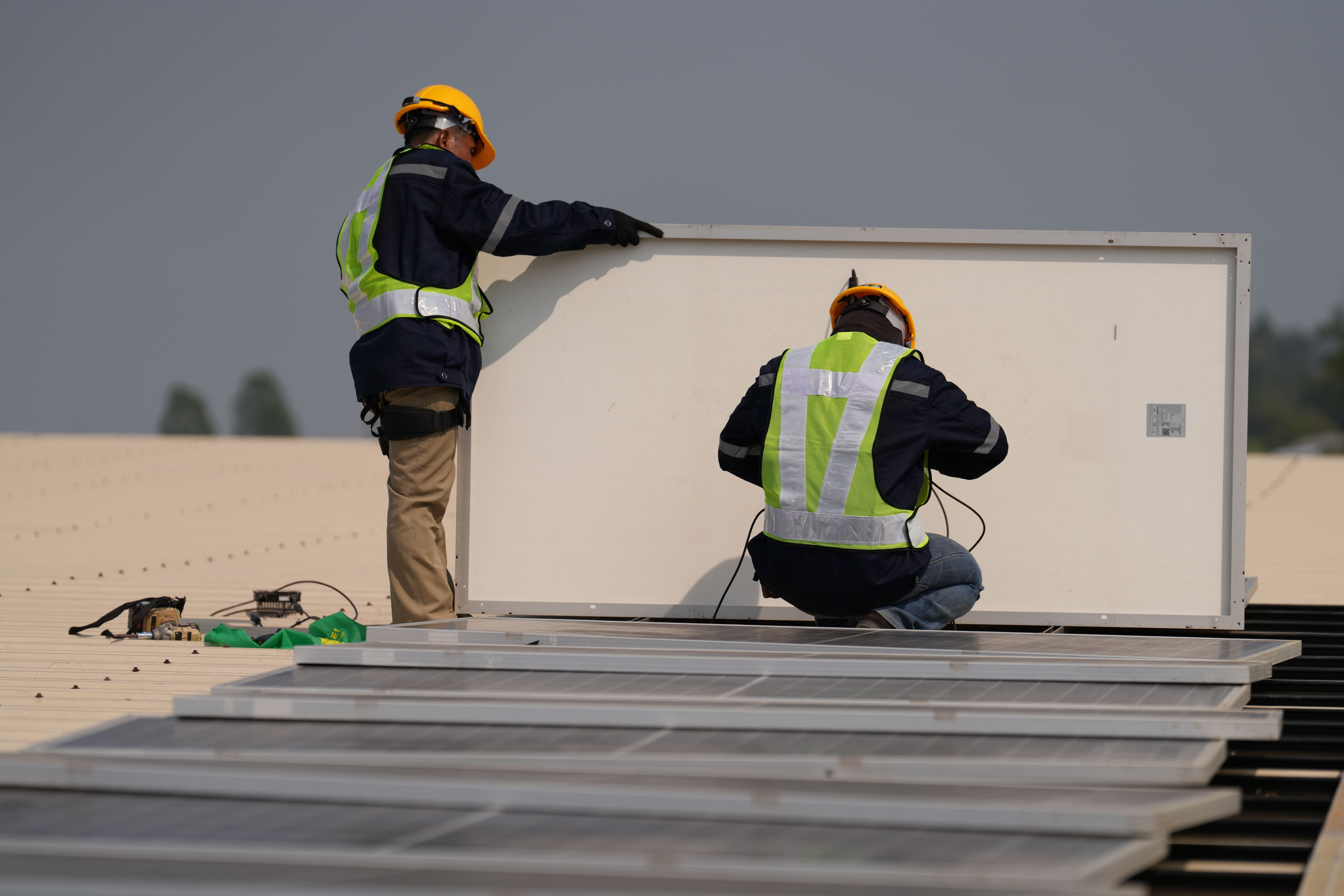
Understanding how to choose a solar panel installer is essential if you want to turn photovoltaics into a truly useful investment. It is not just about finding someone who can install the panels on your roof, but about identifying the professional or company able to propose a solution that is consistent with your consumption, your home and your future goals.
The point is simple: two installers can start from the same roof and arrive at very different proposals. One may suggest a more compact system designed to maximize self-consumption. Another may propose higher power, a larger battery or a more advanced configuration. Another still may focus entirely on price, making the offer seem more convenient at first glance.
But what is really the right choice?
The answer is not always “the one that costs less”, nor is it “the one with more components”. The best choice is the one that makes the most sense for your specific case. To understand this, you need a practical method: collect the right data, compare comparable proposals and evaluate how the installer reasons before even looking at the final price.
In this guide, we will see how to choose a solar panel installer with greater awareness, avoiding rushed decisions and focusing on what really matters.
Why it is not enough to look for a “reliable” installer
Of course, reliability is important. No one wants to entrust their photovoltaic system to an improvised professional. However, when you need to choose between several offers, the idea of a “reliable installer” can be too generic.
The real point is another one: which installer is best suited to your project?
A company may be serious, have good reviews and use good components, but still propose a solution that is not perfectly aligned with your consumption. Another may have an interesting price, but fail to clearly explain what happens after installation. Another still may present a very complete proposal, but perhaps more complex than you actually need.
That is why the choice should not be based on a single question, such as “is it reliable?” or “how much does it cost?”. It should be based on a broader evaluation:
has the installer understood my consumption?
has the installer explained why they are proposing that solution?
is the quote comparable with the others?
is the battery, if included, really useful?
is after-installation support clear?
is the price consistent with the value of the offer?
When you start thinking this way, the comparison becomes much clearer.
Before asking for a quote: clarify what you want to achieve
Many people start their search by immediately asking: “How much does it cost to install solar panels?”. This is understandable, but it is not always the best starting point.
Before talking about price, it is worth clarifying the goal of the system. Do you want to reduce your energy bill? Do you want to increase self-consumption? Do you want to prepare for a future electric car? Do you want to integrate a heat pump? Do you also want to install a battery, or would you rather start with a simpler system?
These answers change the type of proposal.
A system designed for a family that is often away from home during the day will be different from one designed for someone who works remotely. A home with high evening consumption may benefit more from a battery. A home with consumption concentrated during solar production hours may achieve good results even without storage.
The clearer you are about the result you want to achieve, the easier it will be to understand whether the installer is working on your real case or proposing a standard solution.
The data to prepare for more accurate offers
You do not need to approach the installer with a technical dossier. However, some data can be very helpful.
Before requesting quotes, it is useful to have the following available:
annual consumption in kWh;
recent energy bills;
meter power;
any expected future consumption;
presence of a heat pump, air conditioning or induction hob;
possible interest in an electric car and wallbox;
basic information about the roof;
presence of obvious shading;
preference between a system with or without a battery.
This data allows the installer to build a more realistic proposal. It also allows you to recognize who works carefully.
If an installer does not ask anything about your consumption and immediately proposes a system size, the risk is that they are working with an overly generic approach. This does not necessarily mean the proposal is wrong, but it does deserve further investigation.
The practical method for choosing a solar panel installer
To avoid confusion, you can follow a seven-step process. It is a simple method, but very useful for comparing different installers without being guided only by price.
1. Evaluate how the installer analyzes your energy profile
The first signal to observe is how the installer collects information.
A careful professional does not start immediately from the number of panels. First, they try to understand how much energy you consume, when you consume it and how your needs may change in the coming years.
The key question is: does the proposal come from your data or from a pre-packaged solution?
A good installer should connect the system’s power to your annual consumption, but also to your hourly profile. In fact, it is not only how much energy you use overall that matters: it also matters when you use it.
If you consume a lot during the day, you can directly use a larger share of the energy produced. If, on the other hand, you mainly consume in the evening, the battery may become more interesting. If you expect new electrical loads, the system may need to be designed with greater flexibility.
This is the first point to evaluate: not the panel brand, not the discount, but the reasoning behind the proposal.
2. Check whether the proposal is truly personalized
A photovoltaic system should be designed around the home, not simply sold “as a package”.
A personalized proposal takes into account:
actual consumption;
available space;
roof orientation;
any shading;
daily habits;
future goals;
budget;
possible battery;
possible integration with a wallbox or heat pump.
Personalization does not mean making the system more complicated. Sometimes, on the contrary, it means avoiding unnecessary components.
For example, if a battery is not convenient in your case, a serious installer should explain this to you. If a smaller system is more balanced, they should justify it. If a more advanced configuration is needed because of shading or specific consumption patterns, they should clearly explain the technical reason.
A good proposal does not need to seem “big”. It needs to seem consistent.
3. Request comparable offers
One of the most common mistakes is comparing quotes that are not actually comparable.
If one offer includes the battery and another does not, comparing the final price makes little sense. If one includes paperwork, monitoring and support, while another only lists materials and installation, the comparison is also weak.
To choose well, try asking each installer for a similar structure:
system proposal without battery;
possible proposal with battery;
expected power;
estimated annual production;
main components listed with brand and model;
included services;
excluded costs;
warranties;
estimated timing;
support management.
The quotes do not need to be identical. In fact, it is normal for differences to emerge. But they must be clear enough to allow you to understand why one offer costs more or less than another.
4. Look at the method, not just the result
A quote should not be just a number. It should tell the story of a reasoning process.
An installer who works well can explain why they propose a certain power, why they suggest a specific inverter, why they recommend or do not recommend a battery, and which assumptions they use to estimate production.
These explanations are valuable because they allow you to distinguish a reasoned proposal from a purely commercial one.
Pay attention to offers that are too “closed”, where the customer is only expected to accept or reject without understanding. A good installer is not afraid of questions. In fact, they usually appreciate them, because they help build a more informed choice.
5. Assess whether the battery is proposed with a clear rationale
The storage battery is one of the elements that most affects the price of a photovoltaic system. That is why it should be evaluated carefully.
It is not true that it is always needed. Nor is it true that it is never needed. It depends on the consumption profile.
The battery can be useful if you produce energy during the day but mainly consume in the evening. In this case, part of the energy not used immediately can be stored and used later.
It may be less interesting if you already have high consumption during solar production hours, because you could already make good use of the system without storage.
The question to ask the installer is simple: why is this battery suitable for my case?
The answer should talk about evening consumption, self-consumption, capacity in kWh, available excess production and payback time. If, instead, the battery is proposed only because “this makes the system complete”, it is better to investigate further.
6. Clarify the real value of the price
Price is important, but it must be read in context.
A cheaper offer can be very valid if it is clear, complete and well-sized. But it can be risky if information is missing, if some services are excluded or if support is not defined.
In the same way, a higher offer may be justified by better components, longer warranties, more accurate design, more complex installation or included services. But you should not assume that a high price automatically means quality.
The right question is not only: “How much does it cost?”
It is: what am I getting for this price?
To answer this, check whether the offer clearly explains:
what is included;
what is excluded;
which components will be installed;
which warranties are provided;
who handles the paperwork;
who manages any problems;
which services remain active after installation.
If many of these answers are missing, the final price says very little.
7. Choose the most solid offer in the long term
The final choice should bring together three elements: technical consistency, economic clarity and service continuity.
A photovoltaic system is not a product you buy and forget. It is a system designed to work for many years. That is why it is worth choosing a proposal that is sustainable over time, not just attractive at the moment of signing.
The most solid offer is the one that leaves you with fewer doubts. Not because it is perfect, but because it is well explained. You know what you are buying, why it has been proposed, what happens after installation and who to contact if needed.
This peace of mind has real value.
How to understand whether an installer has really understood your needs
A good way to evaluate an installer is to observe the questions they ask you.
If they only ask when you want to install and how much you want to spend, the approach is limited. If, instead, they ask how you consume energy, what goals you have and how your home could change in the coming years, they are reasoning in a more complete way.
An installer who has truly understood your needs usually:
connects the proposal to your consumption;
explains why one system size is more suitable than another;
distinguishes between production and real savings;
evaluates self-consumption;
does not force the battery if it is not needed;
clarifies the limits of the system;
proposes alternatives when it makes sense.
This approach is reassuring because it shows that the proposal does not come only from a price list, but from an analysis.
How to evaluate the first contact
The first contact with the installer is already a small test.
You do not need to expect a complete consultation immediately, but you can observe some signs. Does the company respond clearly? Does it explain which data is needed? Does it outline a process? Does it give you time to evaluate?
A good first contact should convey order. Not necessarily formality, but clarity. You should understand what the next steps will be and what information will be needed to arrive at a serious proposal.
Pay attention, however, to excessive sales pressure. “Today only” offers, discounts presented as unrepeatable or promises of savings that are too absolute are not necessarily a scam, but they should encourage you to ask a few more questions.
Photovoltaics is an important choice. It deserves enthusiasm, yes, but also clarity.
How to select a few installers to compare
There is no need to ask ten companies for quotes. In fact, too many quotes can create confusion.
It is better to create a shortlist of two or three installers selected with clear criteria. To do this, you can consider:
experience with similar systems;
clarity of the first contact;
ability to explain the process;
presence of credible reviews;
willingness to assess consumption;
transparency on components and services;
post-installation support.
Another useful element is understanding who will physically carry out the work. Some companies use internal teams, others work with external technicians. This is not a problem in itself, but it must be clear who is responsible for the final result.
The choice should not depend only on geographical proximity. A local installer can be convenient, but competence remains the priority. It is better to choose a slightly more distant but organized company than a nearby one that is not very transparent.
How to read a technical proposal without being an expert
You do not need to know every technical detail to evaluate a proposal. However, you do need to know which questions to ask.
The first concerns the system’s power: is it proportionate to your consumption? Is it designed only for the current situation, or does it also consider possible future consumption?
The second concerns the inverter: is it suitable for the proposed configuration? Is it compatible with possible storage? Does it allow clear monitoring?
The third concerns the layout of the panels: does it take into account shading, orientation and available space?
The fourth concerns the battery: is it sized based on consumption or included as a standard option?
The fifth concerns monitoring: will you be able to see production, consumption and anomalies in a simple way?
These questions allow you to evaluate the logic of the project without going into overly technical aspects.
How to distinguish an economical offer from an incomplete offer
An economical offer can be a good opportunity. You should not automatically distrust competitive prices. The point is to understand whether the low price comes from efficiency, a promotion and good organization, or from omissions.
An offer may be incomplete when:
it does not specify the brand and model of the components;
it does not clarify the included services;
it does not indicate any excluded costs;
it does not explain the estimated production;
it does not define support;
it does not clarify who handles the paperwork;
it does not mention monitoring;
it does not report understandable warranties.
In these cases, you do not need to discard it immediately. Simply ask for clarification. The quality of the answer will say a lot.
How to evaluate support before signing
Support is one of the aspects people often understand too late. Instead, it should be assessed before signing.
The most important question is: who will support me after installation?
It is not enough to know that the components have a warranty. You need to understand who intervenes if the system reports an anomaly, if monitoring shows a drop in production or if you need support.
A good installer should explain:
how to open a support request;
who responds;
what the indicative response times are;
whether monitoring can be checked remotely;
whether periodic checks are planned;
which interventions are included and which are not.
This does not mean everything has to be free forever. It means that the way support works must be clear.
Local installer or structured company: how to decide
The choice between a local installer and a more structured company depends on the type of service you are looking for.
A local installer can offer a more direct relationship, greater proximity and good knowledge of the area. It can be an interesting choice if you want personal contact and an easily reachable point of reference.
A more structured company can offer organized processes, established partnerships, more operational teams and more formalized support. It can be useful for more complex projects or for those who prefer a very clearly defined process.
Neither option is automatically better. The right question is: who offers me more clarity, competence and continuity?
The size of the company matters less than the way it manages the project.
The most useful questions to ask before choosing
Before deciding, it is worth asking a few targeted questions. You do not need endless interrogations. A few good questions are enough.
Questions about the method
Which data did you use to build the proposal?
Did you analyze my consumption?
Did you consider future consumption?
Which alternatives did you evaluate?
Questions about the technical solution
Why are you proposing this power?
How did you estimate production?
Is the inverter compatible with future expansions?
Is the monitoring system included?
Is the battery really useful in my case?
Questions about the price
Is the price turnkey?
What is included?
What is excluded?
Could there be additional costs?
Is the paperwork included?
Questions about post-installation
Who do I contact in case of a problem?
Is support internal or external?
Are checks planned after activation?
Will monitoring also be followed by you?
What are the average response times?
The answers will help you understand not only what is being sold, but also how the company works.
Mistakes to avoid when choosing between multiple installers
The first mistake is choosing only based on price. Price matters, but on its own it does not tell you the quality of the project.
The second is being convinced by the richest proposal without asking whether you really need it. More components do not always mean greater convenience.
The third is trusting only the brand of the panels. Components are important, but design, installation, configuration and support also matter.
The fourth is accepting a battery without understanding how it will be used. Storage must be sized based on consumption, not included out of habit.
The fifth is not clarifying after-sales support. A photovoltaic system must work for years: knowing who will support you after installation is essential.
Frequently asked questions about how to choose a solar panel installer
How can I compare two installers if they propose different sy
stems?
You need to bring the comparison back to common elements: power, estimated production, components, possible battery, included services, warranties and support. If the proposals are very different, ask each installer to explain the reason behind their choices.
Is it better to choose the cheapest offer?
Not always. The cheapest offer can be valid if it is complete and clear. However, if specified components, included services or support are missing, the low price may become less convenient over time.
How do I know if the proposed power is correct?
The power should be connected to your actual consumption, available space and future goals. If the installer cannot explain why they are proposing that size, it is better to ask for further clarification.
Should the battery always be included in the quote?
No. The battery can be useful if you consume a lot of energy in the evening or want to increase self-consumption, but it is not always essential. It must be evaluated based on the consumption profile.
Does the panel brand or the quality of the installer matter more?
Both matter, but the panel brand alone is not enough. Even good components can perform less effectively if the system is poorly designed or if support is lacking.
Is a local installer always the best choice?
Not necessarily. A local installer can offer proximity and a direct relationship, but must be competent and organized. A more structured company can also be valid if it guarantees quality and continuity.
When is it better to ask for a second opinion?
It is worth asking for a second opinion when the offers are very different, when the battery is proposed without explanation, when the price seems too low or when the reason behind the technical choices is not clear.
Choosing a solar panel installer means evaluating much more than a quote. It means understanding whether the proposal is based on real data, whether the system is consistent with consumption, whether the battery makes sense, whether the price is well explained and whether the company will also be present after installation.
The best installer is not necessarily the cheapest, the closest or the one that promises the most. It is the one that helps you decide clearly, building a solution suited to your home and sustainable over time.
A good photovoltaic system always starts with a good initial choice. And choosing with a method is the best way to invest with more confidence, more awareness and more peace of mind.
Purchase your EV Charger
Our expert will contact you to offer you the most suitable solution for you.