May 26, 2026
Installation times for a photovoltaic system: a clear guide to avoid surprises
From quote request to final activation: everything you need to know to understand how long it really takes to install a photovoltaic system.
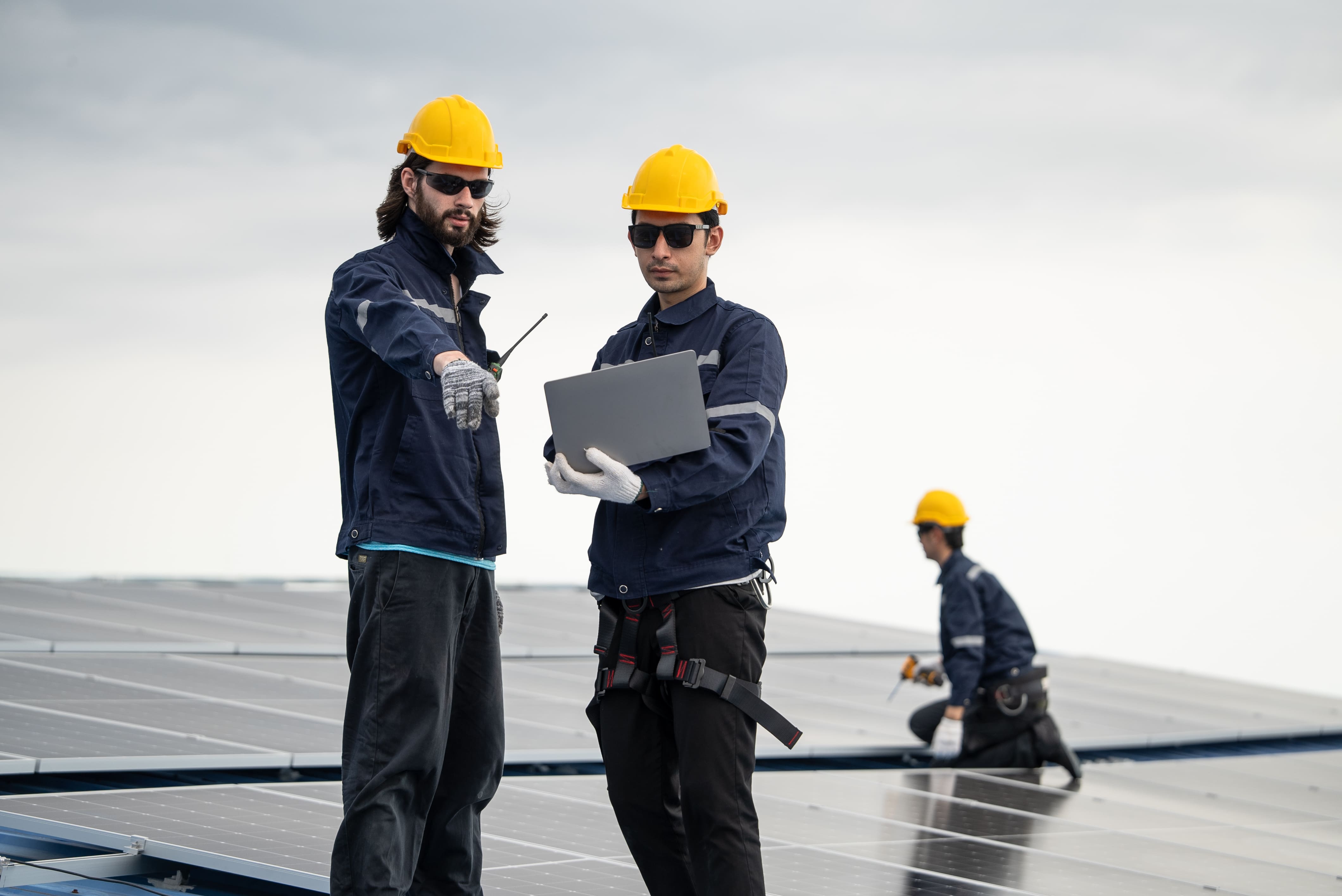
Installing a photovoltaic system is an increasingly common choice for families, apartment buildings and businesses that want to reduce electricity bills, increase energy independence and add value to their property. However, one of the most common questions before getting started is simple: how long does it really take?
When talking about the installation times of a photovoltaic system, it is important to clarify one thing straight away: the physical installation of the panels is often the fastest part. In many cases, for a home, the worksite may last only a few days. The full process, however, also includes the quote, site survey, design, paperwork, material availability, testing and connection to the electricity grid.
In other words, you should not only look at the day the installers arrive on the roof. You need to consider the entire process, from the initial idea to a fully active and monitorable system.
How long does it take to install a photovoltaic system?
On average, a simple residential photovoltaic system can take from a few weeks to a few months to become fully operational. The duration depends on the type of building, the system size, whether a storage battery is included, the condition of the roof and the time required for administrative procedures.
The good news is that, once the preliminary phase is complete, the actual installation is generally quick. For a single-family home, installing the photovoltaic panels, inverter and other components can often take one, two or three working days, unless unexpected issues arise.
Physical installation and full process: two different timelines
To avoid misunderstandings, it is useful to distinguish between two concepts:
Physical installation of the system: this refers to the work carried out on site. It includes mounting the structures, installing the panels, completing the electrical connections, installing the inverter and connecting the battery, where included.
Full photovoltaic system process: this includes the entire journey, from quote request to final activation. This is where the site survey, design, permits, procedures with the distributor, material orders, testing and grid connection come into play.
It is this second part that has the greatest impact on the overall timeline. In fact, the worksite may last only two days, while the full process may take several weeks.
Average times for a residential photovoltaic system
For a residential photovoltaic system without particular complications, the indicative timings may be as follows:
initial analysis and quote: a few days;
technical site survey: from a few days to one or two weeks;
design and paperwork: from two to four weeks, depending on the case;
physical installation: from one to three days;
testing and activation: from a few days to several weeks, especially if the intervention of the distributor is required.
These values are indicative, but they help build a realistic picture. A very simple system can move forward quickly. A system with restrictions, a battery, a complex roof or higher power output may take longer.
Why timelines change from one project to another
No two photovoltaic systems are exactly the same. Even two houses that look similar can have different timelines.
The main reasons are:
roof orientation and pitch;
presence of shading;
accessibility of the roof;
condition of the electrical panel;
system power output;
presence of a storage battery;
availability of panels, inverters and components;
possible municipal, landscape or condominium restrictions;
response times from the electricity distributor.
That is why a good installer should not promise the same timing for everyone. A reliable estimate can only be given after assessing the property, consumption levels and actual technical conditions.
The phases that determine installation times
To better understand how long it takes to install a photovoltaic system, it is useful to look at the individual phases of the process. Each one has a different weight and can influence the final schedule.
Quote, consumption analysis and technical site survey
The first step is collecting information. The installer or energy consultant analyses bills, annual consumption, the habits of the family or business and the customer’s goals.
At this stage, for example, the installer assesses whether the system should cover only part of consumption, whether it is worth adding a battery, or whether a heat pump or electric vehicle charging station is planned in the future.
After the initial analysis, the technical site survey takes place. This step is essential because it makes it possible to check:
the condition of the roof;
sun exposure;
any shaded areas;
spaces for the inverter and battery;
the electrical panel;
cable routes;
accessibility for installers.
An accurate site survey prevents many surprises. It is better to spend some time on this phase than to discover unexpected issues once the worksite has already started.
System design and component selection
After the site survey, the design phase begins. This is where the photovoltaic system configuration is defined: number of panels, total power, type of inverter, possible storage system and connection layout.
Design is not only a technical matter. It is the moment when the right balance is sought between investment, expected production, self-consumption and available space.
For example, a family that consumes a lot of energy in the evening may benefit from a battery. A business with consumption concentrated during the day may instead focus mainly on direct self-consumption.
The choice of components can also affect timelines. If panels, inverters or batteries are available, the project can move forward quickly. If, on the other hand, specific products with long delivery times are selected, the schedule may be extended.
Paperwork, permits and connection request
The bureaucratic part is often the one that raises the most questions. In many cases, installing photovoltaic panels on an existing building is a relatively straightforward intervention, but this is not always the case.
Communications to the municipality, checks on any landscape or architectural restrictions, procedures with the electricity distributor and documents for managing energy fed into the grid may be required.
This phase can be short if the property has no critical issues. It may take longer if the home is located in a restricted area, in a historic centre, in a complex condominium, or if the project involves high power output.
One aspect that should not be underestimated is the request for connection to the electricity grid. Even if the system has already been installed, full operation may depend on the distributor’s technical timelines.
Material order and worksite planning
Once the project has been defined and the paperwork has started, the installer proceeds with ordering the materials and planning the worksite.
The main components are:
photovoltaic modules;
inverter;
possible storage battery;
mounting structures;
cables;
electrical protection devices;
panels and accessories;
monitoring systems.
Material availability is important. A delay in the delivery of the inverter or battery can shift the installation date. That is why it is advisable to define the project clearly from the beginning, avoiding continuous changes.
The availability of technical teams also matters. During periods of high demand, such as spring and summer, installers may have very full schedules. Planning ahead is always a wise choice.
Installation of panels, inverter and battery
The worksite is the most visible phase. Installers prepare the work area, secure the roof, install the support structures and fix the photovoltaic modules.
Then comes the electrical part: connecting the strings, installing the inverter, connecting the system to the electrical panel and, where planned, connecting the storage battery.
For a standard home, this phase is generally short. Under favourable conditions, it can be completed in a few days. Timelines increase if the roof is difficult to access, if special scaffolding is needed, if the system is very large, or if electrical upgrades are required.
Testing, grid connection and final activation
After installation, the system is tested. The technician checks that the connections are correct, that the inverter works, that the protection devices are adequate and that the system produces energy as expected.
The monitoring system is also configured, often through an app or online portal, so the customer can check production, consumption and self-consumption.
At this point, the system may be technically ready, but full activation also depends on the connection procedures and any interventions on the meter. This is where there may be a difference between an “installed system” and a “fully operational system”.
Average times based on the type of photovoltaic system
Timelines vary greatly depending on the type of system. A small residential roof system is very different from an industrial system or a ground-mounted system.
Residential system without storage
This is often the simplest and fastest case. A residential photovoltaic system without a battery has fewer components, requires a more straightforward design and usually involves a quick worksite.
If the roof is in good condition and there are no particular restrictions, the physical installation can be completed in a few days. The full process, however, must still include paperwork, testing and connection.
This solution is suitable for those who consume a lot of energy during the day and want to immediately reduce electricity drawn from the grid.
Photovoltaic system with battery
A system with storage requires a little more attention. The battery must be correctly sized, placed in a suitable space and configured with the inverter and electrical panel.
Installation times may increase slightly, but if the battery is planned from the beginning, the impact is often limited. The advantage is that the energy produced during the day can also be used in the evening or during hours when sunlight is not available.
This solution is particularly interesting for families that consume energy mainly early in the morning and after sunset.
Condominium system
A condominium introduces an additional element: the decision-making phase. Before installation even begins, it may be necessary to clarify the use of the roof, the available spaces, the type of system and the involvement of the assembly.
A system may be private, installed to serve a single unit, or shared, intended for the condominium’s common energy needs. Timelines depend greatly on cooperation between owners, the property manager and the installer.
In these cases, the worksite is not necessarily long, but the preliminary phase may take more time.
Business or industrial system
Business photovoltaic systems are often larger and more complex. They must be sized based on the company’s actual consumption, available power, working hours and economic goals.
On an industrial building, for example, it is necessary to assess the roof structure, operator safety, access points, lifelines and the compatibility of the existing electrical system.
Installation may take from a few days to several weeks, depending on the power output and site conditions. Connection procedures may also be more complex than for a residential system.
Ground-mounted system
A ground-mounted photovoltaic system is generally more demanding from an authorisation point of view. In addition to technical design, urban planning, environmental and landscape checks may be required.
Timelines depend on the size of the system, the intended use of the land, the distance from the connection point and the authorities involved.
For this reason, a ground-mounted system normally requires longer planning than a roof-mounted system.
What can extend installation times?
Even a well-organised project can encounter obstacles. Some are predictable, while others emerge only after the site survey or during the technical phase.
Unsuitable or difficult-to-access roof
The roof is one of the most important elements. If the covering is old, fragile, damaged or unsafe, work may be required before installation.
The most common issues include:
damaged roof tiles;
leaks;
structures that need reinforcement;
presence of asbestos;
difficult access;
steep slopes;
insufficient space.
In these cases, it is better to solve the problem before installing the panels. Installing a system on an unsuitable roof can lead to future costs and complications.
Electrical panel to be upgraded
The existing electrical system is not always ready to accommodate a photovoltaic system. The panel may be outdated, undersized or unsuitable for the needs of the new system.
An electrical upgrade may include replacing components, installing new protection devices, running cables or reorganising the panel.
These are normal interventions, but they must be considered during planning. It is better to know in advance than to discover everything on the installation day.
Landscape, condominium or municipal restrictions
Some properties are located in areas subject to restrictions. These may include historic centres, landscape areas, protected buildings or contexts with specific regulations.
A condominium can also introduce additional timing, especially if the use of the shared roof must be discussed or multiple parties need to be coordinated.
In these cases, the issue is not so much the installation of the panels, but obtaining the necessary authorisations. A preliminary check helps avoid blocks and postponements.
Delays in connection to the electricity grid
Connection to the grid is a crucial phase. After installation, it may be necessary to wait for the distributor to configure or replace the meter and complete the technical procedures.
This step does not depend entirely on the installer. Even a well-organised company must respect the timing of the external parties involved.
For the customer, this is one of the most important aspects to understand: the system may be installed and tested, but full operation may still require a few further steps.
Unavailable materials or changes to the project
Another cause of delay is component availability. Specific inverters, batteries or panels may have variable delivery times.
Last-minute changes can also slow down the process. For example, adding a battery after the project has already been defined may require new technical checks, new materials and a rescheduling of the worksite.
The rule is simple: the clearer the project is from the beginning, the easier it is to respect the timeline.
How to speed up the installation of a photovoltaic system
Not everything depends on the customer, but several actions can make the process smoother. Small steps at the beginning can prevent major delays.
Prepare documents, bills and property data
Having documents ready speeds up the analysis and design phase. In general, the following may be useful:
recent electricity bill;
POD code;
cadastral data;
floor plans, if available;
photos of the roof;
photos of the electrical panel;
information on consumption and energy habits;
any condominium documents.
The more information is available at the beginning, the more accurate the quote will be and the more smoothly the project can proceed without constant data exchanges.
Carry out an accurate site survey before the works
The site survey should not be treated as a formality. It is one of the most important moments in the entire process.
During this visit, access problems, technical constraints, limited spaces, shading or the need for electrical upgrades can be identified.
A well-executed site survey reduces unexpected issues and makes it possible to build a realistic schedule. In short, it is time well spent.
Define power output, battery and components straight away
Changing your mind is normal, but in photovoltaics every change can have consequences for the project. Increasing power output, adding a battery, changing inverter or moving components can require new assessments.
To speed up installation, it is useful to clarify immediately:
how much energy you want to produce;
whether a battery is needed;
whether an electric vehicle is planned;
where to place the inverter and storage system;
which components to use;
which economic goals you want to achieve.
A well-informed choice at the beginning reduces the risk of second thoughts and delays.
Choose an installer that also manages the paperwork
An experienced installer does not simply install panels. They coordinate design, documents, procedures, material supply, worksite, testing and post-installation support.
Having a single point of contact greatly simplifies the process. The customer does not have to chase different technicians, designers, authorities and suppliers. Everything becomes more organised.
Of course, it is important to check in advance what is included in the service: municipal paperwork, connection request, final documentation, monitoring configuration and support after activation.
When does the system start producing energy?
One of the most common questions is: “After installation, can I use the energy produced straight away?”
The answer depends on the system status and the connection procedures. Technically, the system may be ready immediately after testing. However, full operation may require completion of the grid connection and the required procedures.
Technical start-up after testing
After installation, the technician checks that the system is working correctly. If everything is in order, the inverter, panels and monitoring system are configured.
This phase makes it possible to check that the system produces correctly and that there are no issues with the connections or electrical parameters.
It is an essential step because it ensures the safety, efficiency and compliance of the installation.
Difference between an installed system and a connected system
An installed system is a system that has been physically mounted: the panels are on the roof, the inverter is connected and the components are ready.
A connected system, on the other hand, is a system that has also completed the process with the electricity grid. This means it can correctly manage self-consumption and any feed-in of excess energy.
This distinction is fundamental. Many incorrect expectations arise precisely from confusing the completion of the works with full activation.
Self-consumption, grid feed-in and monitoring
When the system is operational, the energy produced can be used directly at home or in the business. If a battery is present, part of the energy can be stored for later use.
Unused energy can be fed into the grid according to the terms of the contract and the activated procedures.
Monitoring allows users to see how much energy is produced, how much is consumed and how much is drawn from the grid. It is a useful tool because it makes the benefits of the system visible day after day.
Example timeline for a residential photovoltaic system
To make everything more concrete, let us imagine a standard residential photovoltaic system installed on a house with a suitable roof, no particular restrictions and available materials.
Week 1: quote and preliminary analysis
The customer sends the electricity bill, provides some information about the home and indicates their goals. The installer analyses consumption and prepares a first proposal.
At this stage, it is clarified whether the system will be without storage, with a battery or prepared for future expansions.
Week 2: site survey and project
The technical site survey is carried out. The roof, exposure, shading, electrical panel and available spaces are checked.
After the site survey, the project is confirmed or modified based on the actual conditions of the property. This is the right moment to define the system power, inverter position and possible storage system.
Weeks 3-4: paperwork and materials
The installer prepares the technical documentation, starts the necessary procedures and orders the materials.
If there are no restrictions or special requests, this phase can move forward quite quickly. However, any authorisations, requests for additional information or distributor timelines may affect the schedule.
Weeks 5-6: installation and testing
The technical team arrives on site. The mounting structures are installed, the panels are laid, the inverter is installed and the system is connected to the electrical panel.
If a battery is included, it is installed and configured. At the end, the technician carries out the testing and activates the monitoring system.
Following weeks: connection and activation
After testing, the final steps for connection and definitive activation are completed. In some cases, it may be necessary to wait for the distributor’s intervention or the completion of technical procedures.
Only at this point can the system be considered fully operational.
Of course, this is an indicative example. In very simple cases, times may be shorter; in complex cases, they may be longer.
Frequently asked questions about photovoltaic installation times
How long does it take to install photovoltaic panels?
For a simple residential system, panel installation generally takes from one to three days. The duration depends on the number of modules, roof accessibility and the complexity of the connections.
How long does the full process take until activation?
The entire process, from quote to final activation, can take from a few weeks to a few months. Timelines vary depending on paperwork, materials, site survey, testing and grid connection.
Can a photovoltaic system be installed in one day?
In some very simple cases, the physical installation can be completed in one day. However, this does not mean that the entire process is completed on the same day. Design, paperwork, testing and activation still remain.
Does a storage battery extend the timeline?
Yes, it can add a few technical steps, but if it is planned from the beginning, it does not necessarily cause major delays. The battery requires adequate space, correct connections and system configuration.
How much do bureaucratic procedures affect timing?
They can have a major impact, especially in the presence of landscape restrictions, historic buildings, condominiums or high-power systems. In simpler cases, however, the process can be more streamlined.
What should you do if the roof is not immediately suitable?
If the roof has issues, it is advisable to solve them before installation. It may be necessary to repair the covering, reinforce the structure, remove unsuitable materials or improve accessibility.
Who manages the paperwork for the photovoltaic system?
Usually, the paperwork is managed by the installer or service provider, but it is always best to check this before signing the contract. A complete service greatly simplifies the process.
When can production be seen on the app?
After testing and monitoring configuration, the customer can usually view production through an app or portal. In some cases, some complete functions depend on the final activation of the system.
How to estimate the real timing of your system
The installation times of a photovoltaic system depend on many factors, but the key concept is simple: the worksite is only one part of the process. Panel installation is often quick; what requires more attention is design, paperwork, materials, testing and grid connection.
For a simple residential system, the physical installation may take only a few days, while the full process may last several weeks. For systems with storage, condominiums, businesses or situations with restrictions, timelines may be longer.
The best choice is to start with a personalised technical assessment. Every roof, every home and every consumption profile has different characteristics. An accurate site survey and a well-defined project make it possible to estimate realistic timelines, avoid surprises and reach system activation with greater peace of mind.
Installing a photovoltaic system requires organisation, of course. But with the right support, the process is simpler than it may seem. And once active, the system starts working every day to reduce consumption, increase energy independence and make the home or business more efficient.
Purchase your EV Charger
Our expert will contact you to offer you the most suitable solution for you.