Jun 15, 2026
Photovoltaic 6 kW: is it worth it? The smart choice to save money
A practical guide to understand whether a 6 kW photovoltaic system is truly suitable for your energy consumption, avoiding oversizing and poor-value choices.
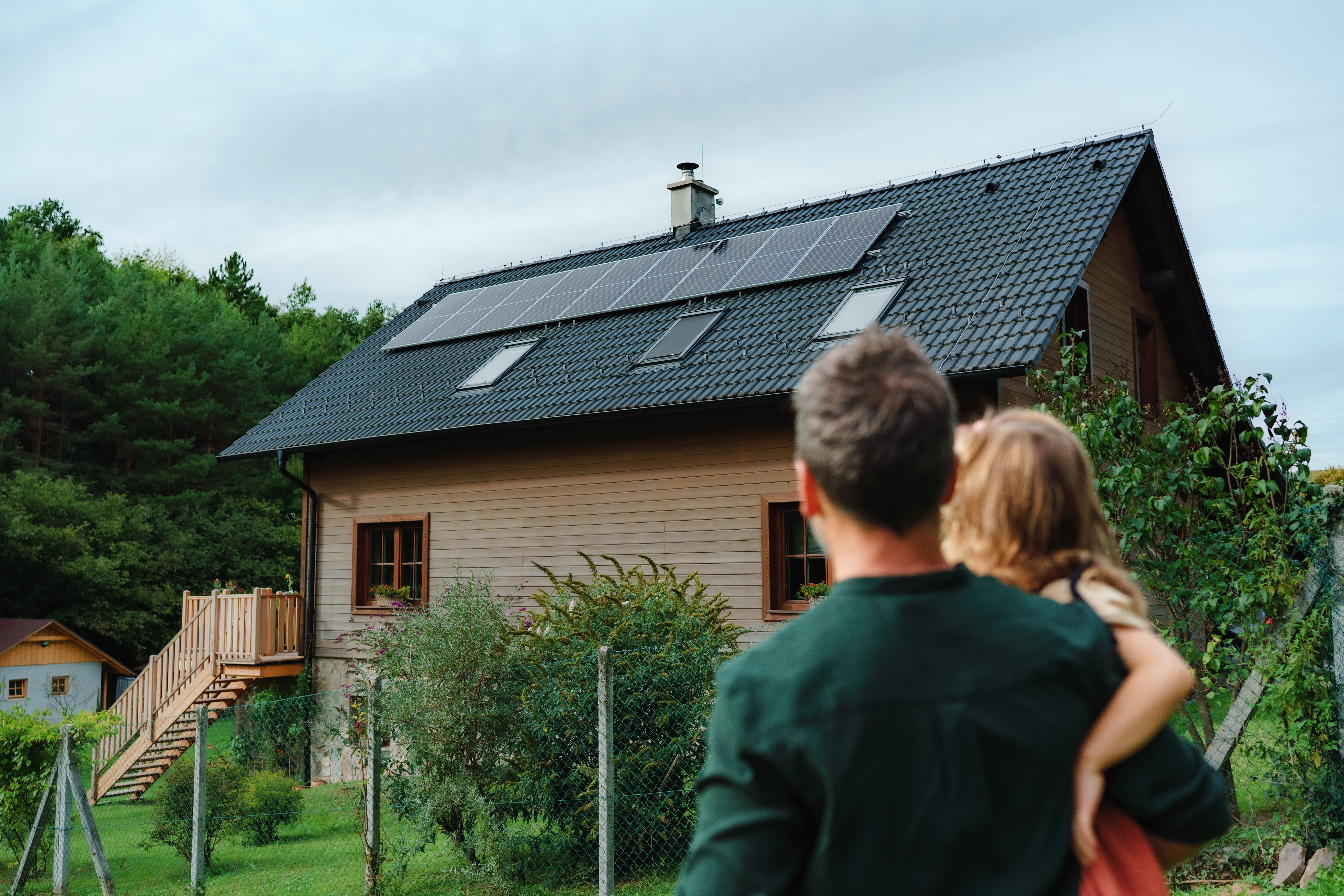
Understanding whether a 6 kW photovoltaic system is worth it is one of the most common questions for anyone considering installing a solar system on their home roof. And it is a more than reasonable question: a photovoltaic system is an important investment that can significantly reduce your electricity bill, but only if it is correctly sized according to the home’s real energy consumption.
The short answer is: yes, a 6 kW photovoltaic system can be very worthwhile, but it is not automatically the right choice for everyone.
Its convenience does not depend only on the system’s power or on how much energy it produces in a year. It depends above all on how much energy you can use directly at home, when you consume electricity during the day, the type of property, whether there is a storage battery, possible future consumption such as a heat pump or electric car and, of course, the characteristics of the roof.
In other words, the point is not to choose “the biggest system possible”. The point is to choose the system that best suits the way you consume energy.
Photovoltaic 6 kW: is it worth it? The answer based on your consumption
A 6 kW photovoltaic system is worthwhile when the home has high enough electricity consumption to make good use of the energy produced. It is often an interesting size for families, already electrified homes or properties where consumption is expected to increase in the coming years.
In fact, 6 kW is a suitable power level for many modern domestic situations: air conditioners, induction hobs, frequently used appliances, remote working, heat pumps and electric car charging. All these elements increase electricity demand and make producing energy at home more useful.
Be careful, though: if a family consumes little energy, or if consumption is concentrated almost entirely in the evening, a 6 kW system may not be the most efficient choice. Not because it does not produce enough — quite the opposite. The issue is that it may produce more energy than the home can use at the right times.
When a 6 kW system is a sensible choice
A 6 kW photovoltaic system tends to be a sensible choice when:
annual electricity consumption is medium-high;
the home is occupied during the day;
air conditioners or heat pumps are used;
there is already, or there will soon be, an electric car;
the roof is well exposed and has little shading;
you want to steadily reduce electricity drawn from the grid;
some consumption can be scheduled during solar production hours.
In these cases, the photovoltaic system does not work “for nothing”: the energy produced is actually used, and this increases savings on the electricity bill.
When it may be oversized
A 6 kW system may be oversized when consumption is low or poorly aligned with solar production. This is the case, for example, of a home with low annual consumption, used little during the day, without major appliances, without significant air conditioning and without future electrification plans.
In these situations, a smaller system may be more balanced. Choosing a larger size “just to be on the safe side” is not always a good idea: if the energy produced is not used, the economic benefit can decrease and payback times can become longer.
Why knowing how much it produces is not enough
Many people ask: “How much does a 6 kW photovoltaic system produce?” It is a useful question, of course, but it is not enough.
The real question is different: how much of the energy produced can I consume directly?
A system can produce a lot, but if most of the energy is fed into the grid instead of being used at home, the actual savings change. Self-consumed energy, in fact, allows you to avoid buying electricity from the grid. This is where the most important advantage lies.
The right question: how much energy can you self-consume?
Self-consumption is at the heart of photovoltaic convenience. Put simply, it means directly using at home the energy produced by the solar panels.
When the system produces energy and the home consumes it at that same moment, electricity drawn from the grid is reduced. This translates into immediate savings on the electricity bill.
If, on the other hand, the system produces energy but the home does not consume it, that electricity is fed into the grid. It is still a useful resource, but it usually does not generate the same economic advantage as direct self-consumption.
Why self-consumption matters more than total production
Imagine two homes with the same 6 kW photovoltaic system. The first consumes energy during the day: washing machine, dishwasher, air conditioner, computer, heat pump, car charging. The second, however, remains empty until evening.
With the same production, the first home saves more. Why? Because it uses a larger share of the energy at the moment it is produced.
That is why convenience is not measured only in kWh produced, but in kWh produced and used well.
Difference between energy used at home and energy fed into the grid
The energy produced by the photovoltaic system can take three routes:
it is consumed immediately by the home;
it is stored in a battery, if present;
it is fed into the grid.
The first option is generally the most advantageous. The second can be useful, especially for those who consume a lot in the evening. The third is still positive, but it should not be the main goal if you want to maximise economic convenience.
In short: the more you self-consume, the more the photovoltaic system works in your favour.
How daily habits influence savings on the electricity bill
Often, changing a few habits is enough to improve self-consumption. For example, scheduling the washing machine and dishwasher in the middle of the day, using the air conditioner when the system is producing, charging the car during peak production times or managing electrical loads more effectively.
There is no need to turn the family routine upside down. You just need to start thinking slightly differently: when the sun is shining, energy costs less because you are producing it yourself.
Annual consumption: when 6 kW is the right size
Annual consumption is the first figure to check before understanding whether a 6 kW system is worthwhile. You can find it on your electricity bill, expressed in kWh per year.
This number tells you how much energy the home consumes overall, but it must be read together with the consumption profile. Two families can consume the same annual kWh, but at different times of day, with very different results in terms of self-consumption.
Below 3,000 kWh per year: when it may be too much
If a home consumes less than 3,000 kWh per year, a 6 kW photovoltaic system may be excessive, unless significant new consumption is expected.
For example, you may consume little today, but in the coming years you might install a heat pump, switch to an induction hob, use air conditioners more often or buy an electric car. In that case, considering a 6 kW system may make sense with the future in mind.
If, however, consumption will remain low, a smaller size may be more consistent.
Between 3,000 and 5,000 kWh per year: when a more precise assessment is needed
This is an intermediate range. A 6 kW system may be worthwhile, but not always. It all depends on when consumption is concentrated.
If the home consumes a lot during the day, 6 kW can be a good choice. If, on the other hand, consumption is mainly in the evening, it may be useful to consider a battery or a different size.
Here, a personalised simulation really makes the difference, because it allows you to estimate how much energy will be self-consumed and how much will be fed into the grid.
Above 5,000 kWh per year: when 6 kW becomes interesting
When a home exceeds 5,000 kWh per year, a 6 kW photovoltaic system often becomes an interesting solution. This is especially true for large families, homes with summer air conditioning, heat pumps, energy-intensive appliances or domestic electric car charging.
In these cases, the system’s production has more opportunities to be used effectively throughout the year.
Future consumption: heat pump, induction hob and electric car
A common mistake is sizing the system only on current consumption, ignoring future consumption.
If you are thinking of eliminating gas, installing a heat pump, switching to an induction hob or buying an electric car, your electricity consumption will increase. In this scenario, a 6 kW system can become much more sensible than a smaller size.
In short, photovoltaic systems should also be chosen by looking at how the home will change in the coming years.
Hourly consumption profile: day, evening and weekend
Knowing how much you consume is important. Knowing when you consume is even more important.
Photovoltaics produce mainly during the day, with peaks in the central hours. If your consumption is concentrated in those hours, the system can generate greater savings. If, instead, you consume almost everything in the evening, you need to think more carefully.
Daytime consumption: the most favourable scenario
A home occupied during the day is often the ideal context for photovoltaics. Remote working, the presence of children or elderly people, domestic activities, air conditioning and scheduled appliances all help increase self-consumption.
In these cases, a 6 kW system can be used very well even without a battery, because a significant portion of the energy is consumed while it is being produced.
Evening consumption: when savings may decrease
If the home is empty all day and consumption starts mainly after 6 p.m., direct self-consumption tends to be lower.
This does not mean that photovoltaics are not worthwhile. It does mean, however, that the role of storage, load scheduling and smart energy management should be assessed more carefully.
In some cases, a battery can increase the share of energy used at home. In others, however, it may not be essential.
Weekends and remote working: opportunities to increase self-consumption
Weekends are often underestimated. Many families consume more energy precisely on Saturdays and Sundays: washing machines, cooking, air conditioning, cleaning, car charging and various appliances.
Remote working also changes the consumption profile significantly. If one or more people work from home, the energy produced during the day can be used directly for computers, monitors, internet connection, air conditioning and other household loads.
Difference between summer and winter consumption
In summer, the photovoltaic system produces more and consumption often increases because of air conditioners. This is a favourable scenario, because production and consumption can coincide.
In winter, however, solar production is lower. If the home uses a heat pump for heating, consumption may increase precisely in the months when the photovoltaic system produces less. This is not a problem, but it is something to consider in order to avoid unrealistic expectations.
Photovoltaic 6 kW without storage: when it is worthwhile
A 6 kW photovoltaic system can also be worthwhile without a battery, especially if consumption is well distributed during the day.
Without storage, the energy produced must be used at the moment it is generated. For this reason, the hourly consumption profile becomes decisive.
Homes occupied during the day
If the home is lived in during solar hours, photovoltaics without storage can work very well. This is the case for people who work from home, families with people present during the day or homes where appliances are often used in the central hours.
In these cases, the battery may not be a priority, at least initially.
Appliances scheduled during solar hours
Many appliances can be scheduled: washing machine, dryer, dishwasher, electric boiler and some air conditioning systems. Using them during peak production hours helps make better use of the system.
It is a small habit, but over time it can make a real difference.
Summer air conditioning powered by photovoltaics
The air conditioner is one of the most interesting forms of consumption to combine with photovoltaics. Why? Simple: when it is hot and the air conditioner is running, there is often plenty of sun and the system is producing well.
This makes a 6 kW photovoltaic system particularly interesting for homes with frequent summer air conditioning use.
When the absence of a battery limits the benefit
Without a battery, energy not used immediately is fed into the grid. If the home consumes little during the day, a significant part of production may not directly contribute to reducing the electricity bill.
In this case, photovoltaics should not necessarily be ruled out. However, it is worth assessing whether it is better to change habits, install storage or choose a more suitable size.
Photovoltaic 6 kW with storage: when the battery is useful
A storage battery allows part of the energy produced during the day to be saved and used later, for example in the evening or in the early hours of the night.
It is an interesting solution, but it must be assessed carefully. Storage does not automatically make a system worthwhile: it increases self-consumption, but it also increases the initial investment.
When storage truly increases self-consumption
The battery is particularly useful when solar production and consumption do not coincide. For example, if the home is empty during the day but consumes a lot in the evening, storage can help use more self-produced energy.
It can also be useful with a heat pump, significant evening consumption, car charging in certain time slots or the desire to reduce electricity drawn from the grid as much as possible.
When the battery may not be essential
If a home already consumes a lot of energy during the day, the battery may be less urgent. In this case, direct self-consumption is already good and storage may have a more limited impact on economic convenience.
There is no rule that applies to everyone. You need to look at real data, not impressions.
Why storage must be sized based on real consumption
A battery that is too small may not cover evening consumption. A battery that is too large may remain unused for much of the year.
Correct sizing is essential. The goal is not to install the largest possible battery, but the one most consistent with the system’s production and the family’s habits.
Photovoltaic 6 kW and heat pump: is it worth it?
The combination of photovoltaics and heat pump is increasingly common, because it allows part of the home’s energy consumption to shift from gas to electricity. In this scenario, photovoltaics can help reduce the cost of the electricity needed for heating, cooling and producing domestic hot water.
A 6 kW system can be a good starting point, but here too, overly simple answers should be avoided.
Why the heat pump changes the home’s electricity demand
The heat pump increases the home’s electricity consumption. This makes photovoltaics more interesting, because the energy produced can help power part of that consumption.
If the home previously consumed little electricity, after installing a heat pump the demand may increase significantly. That is why, during the assessment phase, you should consider not only current bills, but also the home’s new energy setup.
The limit of solar production in the winter months
There is, however, an important point: in winter, photovoltaics produce less, while the heat pump may consume more for heating.
This does not mean that the combination is not worthwhile. It simply means that photovoltaics should not be seen as a magic solution to eliminate all winter consumption. They should be considered a tool to reduce electricity drawn from the grid throughout the year.
When 6 kW can be a good starting point
6 kW can be an interesting size for a home with a heat pump when the property is well insulated, consumption is managed intelligently and the roof allows good production.
System regulation also matters a lot: bringing some consumption forward to solar hours, using smart management systems and coordinating photovoltaics, storage and heat pump can improve self-consumption.
Photovoltaic 6 kW and electric car: when it increases convenience
An electric car can make photovoltaics even more interesting. Domestic charging, in fact, adds significant electricity consumption that can be partly covered by solar energy.
Naturally, a lot depends on when the car is charged.
Daytime charging with solar energy
The most favourable scenario is one in which the car is charged during the day, at least partly. For example, at weekends, on remote working days or in all situations where the car remains parked at home during production hours.
In this case, photovoltaics can contribute directly to charging, increasing self-consumption and reducing the cost of the kilometres driven.
Evening or night charging: what changes
If the car is almost always charged in the evening or at night, the energy produced during the day cannot be used directly, unless there is a storage battery or a specific energy management system.
This does not eliminate convenience, but it makes it more dependent on the system configuration and charging habits.
The role of a smart wallbox in load management
A smart wallbox can help optimise charging, manage available power and make better use of the energy produced by the photovoltaic system.
Smart management becomes particularly useful when there are several important loads at home: appliances, air conditioners, heat pump and electric car. Coordinating these loads avoids waste and makes the system more efficient.
When a 6 kW photovoltaic system is not worthwhile
Saying when it is worthwhile is important. But saying when it is not worthwhile is even more important. A good investment must start from a realistic assessment, not from overly optimistic promises.
A 6 kW system may be poor value if it is not consistent with the home’s consumption, roof or family habits.
Consumption too low compared with the installed power
If the home consumes little, a significant part of the energy produced may not be used. In this case, 6 kW risks being an excessive size.
It is better to consider a lower power level, more proportionate to the real energy demand.
Seldom-used home or second home
For a second home used only during certain periods of the year, 6 kW should be assessed very carefully. If the property remains empty for long periods, self-consumption may be low.
In some cases, it may still make sense, for example if summer consumption is high or if there are specific needs. But it is not an automatic choice.
Shaded or unsuitable roof
A roof with many shadows, unfavourable orientation or limited space can reduce system production. And if production decreases, convenience also changes.
Before deciding, it is essential to carefully assess exposure, inclination, shading, available surface area and possible obstacles.
Low self-consumption and consumption concentrated in the evening
If consumption is almost entirely in the evening and no battery is planned, a 6 kW system may produce a lot of energy during the hours when the home uses little.
In this case, the issue is not only the system’s power, but its overall configuration.
Battery chosen without a real consumption analysis
Storage can also be a mistake if chosen as a “package”, without looking at real consumption. An oversized battery can increase the cost of the system without offering a proportionate benefit.
The battery should be chosen when it is really needed, not because “that is how it is done”.
Better 4.5 kW or 6 kW? How to avoid the wrong size
Many people face a practical doubt: is it better to install 4.5 kW or 6 kW? The answer depends on current consumption, future consumption, available space and the family’s goals.
The right size is not always the biggest one. It is the one that maximises the relationship between investment, production and self-consumption.
When a lower power may be enough
A lower power level may be enough when consumption is limited, the home is not highly electrified and no major new loads are expected.
For a family with moderate consumption, without a heat pump and without an electric car, a smaller system may be more balanced.
When 6 kW is more consistent with consumption
6 kW becomes more consistent when consumption increases: large family, air conditioning, induction hob, heat pump, electric car, remote working or presence at home during the day.
In these cases, a smaller size may cover only a limited share of demand.
When to consider a higher power
If the home has very high consumption, multiple electric cars, a significant heat pump or a large and highly electrified property, it may be useful to consider a power level above 6 kW.
Naturally, roof space, technical constraints, electrical connection and real self-consumption capacity must be checked.
Why the right size is not always the biggest one
Installing more power does not automatically mean saving more. If the extra energy is not used, the economic return can worsen.
Correct sizing is a balance. And, as often happens, balance is worth more than excess.
Mini test: is a 6 kW photovoltaic system right for you?
To understand whether a 6 kW system may be suitable for your home, you can start with a few simple questions. They do not replace a technical simulation, but they help you get oriented.
Questions about your current consumption
Ask yourself:
How many kWh does your home consume in a year?
Is consumption high or low compared with an average family?
Do you often use air conditioners, washing machine, dryer or dishwasher?
Do you already have an induction hob or other important electrical loads?
If consumption is medium-high, 6 kW is certainly worth assessing.
Questions about your future consumption
Also look ahead:
Will you install a heat pump?
Will you buy an electric car?
Will you increase the use of air conditioners?
Will you switch from gas to electricity?
Will your family grow or will household habits change?
Photovoltaics are a long-term investment. Choosing them only based on today’s consumption can be limiting.
Questions about roof, exposure and available space
The roof is another decisive factor:
Is it well exposed?
Are there significant shadows?
Is there enough space for the panels?
Is the surface continuous or fragmented?
Are special installation solutions needed?
A good roof makes the system more worthwhile. A problematic roof requires a more precise assessment.
Questions about battery, wallbox and smart management
Finally, assess the configuration:
Do you consume a lot in the evening?
Do you need a battery?
Do you have, or will you have, a wallbox?
Do you want to manage loads intelligently?
Are you willing to schedule some consumption during solar hours?
The more the system is integrated with the home’s habits, the more worthwhile it can become.
How to interpret the test result
If you answered “yes” to many questions, a 6 kW photovoltaic system could be a very interesting choice.
If, on the other hand, your consumption is low, the roof is not very suitable and the home is empty all day, it is better to proceed with caution. You may need a different size or a more targeted configuration.
Mistakes to avoid before choosing a 6 kW photovoltaic system
Choosing a photovoltaic system does not only mean comparing quotes. It means understanding how the system will fit into the everyday life of the home.
Here are the most common mistakes to avoid.
Choosing the power before analysing consumption
Power should not be the starting point. Consumption comes first: how much it is, when it happens and how it will change.
Only afterwards does it make sense to decide whether 6 kW is too little, right or too much.
Looking only at the price of the quote
Price matters, of course. But a lower quote is not always more convenient if the system is poorly sized, uses unsuitable components or does not consider real self-consumption.
The right question is not only “how much does it cost?”, but “how much value does it generate for my home?”.
Oversizing the system “to be on the safe side”
It is understandable to want to install a larger system to avoid regrets. But oversizing without a reason can reduce the economic efficiency of the investment.
It is better to choose a consistent size, possibly considering future consumption realistically.
Confusing estimated production with real savings
Estimated production indicates how much energy the system can generate. Real savings depend on how much of that energy is used at home.
These two concepts are related, but they are not the same.
Not considering how consumption will change in the coming years
A home can change a lot: new habits, new appliances, more time spent at home, heat pump, electric car.
Good sizing must also take these scenarios into account. Otherwise, you risk installing a system that is already poorly suited after only a few years.
How to understand whether 6 kW is worth it in your case
In the end, the convenience of a 6 kW photovoltaic system is not decided by a universal formula. It is decided by looking at your home’s data.
You need a concrete assessment, based on consumption, habits and the technical characteristics of the property.
Start from the annual kWh on your bill
The first step is to retrieve your annual consumption. It is not enough to look at the bill amount, because the price of energy can vary. The figure to observe is the kWh consumed.
This value helps you understand whether 6 kW is a potentially suitable size or whether it risks being excessive.
Analyse when you consume energy during the day
The second step is understanding when you consume: morning, afternoon, evening, night, weekend.
If consumption coincides with solar production, convenience increases. If it is heavily shifted towards the evening, you need to think about storage, scheduling and smart management.
Consider new future electricity consumption
The third step is to think about the future. Will the home remain as it is or become more electric?
If you expect new consumption, 6 kW could be a forward-looking choice. If, however, consumption will remain low, it may not be necessary.
Check whether the roof allows good production
The fourth step is assessing the roof. Orientation, inclination, shading and available space can change the result significantly.
A technical inspection or an accurate simulation helps avoid estimates that are too generic.
Request a simulation based on your real data
The best way to understand whether a 6 kW photovoltaic system is worthwhile is to request a personalised simulation. Not a standard estimate, but an analysis based on:
annual consumption;
hourly profile;
roof characteristics;
presence or absence of a battery;
possible heat pump;
possible electric car;
savings and autonomy goals.
Only in this way can you understand whether 6 kW is truly the right choice.
A 6 kW photovoltaic system is worth it only if it is sized around your consumption
A 6 kW photovoltaic system can be a very convenient solution for many homes, especially for families with medium-high consumption, electrified homes, frequent air conditioning use, a heat pump or an electric car.
But it is not an answer that works for everyone.
Convenience depends on three main factors: how much you consume, when you consume and how much energy you can self-consume. Roof, storage, load management and future consumption must also be added to the picture.
6 kW is a recommended choice when the system is consistent with the home’s real energy demand. It can instead be excessive if consumption is low, if the roof is not very suitable or if the energy produced is used only a little.
In the end, the most important question is not: “Is a 6 kW photovoltaic system worth it?”
The right question is:
“Is it worth it for my home, with my consumption and my habits?”
And to answer properly, the best step is to start from real data and a personalised assessment.
Purchase your EV Charger
Our expert will contact you to offer you the most suitable solution for you.