May 20, 2026
6 kW solar system price: a useful guide to costs, savings and value
A clear guide to help you understand costs, batteries, incentives, production and payback time, so you can assess whether a 6 kW solar PV system is really worth it for your home.
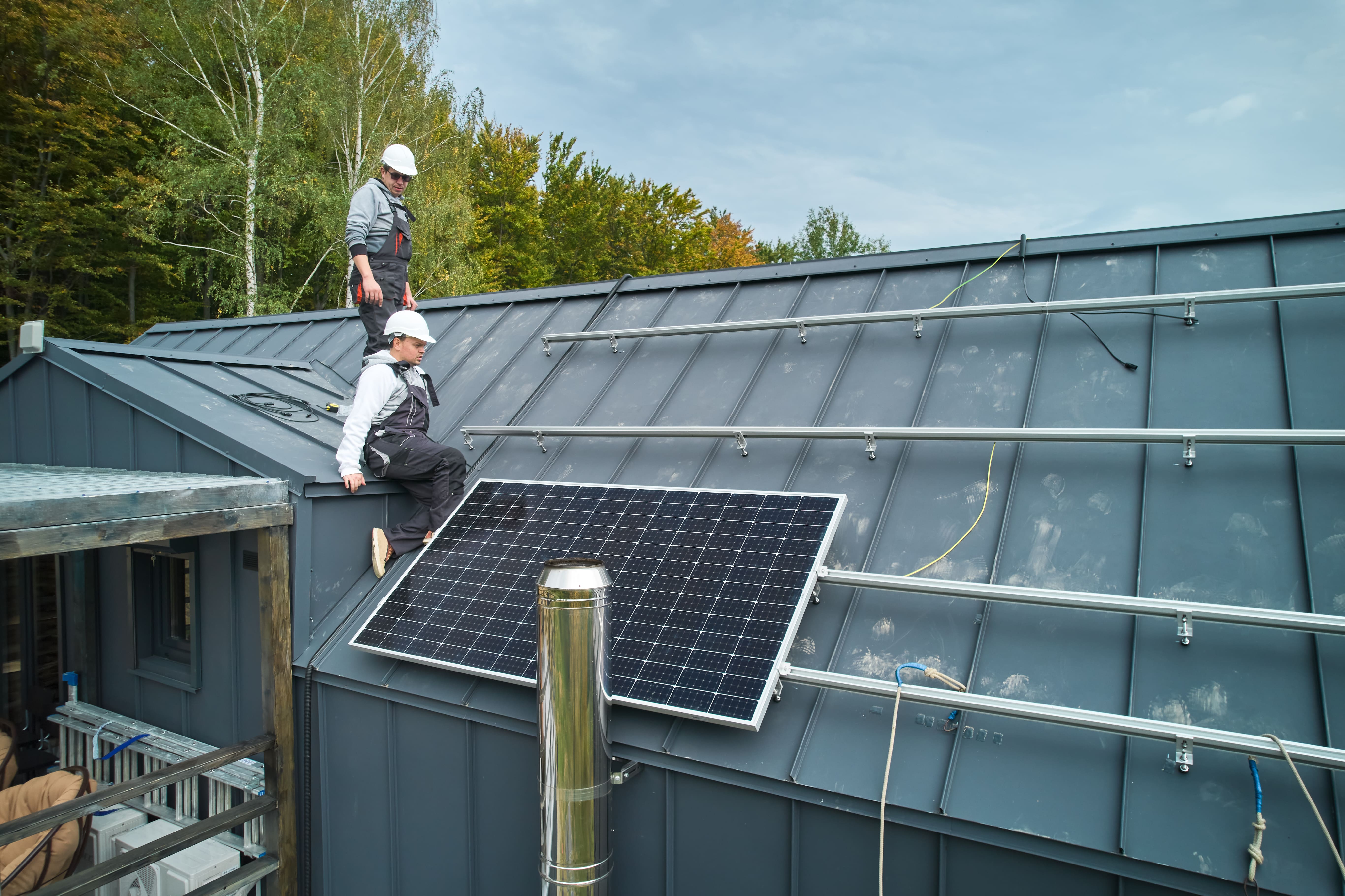
Understanding the price of a 6 kW solar system is one of the first steps for anyone considering solar energy for their home. It is a very popular system size because, in many cases, it can cover a significant portion of the electricity needs of a household with medium to high energy consumption, especially when the home includes energy-intensive appliances, air conditioning, an induction hob, a heat pump or an electric vehicle to charge.
However, asking “How much does a 6 kW solar system cost?” is a bit like asking how much it costs to renovate a kitchen. The answer depends on the materials, the quality of the components, the complexity of the installation, the services included and the final goals.
In general, the price can vary significantly between a basic system without storage and a complete solution with battery storage, advanced monitoring, optimizers, permitting support and extended warranties. Recent market estimates often place a 6 kW system without storage in an entry-level price range, while other quotes can be much higher depending on the configuration and whether a battery is included. Differences between quotes are therefore normal, but they should be assessed carefully.
The goal of this guide is to help you understand not only the initial cost, but also what is included in that price, how much a 6 kW system can produce, how much space is needed, when battery storage makes sense, which mistakes to avoid and how to read a quote more confidently.
Why 6 kW is a popular size for residential solar
A 6 kW solar PV system is often considered a suitable solution for households with medium to high electricity consumption. It is not the smallest system size, but it is also not excessive for a modern home where many energy needs are becoming electric.
For example, think of a family using a washing machine, dryer, dishwasher, air conditioners, electric oven, induction hob and perhaps a heat pump. If there is also an electric vehicle, electricity demand can increase even further. In these cases, a 3 kW system may be limited, while a 6 kW system can offer more interesting production potential.
Of course, system size should not be chosen by guesswork. A 6 kW system makes sense if consumption justifies it, if the roof is suitable and if a good share of the energy produced can be used. Otherwise, there is a risk of installing a system that is larger than necessary, with a higher initial investment and a less effective return.
6 kW solar system price: indicative cost range
The price of a 6 kW solar PV system can vary significantly depending on the configuration. To give a general idea, it is useful to distinguish between at least three cases: a system without storage, a system with battery storage and a premium system with additional components and services.
Price of a 6 kW solar PV system without storage
A 6 kW system without a battery is the simplest configuration. It includes solar panels, an inverter, mounting structures, protection boxes, electrical protection devices, cables, installation, testing and grid connection procedures, provided the quote is truly “turnkey”.
This solution is especially suitable when the home consumes electricity during the day. In practice, the more energy you can use when it is produced, the more the system works in your favour.
The price can vary depending on the quality of the panels, the type of inverter, the complexity of the roof and the services included. It is important to be cautious with quick comparisons: a lower price may seem attractive, but it may not include permitting, monitoring, electrical upgrades or after-sales support.
Price of a 6 kW solar PV system with battery storage
When a battery is added, the price increases. This is normal: battery storage is one of the most important and expensive components of the system.
A battery allows you to store energy produced during the day and not consumed immediately, so you can use it in the evening or at night. This can increase self-consumption and further reduce grid electricity use. However, it is not always essential.
A 6 kW system with storage can be configured with batteries of different capacities, such as 5 kWh, 10 kWh or larger. The right choice depends on when you consume energy, not only on how much energy you consume overall.
If you are away from home all day and consume a lot in the evening, a battery may be interesting. If, on the other hand, you work from home, use many appliances during daylight hours or have daytime consumption, you may achieve good self-consumption even without storage.
Solar kit or turnkey system?
Another point to clarify immediately is the difference between a 6 kW solar kit and a turnkey system.
A kit usually includes components such as panels, inverter and mounting structures. But a real solar installation requires much more: design, site inspection, installation, cabling, protection devices, configuration, permitting, testing and declarations of conformity where required.
For this reason, when evaluating price, the most useful figure is the cost of the system installed and operating, not the price of materials alone. A kit may look cheaper, but it does not tell the whole story.
What is included in the price of a 6 kW solar PV system
A complete quote should clearly explain what is included. If the document is too generic, it is better to ask for clarification before signing. A solar PV system is not made only of panels: it is a system composed of several elements that must work together.
Solar panels
Panels are the most visible part of the system. Their function is to convert sunlight into electricity. Not all modules are the same: power, efficiency, technology, product warranty and performance warranty over time can all vary.
More efficient panels can be useful when roof space is limited. For the same overall system size, higher-power modules can reduce the number of panels needed to reach 6 kW.
Solar inverter
The inverter converts the direct current produced by the panels into alternating current that can be used in the home. It is one of the most important components of the system.
It can be a standard inverter, a hybrid inverter or storage-ready. If you are thinking of adding a battery in the future, it is important to clarify immediately whether the inverter is compatible. Otherwise, you may need to replace or integrate components later, with additional costs.
Mounting structures, protection boxes and electrical protection
Mounting structures allow panels to be installed safely on the roof. They vary depending on the type of surface: pitched roof, flat roof, pergola, carport or dedicated structure.
In addition, the system includes protection boxes, DC and AC protection devices, cabling and connections to the existing electrical panel. These elements are less visible, but they are essential for safety and long-term system reliability.
Labour, permitting and testing
Labour affects the final price, especially when the roof is complex, difficult to access or requires specific safety systems.
A serious quote should also include technical inspection, installation, electrical connections, inverter configuration, final testing, compliance documentation and grid connection procedures where required. If these items are not listed, it is worth asking whether they are included or excluded.
6 kW system with storage: how much the battery affects the price
The storage battery is one of the elements that most influences the price of a 6 kW solar PV system. Adding it means increasing the initial cost, but also improving the possibility of using the energy produced by the system at times other than when it is generated.
What a battery is really for
A battery does not “produce more energy”. The panels produce energy. The battery helps manage that energy better by storing what is not consumed immediately.
Put simply: if your system produces a lot at midday and your home consumes little, the excess energy can be stored. In the evening, when the panels are not producing, you can use part of that stored energy instead of drawing electricity from the grid.
5 kWh or 10 kWh storage?
A 5 kWh battery may be suitable for moderate evening consumption. A 10 kWh battery may be more interesting for households with higher consumption, homes with heat pumps or users who want to maximize self-consumption.
However, bigger does not always mean better. An oversized battery can be expensive and may not be fully used. A battery that is too small, on the other hand, may run out quickly in the evening.
The right choice comes from consumption analysis: how much energy you use, when you use it and how much solar production remains available to charge the battery.
Storage and backup are not the same thing
It is important to clarify a very common misunderstanding: having a battery does not automatically mean having electricity during a blackout.
To power the home when the grid is down, a specific configuration is required, often with a backup function or a dedicated line for essential loads. Before buying, the question to ask is simple: “Does the battery work during a blackout? Which loads can it power?”
It is better to clarify this immediately, in writing, to avoid surprises.
What determines the cost of a 6 kW solar PV system
Two 6 kW systems can have very different prices. This does not necessarily mean that one of the two quotes is wrong: it often means they are offering different solutions.
Quality of the panels and inverter
Panels with higher efficiency, better warranties and lower degradation over time can cost more. The same applies to the inverter: a basic model has a different cost from a hybrid, smart or storage-ready inverter.
Component quality affects not only the initial price, but also the long-term reliability of the system.
Optimizers and microinverters
In some cases, optimizers or microinverters may be proposed. These solutions are especially useful when the roof has partial shading, different orientations or uneven conditions.
They increase the cost, but they can improve production management in complex situations. They are not always necessary, so they should be evaluated case by case.
Roof complexity
A simple, well-exposed and easily accessible roof makes installation more straightforward. A roof with multiple sections, shading, delicate coverings, steep slopes or difficult access can increase installation costs.
Scaffolding, lifelines, masonry work or structural adjustments can also affect the final price.
Electrical upgrades
The existing electrical system is not always ready to accommodate a 6 kW solar PV system. Sometimes modifications to the electrical panel, new protection devices, dedicated lines or checks on the utility connection are required.
These costs are not “annoying extras”: they are necessary interventions to install the system safely and in compliance with local requirements.
How much a 6 kW solar PV system produces
The production of a 6 kW system depends mainly on geographic location, orientation, tilt, shading and component quality.
A correctly installed 6 kW system can produce several thousand kWh per year. In very general terms, yield tends to be higher in sunnier regions and lower in areas with less solar irradiation.
However, annual production is not the only factor to consider. When the energy is produced also matters. Production is higher in summer and lower in winter. The system produces during the day, not at night. For this reason, production and savings are not the same thing.
Theoretical production and useful production
If a system produces 7,000 or 8,000 kWh in a year, this does not mean that all those kWh generate the same savings.
Part of the energy may be self-consumed directly, part may be stored in the battery and part may be exported to the grid. The greatest economic benefit usually comes from self-consumed energy, because it directly reduces electricity taken from the grid.
Self-consumption means using the energy produced by your own solar PV system on site to cover the energy needs of a home, office or business. One of the main benefits is reducing electricity bills.
How much space is needed to install a 6 kW system
The space required depends on the power of the selected panels. With higher-power modules, fewer panels are needed; with lower-power modules, more panels are needed.
In practical terms, a 6 kW system normally requires a significant but not excessive surface area. Much depends on the roof: a well-exposed pitched roof allows for a simpler layout, while a flat roof requires spacing between rows to avoid mutual shading.
If the roof is small, high-efficiency panels, installation across multiple roof sections or alternative solutions such as pergolas, carports or solar canopies can be considered.
If the roof is shaded, a more careful analysis is needed. Shadows from chimneys, trees, antennas or nearby buildings can reduce production. In some cases, optimizers help; in others, it may be better to change the module layout or resize the system.
How much you can save with a 6 kW solar PV system
Savings depend on three main factors: how much energy the system produces, how much of it you consume directly and how much you pay for electricity from the grid.
The role of self-consumption
Self-consumption is the key point. If you produce energy and use it immediately, you reduce grid consumption. If, instead, you produce energy when you are not consuming, that portion is exported to the grid or stored if you have a battery.
To increase self-consumption, you can schedule some energy use during daylight hours: washing machine, dishwasher, air conditioning, heat pump, electric vehicle charging. You do not need to completely change your daily life, but a few smart habits can make a difference.
Savings without storage
Without a battery, savings are greater when the home consumes energy during the day. People who work from home, use air conditioning during daylight hours or schedule appliances can achieve a good level of self-consumption.
If, however, consumption is concentrated mostly in the evening, a larger share of the energy produced may be exported to the grid. In this case, the system can still be worthwhile, but the economics should be calculated more carefully.
Savings with storage
With a battery, part of the energy produced during the day can be used in the evening. This reduces evening grid consumption and can increase the practical value of the system.
However, storage increases the initial cost. For this reason, payback time should be assessed carefully: a battery makes sense when it is actually used, not when it is chosen only because it makes the system “look complete”.
What happens to the energy produced and not consumed
When the system produces energy, three things can happen: the energy is consumed immediately, stored or exported to the grid.
Energy self-consumed directly
This is the most interesting share from a savings perspective. You use the energy when it is produced and reduce the amount of electricity purchased from your supplier.
Energy stored in the battery
If a storage system is present, energy not used immediately can be stored. This is especially useful when consumption is shifted toward the evening.
Energy exported to the grid
Energy produced and not used can be exported to the grid. Depending on the country and local regulation, this may be managed through mechanisms such as net metering, net billing, feed-in tariffs or other export compensation schemes.
This should be distinguished from self-consumption. Exported energy may have value, but it is not the same as the direct savings obtained when you use the energy produced to avoid buying electricity from the grid.
Incentives and subsidies for a 6 kW solar PV system
Incentives, tax credits, rebates and grants can be an important part of the economic assessment, but they should always be checked at the time of purchase because they vary by country, region and period.
In some markets, incentives may reduce the upfront cost. In others, the benefit may be recovered over time through tax credits or deductions. Some schemes may apply only to the solar PV system, while others may also include battery storage.
This means that the effective cost of a system can sometimes be reduced through financial support, but it is important to understand how the mechanism works. Not every incentive is an immediate discount on the purchase price.
Price paid and effective cost are not the same thing
If a system costs 10,000, that is usually the amount paid to the supplier. Any incentive, tax credit or rebate may reduce the effective cost, but the timing and method of recovery depend on local rules.
For this reason, it is more accurate to distinguish between:
gross system price;
eligible amount;
total incentive or tax benefit;
theoretical net cost over time.
Before signing, it is always advisable to check requirements, limits, documents, payment methods and whether the battery is eligible for support.
6 kW system price before and after incentives
Here is a simple purely indicative example.
If a 6 kW solar PV system without storage has an initial cost of 10,000 and the project qualifies for a 30% incentive, the total benefit could be 3,000. The theoretical effective cost over time would therefore be 7,000.
In practice, however, three aspects must be considered.
First: the incentive may not always reduce the upfront payment immediately. Second: the benefit may be recovered over time. Third: eligibility conditions may apply. If you cannot use the full incentive, the real benefit may be lower.
With storage, the reasoning is similar, but the initial cost is higher. A battery can increase savings through higher self-consumption, but it is important to understand whether the higher price is offset by the benefits over time.
Payback time
Payback time indicates how many years are needed to recover the investment through the savings achieved.
The simplified formula is:
Payback time = effective system cost / estimated annual savings
It looks simple, but there are many variables behind it: annual production, self-consumption rate, energy price, incentives, maintenance, any storage system and consumption habits.
Payback without storage
A system without a battery has a lower initial cost. For this reason, payback time can be easier to estimate, especially if the home consumes electricity during the day.
Payback with storage
With a battery, the initial cost increases, but self-consumption may also increase. The key point is to understand whether the stored energy is used often and effectively. If the battery works every day, it can make sense. If it often remains unused, it may extend the payback time.
Who benefits from a 6 kW solar PV system
A 6 kW system can be an interesting choice for many homes, but it is not the perfect solution for everyone.
Families with medium to high electricity consumption
It is suitable for families that use a lot of energy during the year, especially if consumption is not concentrated only at night.
Homes with a heat pump
A heat pump increases electricity consumption, but can reduce gas use. In these cases, solar PV can help cover part of the electricity demand, especially in mild seasons and during summer cooling.
Homes with an induction hob
An induction hob is part of the home electrification process. On its own, it does not justify a 6 kW system, but together with other loads it can contribute to higher electricity demand.
Users with an electric vehicle
Home charging for an electric vehicle can significantly increase self-consumption, especially if charging is scheduled during peak solar production hours. In these cases, a 6 kW system can become very interesting.
Small offices and businesses
A small office or business with daytime electricity use can make good use of solar production, because energy is consumed when the system is producing.
When 6 kW may be too much or not enough
A 6 kW system may be oversized if consumption is low, the roof is small or the family is often away from home during the day without storage.
On the other hand, it may not be enough for a fully electric home with a heat pump, multiple electric vehicles, high consumption and a large household. In these cases, a larger system may be considered, always after a technical analysis.
The point is not to choose “as much power as possible”, but to choose the right system size.
6 kW or 3 kW system: which one to choose
A 3 kW system costs less, requires less space and may be enough for a home with limited consumption. It is a reasonable choice when the goal is to cover part of the electricity bill without increasing the initial investment too much.
A 6 kW system, on the other hand, produces more and is better suited to medium to high consumption. It may be more interesting if you have, or plan to have, a heat pump, electric vehicle, frequent air conditioning use or appliances used often.
The choice depends on annual consumption and the hourly consumption profile. Looking only at the total electricity bill is not enough: you need to understand when you consume energy.
6 kW or 9 kW system: when more power is needed
A 9 kW system can be useful in very energy-intensive homes, fully electric homes, large families or small business settings with high daytime consumption.
Before increasing system size, however, it is necessary to check available space, grid connection capacity, type of electrical connection, possible three-phase requirements and any technical constraints from the local grid operator.
In many cases, 6 kW represents a good balance. In others, a larger size may be more appropriate. Here too, the technical site inspection makes the difference.
Mistakes to avoid when evaluating the price of a 6 kW system
The first mistake is looking only at the lowest price. A solar PV system must work for many years: component quality, installation and support matter.
The second mistake is comparing different quotes as if they were the same. A system with storage cannot be compared with one without storage. A kit cannot be compared with a turnkey system. A quote with permitting included is not the same as one where permitting is excluded.
The third mistake is not analysing real consumption. Without data, there is a risk of choosing the wrong system size or an unsuitable battery.
The fourth mistake is confusing production with savings. Producing a lot is positive, but savings depend on how much energy you can use directly.
The fifth mistake is neglecting monitoring and support. A system should be checked over time: if it produces less than expected, you need to know and be able to resolve the issue.
Examples of configurations for a 6 kW solar PV system
Basic configuration without storage
This is suitable for those who want to reduce their electricity bill with a lower initial investment. It works well when there is daytime consumption.
Configuration with 5 kWh storage
This may be suitable for families with moderate evening consumption. It helps increase self-consumption, but has limited capacity.
Configuration with 10 kWh storage
This is more interesting for families with high evening consumption, a heat pump or electric vehicle charging. It costs more, so it should be assessed carefully.
Configuration with optimizers
This is useful for roofs with partial shading, different orientations or a need for more detailed monitoring. It can increase the cost, but improve system management.
Configuration for a home with an electric vehicle
Integrating solar PV and a wallbox can greatly increase self-consumption, especially if charging is scheduled during the central hours of the day.
Frequently asked questions about the price of a 6 kW system
How much does a 6 kW solar PV system cost?
The price depends on components, installation, presence of storage, permitting and included services. In general, a system without a battery costs less than a solution with storage.
How much does a 6 kW system with storage cost?
It costs more because it includes the battery. The price changes depending on storage capacity, brand, inverter compatibility and available functions.
How many panels are needed to reach 6 kW?
It depends on the power of each module. With higher-power panels, fewer modules are needed; with lower-power panels, more modules are required.
How much roof space is needed?
An adequate, well-exposed surface is needed. The exact space depends on the type of panels, the layout and the type of roof.
How much does a 6 kW system produce in one year?
Production varies depending on location, orientation, tilt and shading. For reliable estimates, a technical simulation is useful, including tools such as PVGIS or equivalent solar assessment software.
Is it worth adding a battery?
It is worth considering if you have significant evening consumption and want to increase self-consumption. It is not always essential.
How long does it take to recover the investment?
It depends on initial cost, incentives, production, self-consumption and energy price. A serious estimate requires analysis of real consumption data.
Do incentives also apply to storage?
In many markets, storage may be included in eligible expenditure, but requirements, documentation and current regulations should always be checked before purchase.
Is 3 kW, 6 kW or 9 kW better?
It depends on consumption. 3 kW may be enough for limited consumption, 6 kW is suitable for medium to high consumption, and 9 kW may be needed for very energy-intensive homes or more complex situations.
How to understand whether the price of a 6 kW system is really convenient
The price of a 6 kW system should not be evaluated on its own. It should be considered together with component quality, estimated production, self-consumption rate, presence or absence of storage, warranties and included services.
The best quote is not always the cheapest. It is the one that is clearest, most consistent with your consumption and most complete in relation to the goals you want to achieve.
A 6 kW solar PV system can be a very interesting investment for a home with medium to high electricity consumption, especially if it is designed carefully. But the right choice always starts from real data: electricity bills, roof characteristics, consumption habits, available space, possible battery storage and future goals.
Before deciding, the most useful step is therefore to request a personalized assessment. Only then can you understand whether the price is truly worthwhile and whether a 6 kW system is the right solution for your home.
Purchase your EV Charger
Our expert will contact you to offer you the most suitable solution for you.