Apr 27, 2026
Photovoltaic system fire: the real risks to know and how to prevent them
From electrical faults to installation errors: everything you need to know to reduce risk and manage your photovoltaic system more safely.
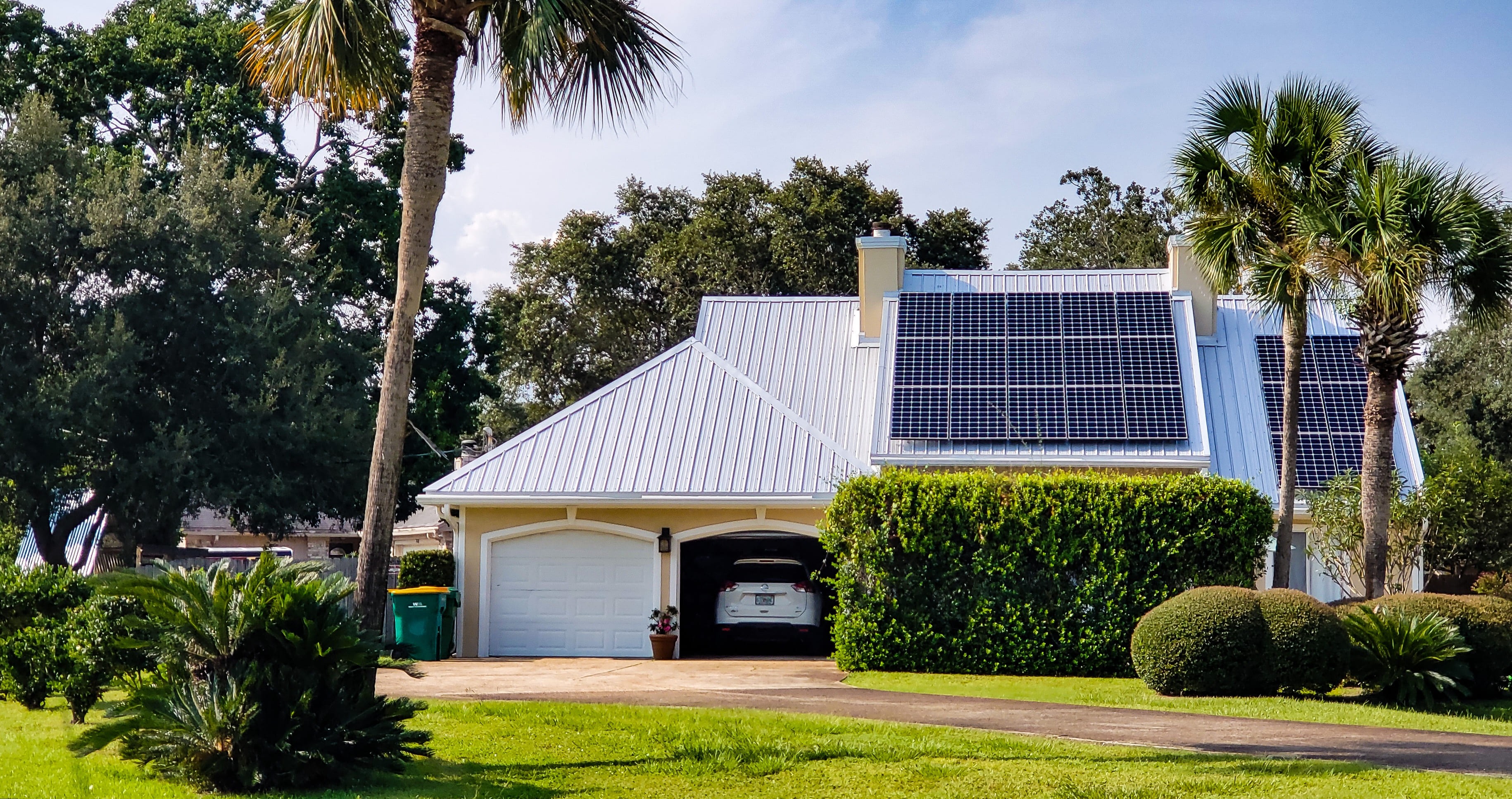
When talking about photovoltaic system fires, there is a risk of falling into two opposite extremes: alarmism on one side and superficiality on the other. The truth, as is often the case, lies somewhere in between. A photovoltaic system that is well designed, correctly installed, and properly maintained over time is not, in itself, a source of danger. However, if certain elements are neglected, the system can develop critical issues capable of compromising not only performance, but also safety.
This is an essential point. Photovoltaics is a reliable, mature, and increasingly widespread technology. Precisely for this reason, it must be treated seriously. It is not enough for it to simply “work”: it must also remain stable, controllable, and safe over time.
The issue of fire does not concern only the modules installed on the roof, as people often assume. It involves the entire system ecosystem: wiring, connections, inverters, electrical panels, protection box, installation methods, component quality, and maintenance. In other words, the risk almost never comes from one isolated element, but from a combination of factors that, taken together, can create the conditions for a serious fault.
The good news is that a large part of these problems can be prevented. And that is exactly the core of the issue: understanding in advance, taking the right action, and not allowing small anomalies to turn into major criticalities.
Can a photovoltaic system catch fire? Real risks and common myths
Yes, a photovoltaic system can experience the start of a fire. But it would be misleading to describe this as a “typical” or inevitable event. In most cases, behind such an incident there is not photovoltaic technology itself, but a specific technical problem: a faulty connection, an unsuitable component, undetected degradation, an installation error, or inadequate maintenance.
This is important to clarify, because many misconceptions still circulate on the subject. One of the most common is the idea that panels “catch fire on their own.” In reality, the most frequent issues concern connection points, cables, protective devices, inverters, and everything that allows the system to operate continuously and stably.
There is also another aspect that makes photovoltaics different from other electrical systems: the presence of direct current parts. This technical detail has very concrete consequences. During daylight hours, some sections of the system can remain energized even when work is being carried out on the side traditionally perceived as “off.” This is one of the reasons why photovoltaic systems require dedicated measures in terms of safety, disconnection, and emergency management.
In short, it makes no sense to demonize this technology. It makes far more sense to ask whether the system has been properly designed, built according to sound criteria, and managed in the right way.
Causes of photovoltaic system fire: from electrical arcs to inverter overheating
To truly understand how to reduce risk, you first need to understand where a fire can originate. The causes are not all the same, but they often share one common trait: they are problems that start small and worsen over time.
Electrical arcs, insulation faults, and DC-side problems
Among the most delicate causes are electrical arcs, especially on the DC side. When a connection loses continuity, a conductor is damaged, or the circuit has a partial defect, an arc can be triggered. There is no need to imagine dramatic scenes: even a localized but persistent phenomenon can generate heat and deteriorate surrounding materials.
The direct current side is particularly sensitive because an arc can be sustained more easily. Alongside arcs, there are also insulation faults. A damaged cable, deteriorated sheath, overly exposed cable run, or moisture ingress can alter electrical insulation without immediately showing obvious signs. That is what makes the problem insidious: the fault can remain hidden for some time while continuing to worsen.
Faulty connections, incompatible connectors, and incorrect wiring
There are also defects that originate in the most “operational” areas of the system: connections, junctions, tightening points, and assembly work. It may sound almost trivial, but a poorly executed connection can cause very serious damage. When contact is unstable, electrical resistance increases; when resistance increases, heat rises; and when heat keeps concentrating in the same point, risk grows.
Connector compatibility is also an often underestimated issue. Components that look similar are not necessarily compatible with one another in terms of performance and construction.
Overheating of inverters, cables, electrical panels, and protection box
Not everything starts from the modules. In fact, in many cases the warning signs are concentrated in the inverter, panels, cables, and protection box. An inverter operating in a poorly ventilated environment, an undersized panel, overstressed components, or insufficient heat dissipation can all lead to progressive overheating.
The problem is that these phenomena do not always show up immediately in an obvious way. Sometimes the system continues to function, but under worse conditions than expected. It may still produce energy, yet accumulate thermal stress, display recurring errors, or behave abnormally. That is why relying only on the fact that “the system is working” is a weak criterion. A system can operate and still have a structural problem that is evolving.
Design errors, incorrect photovoltaic installation, and unsuitable components
Many critical issues actually arise long before operation begins. They arise when the design is incomplete, when the layout does not take the roof into account, when cable routing is not optimized, when component selection is driven too heavily by cost savings, or when there is no overall system vision.
A photovoltaic system is not just a set of parts to be connected together. It is a system that must integrate with a building, with its construction characteristics, environmental conditions, access needs, and safety logic. The Fire Brigade guidelines emphasize exactly this point: design and installation must limit both the risk of ignition and the spread of fire toward the building structure or surrounding areas.
In practical terms, a well-designed system does not just produce energy: it is also easier to control, more robust over time, and less exposed to critical faults.
Photovoltaic system with battery storage: how the risk changes
When a storage system is added to photovoltaics, the picture becomes broader. This does not mean the system automatically becomes dangerous, but it does mean safety must be assessed on multiple levels. New operating conditions come into play, along with additional devices, further thermal management requirements, and more complex control procedures.
For this reason, systems with batteries deserve a specific assessment and should not simply be treated as an extension of the logic used for the photovoltaic field alone. On this front as well, technical Fire Brigade documents clearly show that the issue requires dedicated attention.
Warning signs not to underestimate: how to understand whether a photovoltaic system is at risk of fire
A system rarely goes from “everything is fine” to “emergency” without warning. In most cases, symptoms appear first, perhaps mild, perhaps intermittent, but still present. The problem is that they are often ignored or interpreted as minor inconveniences.
One of the most typical warning signs is the smell of burning or overheated material. It may seem like an isolated episode, but it should be taken seriously. The same applies to unusual noises, abnormal tripping of protective devices, inverter errors that recur frequently, or production losses that are inconsistent with irradiance and weather conditions.
Even a visual inspection, when you know what to look for, can reveal a lot. Stiffened cables, deformed connectors, halos, blackening, locally discolored areas, altered enclosures, modules with visible damage, or the presence of condensation are all signs that deserve further investigation. The 2025 Fire Brigade guidelines explicitly highlight the importance of monitoring visible damage, microcracks, condensation, degradation, and anomalies detected during operation and maintenance.
Then there is data monitoring. An unexplained drop, a string behaving differently from the others, repeated errors, or irregular trends may be the first warning sign of a deeper issue. That is why monitoring is not only useful for checking how much energy the system produces: it is also essential for understanding its health.
What to do in the event of a photovoltaic panel fire or an incipient fire
When there is the beginning of a fire, the temptation to intervene immediately on your own can be strong. But that is exactly when it is most important to stay clear-headed. The absolute priority is one thing only: keeping people safe.
Anyone nearby should be moved away, emergency services must be contacted immediately, and the presence of the photovoltaic system must be clearly reported. This step is essential, because photovoltaics introduces specific operational variables into emergency management. Fire Brigade guidelines require dedicated signage and the presence of a disconnecting device that is easy to identify, accessible, and protected as far as possible from the effects of fire.
What must not be done is just as important. Do not touch damaged cables, modules, inverters, or panels. Do not improvise technical maneuvers. And do not assume that switching off the main power meter automatically removes every hazard.
After any episode involving smoke or abnormal overheating, the system should not simply be “turned back on.” It must first undergo a complete technical inspection by qualified personnel capable of determining the origin of the problem and the actual safety condition of the system.
How to prevent a fire in a photovoltaic system
Prevention cannot be reduced to a single device or one good practice. It only works effectively when all elements of the system are consistent with one another.
Proper design and installation according to best practice
Everything starts with the design. A reliable system begins with a careful evaluation of the context: roof type, cable routes, environmental conditions, ventilation, accessibility, interaction with the building, maintenance possibilities, and emergency management methods.
If this foundation is weak, problems will emerge sooner or later. On the other hand, serious design work reduces many risk factors at their source. The same applies to installation: order, precision, compliance with specifications, and attention to workmanship directly affect safety, not just appearance or installation neatness.
Electrical protection, emergency disconnection, and safety on the DC and AC sides
Protective devices must be conceived as part of an overall strategy. It is not simply a matter of “adding devices,” but of building a coherent system against overcurrents, anomalies, insulation faults, and overvoltages.
Emergency disconnection also plays a central role. It must be clear, accessible, and recognizable, especially for those who need to intervene under urgent conditions. The 2025 Fire Brigade guidelines insist on these aspects, together with the need for effective signage along the areas affected by the system and the direct current routes.
Protection box, component compatibility, and wiring quality
A well-designed protection box helps keep the system organized and protected, but the broader point is this: component compatibility matters just as much as the individual quality of each component. If the individual elements are good but do not work well together, the risk does not disappear.
Wiring, then, is one of those issues that often remains “behind the scenes,” but in reality it makes a major difference. Careful installation, correct connections, proper tightening, and suitable materials all concretely reduce the likelihood of localized overheating and progressive faults.
Periodic maintenance, thermal inspections, and anomaly checks
This is one of the clearest differences between a system that is merely installed and one that is actually managed. Maintenance is not an optional extra: it is the most effective way to intercept critical issues before they worsen.
Visual inspections, instrumental checks, observation of monitoring data, and, where appropriate, thermal inspections help identify hot connectors, material alterations, recurring issues, and abnormal behavior. Fire Brigade guidelines require these activities to be recorded and call for long-term monitoring of damage, condensation, significant shading, cleanliness, revamping, and operating anomalies.
In essence, maintenance serves one very concrete purpose: preventing a technical issue from remaining invisible for too long.
Signage, accessibility, and emergency management on roofs or roof coverings
Finally, there is an aspect that is often underestimated, yet decisive from a fire safety perspective: emergency operability. A system may be electrically sound and, at the same time, inconvenient or critical to manage during an intervention.
If it obstructs access, complicates movement on the roof, interferes with smoke ventilation, or makes it harder for emergency responders to understand the system layout quickly, the problem is not only technical: it becomes operational. And that is exactly why design and fire safety must work together from the very beginning.
Fire safety for photovoltaics: regulations, technical inspections, and responsibilities
From a regulatory and technical standpoint, the most useful message is this: a photovoltaic system should not be considered only as a machine that produces energy, but as a system that can affect the overall safety of the building in which it is installed.
The 2012 Fire Brigade guidance already clarified that a photovoltaic system, in itself, does not constitute a stand-alone activity subject to fire prevention controls; however, its installation may change the safety conditions of the activity it serves and therefore require a specific assessment. The updated 2025 guidelines reinforce this approach, introducing even more structured operational indications regarding design, installation, operation, maintenance, and emergency management.
In practical terms, this means that safety does not end with initial compliance. What also matters is the available documentation, maintenance history, traceability of interventions, the quality of modifications made over time, and the ability to identify anomalies promptly.
When these pieces are missing, it is wise to stop and carry out a specialist assessment. Better one extra check today than a serious problem tomorrow.
FAQ on photovoltaic system fire, inverter safety, and solar panel safety
Do photovoltaic panels catch fire easily?
No. The risk does not concern the panel itself so much as the overall system and, above all, any connection defects, electrical faults, or installation and maintenance problems.
Can a photovoltaic inverter cause a fire?
It can be involved in a critical issue, especially if it operates under unsuitable thermal conditions, shows recurring anomalies, or is installed in an environment that does not allow proper heat dissipation.
Is switching off the power enough to make the system safe?
Not always. During the day, some parts of the system may remain energized, and that is precisely why disconnection and signage play such an important role.
How often should a photovoltaic system be checked to reduce risk?
It depends on the type of system, the installation environment, the age of the system, and the history of anomalies. In any case, documented periodic maintenance should never be missing.
Is a system with a battery or storage unit more exposed to critical issues?
It requires greater attention because it introduces additional components, operating logic, and safety conditions that must be assessed.
After an incipient fire, can the photovoltaic system be switched back on immediately?
No. First, the cause must be identified, the condition of the equipment must be checked, and it must be confirmed that the system is safe again.
How to truly reduce fire risk in photovoltaics
The fire risk in photovoltaics exists, but it should be treated neither as a taboo nor as an inevitable sentence. It should be addressed for what it is: a serious technical issue that is manageable and largely preventable.
The difference is always made by the same factors, but interpreted correctly: design quality, component selection, a suitable protection box, accurate wiring, coherent protective systems, regular maintenance, clear signage, monitoring, and the ability to act before the problem worsens.
Ultimately, that is what it all comes down to. A safe system is not simply a system that is on. It is a system that has been well designed, well managed, and consistently maintained. And it is precisely this perspective that transforms safety from a technical obligation into a concrete, measurable, and lasting value.
Purchase your EV Charger
Our expert will contact you to offer you the most suitable solution for you.