Sep 4, 2026
Is it better to charge your EV immediately or schedule charging?
When to delay charging, when to start immediately, and why plugging in your EV does not necessarily mean charging it straight away.
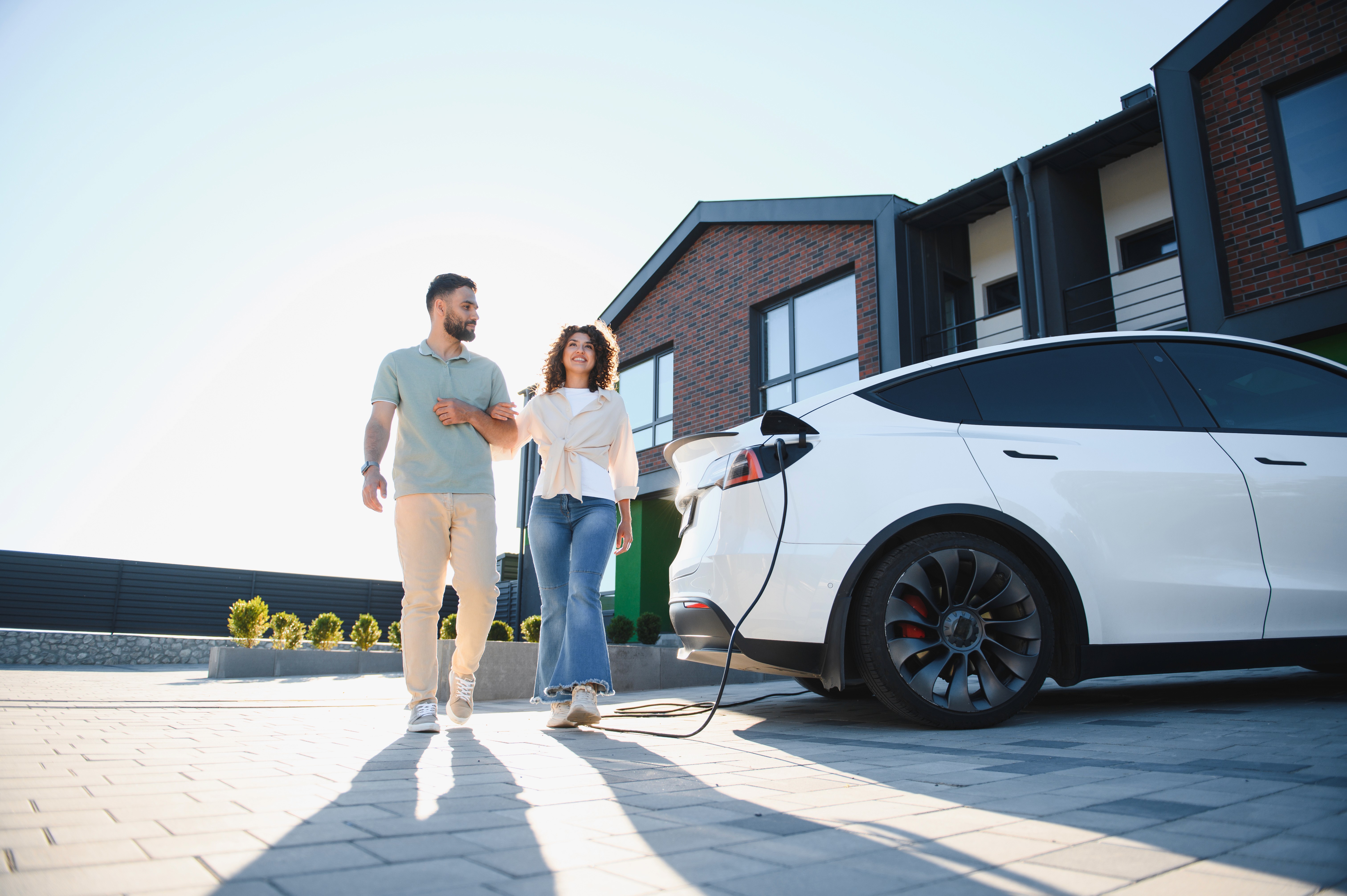
When you park an electric car at home, the first thing to do may seem almost automatic: plug it in and start charging straight away. But is that always the best option?
Not necessarily. For most home charging scenarios, the most practical solution is to plug the car in as soon as you arrive and schedule charging to start later, depending on your electricity tariff, other household energy consumption, your departure time and any available solar production.
Plugging in the vehicle and starting a charging session are two different things. The car can remain connected to the charger for several hours, while charging begins automatically only during the scheduled time window.
Immediate charging is still useful when you need to recover range quickly, when an unexpected journey comes up, or when surplus energy from your solar system is available at that particular moment.
So, how does scheduled EV charging work, when does it make sense, and when is it better to start charging straight away?
What is scheduled EV charging?
Scheduled charging allows you to decide in advance when the charger should start or stop a charging session.
Depending on the system you use, the schedule can be set:
through the app connected to the charger;
directly through the vehicle’s onboard system;
through the vehicle manufacturer’s app;
through a home energy management platform.
The simplest example is a charging window: the car is plugged in at 7:00 p.m., but charging is only enabled between 11:00 p.m. and 6:00 a.m.
This means you do not have to return to the vehicle later just to plug it in. You can connect the cable as soon as you park, and the system automatically manages when charging begins.
Scheduled charging should not, however, be confused with the broader concept of smart charging.
Scheduling mainly determines when the vehicle charges. More advanced smart energy management can also:
adjust charging power according to household consumption;
prevent the available electrical capacity from being exceeded;
make use of surplus solar energy;
coordinate multiple chargers;
adapt charging sessions to the home’s current energy conditions.
A more advanced Energy Management System can therefore go well beyond simple time scheduling.
The functions available depend on the charger installed, the vehicle, the app being used and the configuration of the electrical system.
Scheduled EV charging: when does it really make sense?
In general, scheduled charging makes sense when the car will remain parked for several hours and there is no immediate need to recover range.
It is particularly useful when:
electricity prices vary depending on the time of day;
you normally arrive home in the evening and leave again in the morning;
you want to avoid adding EV charging to periods of high household consumption;
you want to automate a recurring routine;
you want charging to finish close to your departure time;
your charger allows sessions to be managed through an app.
The main advantage is not purely financial. Scheduling also removes a small daily task: there is no need to remember to start charging manually later in the evening or adjust the settings every day.
Once your usual charging window has been configured, all you need to do is plug in the vehicle. The charger will begin delivering power at the scheduled time.
Whether this is worthwhile, however, always depends on the user’s actual circumstances. There is no single best charging time for every EV and every home.
When is it better to start charging immediately?
Immediate charging is the most sensible choice when the available range may not be enough for your next journey.
There are four situations in particular where starting straight away makes more sense.
When you need to leave again soon
If you need to use the car again within a few hours, delaying the charging session may not leave enough time to recover the energy you need.
In this situation, it is better to start charging immediately, even if the timing does not coincide with the potentially cheapest period.
The amount of time required will naturally depend on the vehicle, battery level and available charging power. You can explore these variables in more detail in our guide to electric car charging times.
When the battery is lower than expected
An unexpected journey, a detour or heavier-than-usual use can mean arriving home with a lower state of charge than normal.
Your usual charging schedule can be temporarily overridden so that charging begins immediately, before returning to your standard settings for the following days.
When electricity prices do not vary by time of day
With a single-rate electricity tariff, the energy price remains the same regardless of when electricity is consumed.
In this situation, scheduled charging does not necessarily generate a direct financial benefit. It may still be useful for managing household consumption or automating your routine, but you should not expect savings simply from moving the charging session to a different time.
When surplus solar energy is available
If you have a solar PV system, charging at night is not always the best option.
If the car is parked at home during production hours and the solar system is generating more electricity than the household is consuming, it may make sense to start charging immediately or dynamically adjust charging power to increase self-consumption.
In this situation, the decision depends less on the clock and more on how much solar energy is actually available.
Scheduled charging or immediate charging: how they compare
The two approaches should not be treated as rigid alternatives. They can complement each other depending on the day and your needs.
Scheduled charging
It is generally preferable when:
the car remains parked overnight;
you usually leave at a regular time;
your electricity tariff has different prices depending on the time of day;
you do not need to recover range immediately;
you want to automate your home charging routine.
Immediate charging
It is generally more suitable when:
you need to leave again soon;
the battery level is particularly low;
you need additional range because of an unexpected journey;
you are using a public charging station while travelling;
surplus solar energy is available at that moment;
there is no real benefit to delaying the session.
The most flexible solution is therefore to create a basic schedule for everyday use while keeping the option to override it and start charging immediately whenever necessary.
How to schedule EV charging with a charger and app
The exact procedure varies depending on the product being used, but the general principle is straightforward.
Once the charger has been installed and configured, its app will usually allow you to select the days and time windows during which charging is enabled.
For example:
Monday to Friday, from 11:00 p.m. to 6:00 a.m.;
throughout the weekend;
during a different time window on days when you work from home;
only during specific periods selected by the user.
With compatible products and configurations, you can schedule and manage charging directly through the app, monitor the charger and adapt charging sessions to your routine.
Once the settings have been saved, everyday use becomes very simple:
park the car;
plug in the cable;
the charger waits for the scheduled time window;
charging starts automatically;
use the app to monitor its status and make changes when needed.
If something unexpected comes up, you can temporarily change the schedule or start an immediate charging session without necessarily deleting your normal routine, depending on the functions available on your system.
It is important to avoid conflicting settings. If charging is scheduled both through the car and through the charger, two different schedules could prevent or delay the charging session.
As a general rule, it is better to choose one main system for managing charging times and then check that the vehicle settings are compatible with it.
Does charging at night always save money?
No. Charging at night can be cheaper, but savings are not automatic.
It all depends on your electricity contract.
Some energy tariffs use time-of-use pricing, meaning the price of electricity varies depending on the time of day. In these cases, moving EV charging to lower-cost periods can reduce the amount you spend on charging the car.
Other tariffs apply a single rate, meaning the energy price does not change according to the time of day. With this type of tariff, charging overnight is not necessarily cheaper than charging in the afternoon.
To understand whether scheduled charging can actually save you money, check:
the electricity price during different time periods;
how much energy is actually transferred to the vehicle;
the price difference between those periods;
how frequently you charge;
the specific conditions of your electricity contract.
A simple indicative calculation can be made using the following formula:
Estimated savings = energy shifted to lower-cost periods × difference in price per kWh
If the price difference is small, the annual savings will also be limited. If, on the other hand, a significant share of your charging can be moved to a substantially cheaper period, the benefit can become more meaningful.
Scheduling is still only one of the ways to reduce EV charging costs. Your electricity tariff, charging power, driving habits and any available solar generation also play an important role.
Does scheduled charging protect the battery?
Scheduling can contribute to more controlled battery management, but it does not automatically extend battery life in every situation.
It is important to distinguish between:
choosing when charging takes place;
setting a maximum charge level;
temperature management;
the behaviour of the vehicle’s battery management system.
The charger can authorise charging during a specific time window, but it does not necessarily know the exact state of charge of the vehicle battery or have the ability to stop the session at a percentage chosen by the user.
The ability to set a target such as 80% or 90% depends on the vehicle, the manufacturer’s app and the integrations available.
Many vehicle manufacturers recommend avoiding keeping the battery at extreme states of charge for long periods during everyday use. However, recommendations vary depending on the vehicle model and battery technology.
There is therefore no single percentage that is correct for every EV. The best approach is to follow the recommendations in your vehicle manual and adopt charging habits that are appropriate for your specific car.
Scheduled charging can be particularly useful when it allows the session to finish close to your departure time, rather than leaving the vehicle at a high state of charge for many unnecessary hours.
Scheduled charging and solar PV: what is the best time to charge?
With a solar PV system, the most convenient charging time can change significantly.
If your goal is to use as much of your own solar energy as possible, scheduling charging exclusively at night may actually be counterproductive. Solar panels do not generate electricity at night, so the charger will draw energy from the grid or, if available and configured accordingly, from a home battery storage system.
If the car is parked at home during the day, it may be more advantageous to charge your electric car using solar panels, taking advantage of the hours when solar production is highest.
An energy management system can adapt the power supplied to the vehicle according to:
real-time solar production;
electricity consumption from other household devices;
available surplus energy;
the charger’s maximum power;
priorities set by the user.
The best strategy can therefore be a hybrid one:
use available solar energy during the day;
complete charging later during a scheduled time window if necessary;
start immediately when surplus solar energy is available;
avoid unnecessary grid consumption when solar production is sufficient.
Five mistakes to avoid
1. Confusing plugging in with starting to charge
Plugging the car in does not necessarily mean charging has to begin immediately.
You can connect the cable as soon as you park and allow the charger to wait until the scheduled time.
2. Assuming electricity is always cheaper at night
Before setting an overnight charging schedule, check the conditions of your electricity tariff.
Depending on your contract and country, electricity may be cheaper during certain off-peak periods, but this is not universal. With a single-rate tariff, the price may remain unchanged throughout the day.
3. Scheduling both the car and charger without coordinating them
Two incompatible schedules can prevent charging from starting.
Where possible, choose one primary system for managing charging times.
4. Forgetting to adapt your routine
Your charging schedule should reflect your actual needs.
If your working hours, travel patterns or required range change, update the settings accordingly.
5. Not checking the first few charging sessions
After setting up a new schedule, monitor at least the first few sessions to make sure:
charging begins at the expected time;
the vehicle receives the energy it needs;
the charging window is long enough;
there are no conflicting settings;
the car is ready when you need to leave.
Once everything has been checked, the process can become almost completely automatic.
How to decide in a few seconds
Do you need to leave again soon?
Start charging immediately.
Will the car remain parked until the morning?
Plug it in and schedule the charging session.
Does your electricity price vary depending on the time of day?
Choose the time window that is genuinely cheaper under your electricity contract.
Do you have a single-rate tariff?
Schedule charging according to convenience and household energy demand rather than expecting savings that the tariff does not provide.
Do you have a solar PV system?
Consider charging during solar production hours or using dynamic energy management.
Has something unexpected come up?
Temporarily override the schedule and start charging straight away.
Frequently asked questions about scheduled EV charging
Can I plug my car in immediately and start charging later?
Yes. This is one of the main purposes of scheduled charging.
The vehicle can be connected as soon as it is parked, while the charger waits until the selected time window before starting the session.
Is scheduled charging worthwhile with a single-rate electricity tariff?
It does not necessarily provide financial savings because the energy price remains the same regardless of the time of day.
However, scheduled charging can still be useful for automating your routine, distributing household electricity consumption more effectively or ensuring that charging finishes close to your departure time.
Is it better to charge at night or during solar production?
It depends on your objective.
With a time-of-use electricity tariff, overnight or other off-peak periods may be cheaper. If you have a solar PV system and the car is parked at home during the day, however, using available solar energy directly may be the better option.
Can the charger automatically stop charging at 80%?
Not always.
Managing a target state of charge depends on the vehicle, charger, app and supported communication standards. In many cases, the maximum charge level is set directly through the vehicle itself.
Check the functions available on your specific model.
Can I start charging immediately even if I have set a schedule?
Yes. On systems that support this function, you can override the schedule to start an immediate charging session or temporarily change the charging window while keeping your usual schedule for subsequent days.
Conclusion: plug in immediately and schedule when charging starts
For everyday home use, the most practical solution is often to plug the car in straight away and let charging begin automatically at the scheduled time.
Scheduled EV charging is particularly useful when the vehicle remains parked for several hours, your routine is relatively predictable and your electricity tariff offers different prices depending on the time of day.
Immediate charging remains the right option when you need to recover range quickly, have to leave again soon or have solar energy available that makes sense to use at that moment.
There is therefore no need to choose one approach permanently. A well-designed schedule can manage everyday charging automatically, while immediate charging remains available whenever circumstances change.
That flexibility is the real advantage: you can plug in your EV without having to decide every time when charging should begin, allowing the system to manage your daily routine while keeping you in control whenever your needs change.
Purchase your EV Charger
Our expert will contact you to offer you the most suitable solution for you.