Jun 4, 2026
How much does a 6 kW photovoltaic system produce? The complete guide for a smart choice
Average production, seasonal performance, number of panels, electricity bill savings, and the factors that truly affect the output of a 6 kW photovoltaic system.
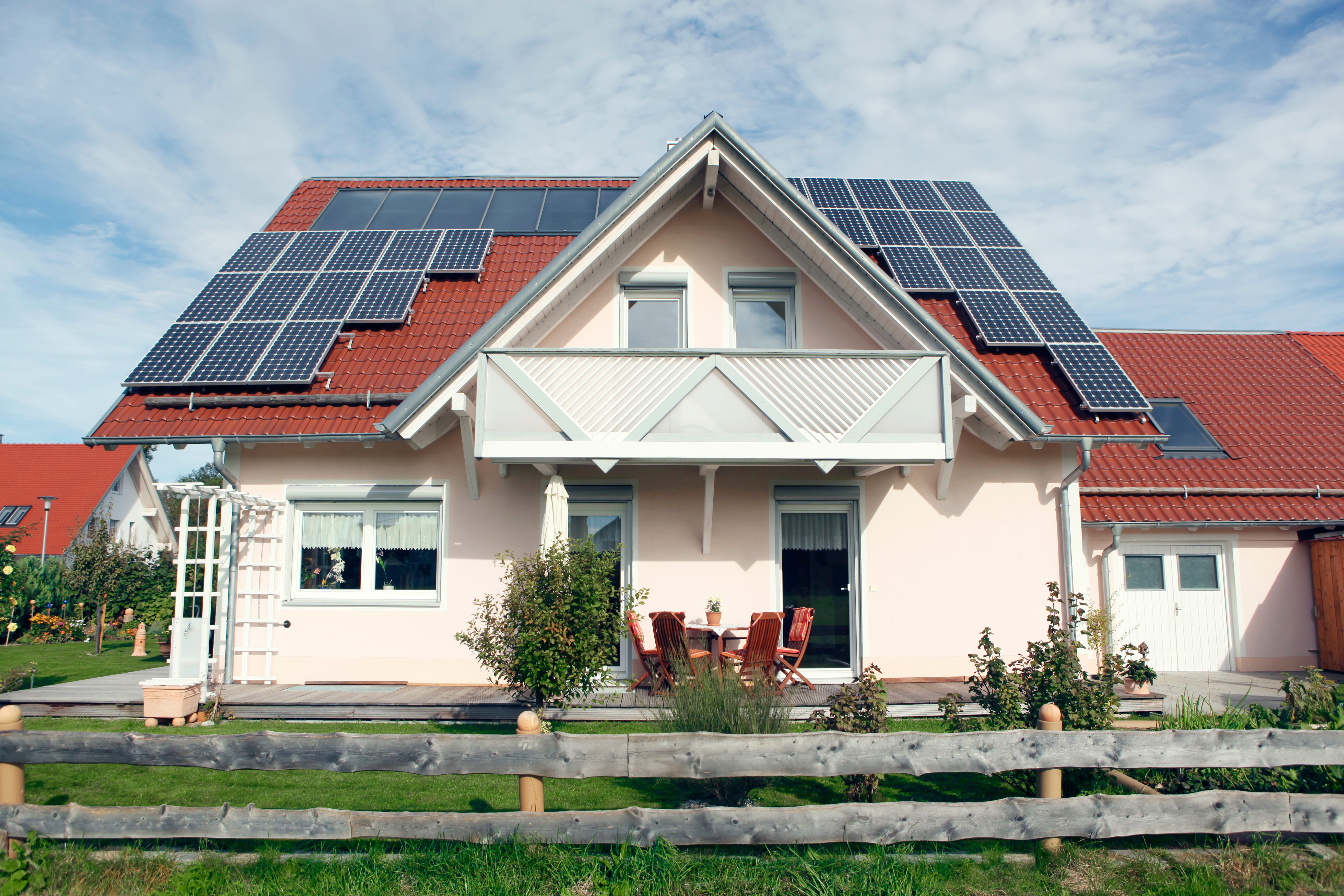
A 6 kW photovoltaic system is one of the most common solutions for homes with medium-to-high electricity consumption. It is an interesting system size because it can cover a significant share of household energy needs, especially if the home uses energy-intensive appliances, air conditioning, a heat pump, an induction cooktop, or an electric car.
But the real question is: how much does a 6 kW photovoltaic system produce?
In general, a 6 kW photovoltaic system can produce on average between 6,000 and 9,500 kWh per year, depending on the country, local solar irradiation, panel orientation, roof pitch, shading, component quality, and weather conditions.
In simple terms, a system installed in a region with lower solar irradiation will produce less than one installed in a sunnier area. At the same time, a system with good south-facing exposure in the Northern Hemisphere, or north-facing exposure in the Southern Hemisphere, and no shading can deliver much higher performance than one installed in less favourable conditions.
Let’s take a clear and complete look at how much energy a 6 kW photovoltaic system can actually produce and which factors affect its performance.
Average production of a 6 kW photovoltaic system
The output of a photovoltaic system is not the same for every home. However, it is possible to indicate some useful average estimates.
Under good conditions, a 6 kW photovoltaic system can produce approximately:
16–26 kWh per day, calculated as an annual average;
500–790 kWh per month, considering an average distribution throughout the year;
6,000–9,500 kWh per year, depending on the geographical area and the system’s conditions.
These values should not be seen as fixed figures, but as realistic ranges. A system may produce more during spring and summer and much less during winter. That is perfectly normal: solar production follows the sun’s seasonal pattern.
How many kWh it produces on average per year
A 6 kW system produces on average:
6,000–7,200 kWh per year in areas with lower solar irradiation;
7,200–8,400 kWh per year in areas with moderate solar irradiation;
8,400–9,500 kWh per year in areas with high solar irradiation.
The actual annual production depends strongly on the local climate, the number of sunlight hours, the quality of the installation, and the amount of shading affecting the panels.
Average daily production of a 6 kW system
On an annual basis, a 6 kW photovoltaic system produces around 16–26 kWh per day on average.
Be careful, though: this is only an average. On a very sunny summer day, production may exceed 35–40 kWh, while on a cloudy winter day it may drop to just a few kWh.
That is why you should not judge the system by looking at a single day. It is much more useful to look at monthly and annual production.
Estimated monthly production throughout the year
Monthly production changes significantly between winter and summer. As a guideline, a 6 kW photovoltaic system can produce:
in January, around 250–550 kWh, depending on hemisphere, season, and location;
in February, around 350–650 kWh;
in March, around 500–800 kWh;
in April, around 650–950 kWh;
in May, around 750–1,050 kWh;
in June, around 800–1,100 kWh;
in July, around 800–1,100 kWh;
in August, around 750–1,050 kWh;
in September, around 600–900 kWh;
in October, around 450–750 kWh;
in November, around 300–600 kWh;
in December, around 250–550 kWh.
Naturally, these figures are indicative. A home in a sunny climate with a well-oriented roof may achieve higher values than a home in a cloudier region with less favourable exposure.
Performance differences between regions
Geographical location is one of the most important factors. Areas with high solar irradiation, such as many Mediterranean, desert, subtropical, and equatorial regions, generally allow photovoltaic systems to produce more energy during the year.
In areas with lower irradiation, such as northern or cloudier climates, production is lower, but this does not mean that solar photovoltaics are not worthwhile. Even in less sunny regions, a 6 kW system can generate a significant amount of energy and meaningfully reduce electricity drawn from the grid.
What a 6 kW photovoltaic system means
Before talking about production, it is useful to clarify what “6 kW photovoltaic system” actually means.
A 6 kW system has an installed nominal power of 6 kilowatts. This value indicates the theoretical maximum power that the panels can reach under standard laboratory conditions.
In everyday use, however, real production depends on sunlight, temperature, module orientation, and many other factors.
Nominal power of the photovoltaic system
The nominal power is the sum of the power ratings of the individual installed panels.
For example, to reach around 6 kW, you could install:
around 15 panels of 400 W;
around 14 panels of 430–450 W;
around 12 panels of 500 W.
So, when we talk about a 6 kW system, we are referring to the total power of the photovoltaic modules, not to constant production at every moment of the day.
Difference between kW and kWh in solar production
One of the most common mistakes is confusing kW and kWh. They look similar, but they refer to two different concepts.
kW: the installed power of the system
The kW, or kilowatt, indicates power. In the case of photovoltaics, it represents the system’s maximum capacity to produce energy at a given moment.
A 6 kW system can theoretically reach an instantaneous power output of 6 kW, but only under very favourable conditions.
kWh: the electricity produced or consumed
The kWh, or kilowatt-hour, indicates the energy produced or consumed over time.
For example, if a system produces 6 kW for one hour, it generates 6 kWh of energy. If it produces 3 kW for two hours, it still generates 6 kWh.
Electricity bills show consumption in kWh.
Why a 6 kW system does not always produce at maximum power
A photovoltaic system does not always operate at its nominal power. During the day, production increases in the morning, reaches its peak around the middle of the day, and decreases in the afternoon.
In addition, clouds, shade, high temperatures, and imperfect orientation can reduce output. It is therefore normal that a 6 kW system does not constantly produce 6 kWh every hour.
Real production compared to peak power
Peak power is a useful technical reference, but it does not tell you on its own how much energy will be produced in a year.
To estimate real production, you need to consider the specific yield, meaning how many kWh each installed kW produces in a year.
Globally, an indicative value can range from around 1,000 to 1,600 kWh per installed kW per year, depending on the area, solar resource, climate, and system conditions.
How much a 6 kW photovoltaic system produces per year
Annual production is the most useful figure for assessing the performance of a photovoltaic system. Daily output can vary too much, while annual output gives a clearer picture of the system’s real contribution to household electricity needs.
Estimated annual production in kWh
A 6 kW photovoltaic system produces on average:
in areas with lower solar irradiation, around 6,000–7,200 kWh per year;
in areas with moderate solar irradiation, around 7,200–8,400 kWh per year;
in areas with high solar irradiation, around 8,400–9,500 kWh per year.
If the system is well designed, well installed, and free from major shading, production can be very satisfying.
Annual photovoltaic production in areas with lower solar irradiation
In areas with lower solar irradiation, a 6 kW system can produce approximately 6,000–7,200 kWh per year.
This may include cooler, cloudier, or more northern regions in the Northern Hemisphere, as well as locations with frequent rainfall or fewer annual sunlight hours. Even so, photovoltaics can still deliver excellent results, especially with a well-oriented roof and minimal shading.
Annual photovoltaic production in areas with moderate solar irradiation
In areas with moderate solar irradiation, production can reach around 7,200–8,400 kWh per year.
These conditions are common in many temperate regions, where a 6 kW system can offer a good balance between annual production, self-consumption, and savings on electricity bills.
Annual photovoltaic production in areas with high solar irradiation
In sunny regions with high solar irradiation, a 6 kW system can produce as much as 8,400–9,500 kWh per year.
This includes many Mediterranean, subtropical, desert, and high-sunlight regions. In these areas, photovoltaics can really perform at their best.
Formula for calculating the yield of a 6 kW system
A simple formula for estimating annual production is:
Annual production = system power × specific yield
For example:
6 kW × 1,300 kWh/kW = 7,800 kWh per year
This formula is useful for an initial estimate, although it does not replace a technical simulation based on the actual roof, location, and shading conditions.
Practical example of annual production calculation
Let’s imagine a home located in an area with moderate solar irradiation, with a 6 kW system installed on an inclined roof, correctly oriented and with no significant shading.
If the specific yield is 1,300 kWh/kW, annual production will be:
6 × 1,300 = 7,800 kWh
This means the system can generate almost 8,000 kWh per year, enough to cover a significant part of many households’ electricity consumption.
How much a 6 kW photovoltaic system produces per day
Daily production is one of the most searched-for figures, but also one of the most variable. A sunny day in summer cannot be compared with a rainy day in winter.
Average daily production on an annual basis
On an annual basis, a 6 kW photovoltaic system produces on average 16–26 kWh per day.
This average is obtained by dividing annual production by 365 days. For example, a system that produces 7,800 kWh per year generates on average around:
7,800 ÷ 365 = 21.4 kWh per day
How much energy it produces on a sunny day
On a clear spring or summer day, a 6 kW system can produce as much as 30–40 kWh.
Production will be higher if:
the panels are correctly oriented;
the inclination is suitable for the location;
there is no shading;
the system is clean and working properly;
solar irradiation is high.
How much energy it produces on a cloudy day
On a cloudy day, production decreases. However, the system still generates energy because the panels also use diffuse light.
On very overcast days, output can drop significantly, but it does not fall to zero unless conditions are particularly unfavourable.
Daily production in summer
In summer, thanks to longer days and higher irradiation, a 6 kW photovoltaic system can produce a lot of energy.
Under favourable conditions, daily production can reach 35–40 kWh. During the summer months, the system can be particularly useful for powering air conditioning, appliances, and electric car charging during the day.
Daily production in winter
In winter, production falls. Days are shorter, the sun is lower, and the weather is often less favourable.
A 6 kW system can produce approximately 5–16 kWh per day during the coldest months, with significant variations depending on climate, latitude, and local weather conditions.
Why daily output changes throughout the year
Daily output changes because the amount of available sunlight changes. There is nothing unusual about this: it is the normal behaviour of a photovoltaic system.
In general:
in spring, production increases quickly;
in summer, it reaches its highest values;
in autumn, it starts to decrease;
in winter, it reaches its lowest levels.
In the Southern Hemisphere, these seasonal patterns are reversed compared with the Northern Hemisphere.
How much a 6 kW photovoltaic system produces per month
Monthly production is very useful for understanding how energy is distributed throughout the year. It also helps assess whether it makes sense to install a battery or shift consumption to daylight hours.
Indicative monthly production month by month
A 6 kW system can produce around:
250–550 kWh in the least productive months, depending on climate and hemisphere;
400–800 kWh in transitional months;
750–1,150 kWh in the most productive months.
More specifically, in many Northern Hemisphere locations, the values may be approximately:
January: 250–550 kWh;
February: 350–650 kWh;
March: 500–800 kWh;
April: 650–950 kWh;
May: 750–1,050 kWh;
June: 800–1,100 kWh;
July: 800–1,100 kWh;
August: 750–1,050 kWh;
September: 600–900 kWh;
October: 450–750 kWh;
November: 300–600 kWh;
December: 250–550 kWh.
In the Southern Hemisphere, the seasonal pattern is reversed: production is generally higher from November to February and lower from May to August.
These values highlight an important point: production is not evenly distributed throughout the year.
Months with the highest solar production
The most productive months are generally the months with longer days, higher solar irradiation, and more stable weather.
In the Northern Hemisphere, these are usually late spring and summer months. In the Southern Hemisphere, peak production usually occurs between late spring and summer as well, but in the opposite part of the calendar year.
Months with the lowest photovoltaic production
The least productive months are usually the winter months, when days are shorter, the sun is lower, and weather conditions are often less favourable.
This does not mean that the system is not working; it simply means it produces less energy than during the summer season.
Difference between summer and winter production
The difference between summer and winter can be considerable. A summer month may produce two, three, or even four times more energy than a winter month, depending on latitude and local climate.
For this reason, it is important to size the system by considering the whole year, not only the period of maximum production.
How to interpret monthly data correctly
Monthly data should be read as an average. A particularly rainy month may produce less than expected, while a very sunny month may exceed estimates.
The truly important figure is the total annual production, because it smooths out seasonal fluctuations.
How many panels are needed for a 6 kW photovoltaic system?
The number of panels depends on the power of each module. In recent years, panels have become increasingly powerful, so fewer modules are now needed to reach 6 kW compared with the past.
Number of panels based on module power
To create a system of around 6 kW, you generally need:
15 panels of 400 W;
14 panels of around 430 W;
13 or 14 panels of 450 W, depending on the exact sizing;
12 panels of 500 W.
The exact number depends on the chosen configuration, the actual power of the available modules, and the usable space on the roof.
Surface area needed to install 6 kW of photovoltaics
A 6 kW photovoltaic system usually requires around 25–35 m² of available surface area.
The required surface area may vary depending on:
panel size;
roof layout;
existing obstacles;
technical distances to be respected;
type of roof covering.
Space required on a flat or pitched roof
On a pitched roof, panels usually follow the slope of the roof. On a flat roof, however, tilted mounting structures are often installed, which require additional space to avoid shading between rows.
Panel arrangement and system layout
The system layout must be designed carefully. It is not enough to simply “fill” the roof: shading, accessibility, safety, orientation, and electrical connections must all be considered.
When the roof is not large enough for a 6 kW system
If the roof does not have enough space, you can consider:
a smaller system;
high-efficiency panels;
installation across multiple roof sections;
structures on pergolas or canopies, where technically and legally possible.
Frequently asked questions about the production of a 6 kW photovoltaic system
How much does a 6 kW photovoltaic system produce per day?
It produces on average 16–26 kWh per day on an annual basis. In summer it can exceed 35 kWh per day, while in winter it can drop significantly.
How much does a 6 kW photovoltaic system produce per month?
Monthly production can range from around 250–550 kWh in the least productive months to 800–1,150 kWh in the most productive months, depending on the area and the system’s conditions.
How much does a 6 kW photovoltaic system produce per year?
Globally, it can produce approximately 6,000–9,500 kWh per year, depending mainly on solar irradiation, orientation, shading, and system quality.
How much does a 6 kW system produce in winter?
In winter, it produces less, often between 5 and 16 kWh per day, with significant variations depending on weather, latitude, and geographical location.
How much does a 6 kW system produce in summer?
In summer, it can produce 30–40 kWh per day under favourable conditions.
How many panels are needed for a 6 kW system?
You usually need around 12–15 panels, depending on module power.
How many square metres are needed for 6 kW of photovoltaics?
On average, 25–35 m² of available surface area are needed.
How much can a 6 kW photovoltaic system really produce?
A 6 kW photovoltaic system can produce around 6,000–9,500 kWh per year, with an average often between 7,000 and 8,500 kWh in many well-suited residential installations.
Actual production depends on many factors: geographical location, solar irradiation, exposure, inclination, shading, panel quality, inverter, maintenance, and weather conditions.
In general, a 6 kW system is a very interesting solution for families with medium-to-high electricity consumption, especially if they can increase self-consumption by using energy during production hours or by installing a properly sized battery.
The key point is this: the system should not be chosen based only on power, but according to the home’s real consumption and local solar conditions. When the system is designed correctly, photovoltaics can reduce electricity bills, increase energy independence, and make the home more efficient in the long term.
Purchase your EV Charger
Our expert will contact you to offer you the most suitable solution for you.