May 15, 2026
Reliable solar panel installers: a complete guide to choosing without mistakes
A clear guide to identifying reliable professionals, comparing offers and installing a safe, efficient and cost-effective photovoltaic system.
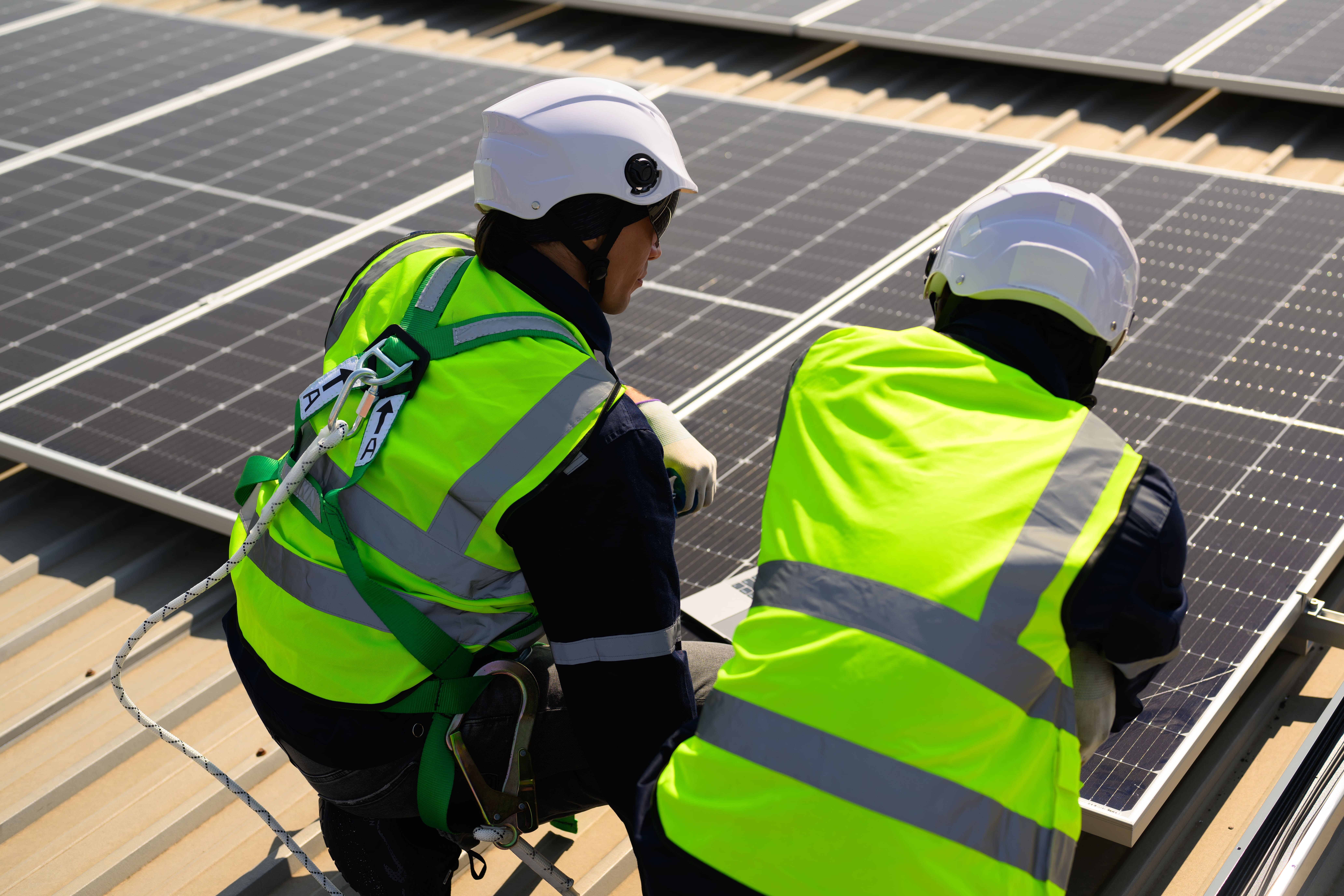
Choosing the right solar panel installers is one of the most important steps to getting a photovoltaic system that is efficient, safe and genuinely cost-effective over time. People often think the final result depends only on the quality of the panels, but that is not the case. Even the best photovoltaic module can perform below expectations if it is installed poorly, sized incorrectly or connected without the right technical care.
A good installer does not simply “mount panels on the roof”. They analyse consumption, assess the property’s exposure, design a solution that matches the customer’s needs, manage paperwork and connections, configure the inverter and deliver a system that is ready to operate reliably. In other words, they support the customer from the initial idea through to final activation.
In this guide, we will look at how to recognise reliable professionals, what a quote should include, which questions to ask before signing and which mistakes to avoid. The goal is simple: to help you make a more informed choice and invest in photovoltaics with greater peace of mind.
Who solar panel installers are and what they do
Solar panel installers are technicians or specialised companies that build photovoltaic systems for homes, businesses, commercial activities and industrial facilities. Their main task is to turn an energy project into a functioning, safe system that complies with regulations.
Behind a well-executed installation there are different types of expertise: electrical, structural, design-related and practical. It is not enough to know how to fix modules onto a roof. You need to understand how the system will interact with the electrical panel, how energy will be produced and used, which components to choose and how to ensure the best possible performance.
What a photovoltaic installer does before, during and after installation
Before installation, the installer collects essential information: electricity consumption, property characteristics, roof orientation, presence of shade, available space and customer objectives. This phase is essential because it helps determine whether photovoltaics are suitable for the specific case and what capacity should be installed.
During installation, the technician takes care of fitting the mounting structures, installing the photovoltaic modules, wiring, connecting the inverter and integrating the system with the existing electrical installation. Every step must be carried out precisely, because small mistakes can cause production losses, faults or safety issues.
After installation, the installer tests the system, configures the monitoring system, checks that the system is producing correctly and provides the technical documentation. A serious professional also remains available after activation for support, maintenance and assistance in case of anomalies.
Difference between installer, designer and qualified electrician
In the photovoltaic sector, these roles may seem similar, but they are not the same. The designer deals with the sizing and technical aspects of the project: they calculate the most suitable capacity, assess the panel layout, choose the components and check system compatibility.
The qualified electrician mainly works on electrical connections, protection devices, the electrical panel and the declaration of conformity. This is an essential role, because a photovoltaic system is, in every respect, an electrical system connected to a home or business.
The installer, on the other hand, may be an operational figure or a company that coordinates the entire process. In the best projects, these skills work together. That is why relying on a specialised company can make the difference: the customer has a single point of contact, supported by a team capable of managing every phase.
When a specialised company is needed for solar panel installation
A specialised company is recommended whenever you want to build a complete photovoltaic system, especially if storage batteries, wallboxes for electric cars, heat pumps or significant-capacity business systems are involved.
It is also particularly useful when the roof is complex, difficult to access, subject to restrictions or affected by significant shading. In these cases, a superficial assessment can lead to an inefficient system or, worse, work that has to be redone.
Relying on qualified professionals means reducing the risk of mistakes, receiving correct documentation and being able to count on technical support over the long term. In short, it is not just about installation: it is a choice that affects the entire life cycle of the system.
Why choose qualified installers for photovoltaics
A photovoltaic system is an investment designed to last for many years. That is why it is important for it to be installed by competent technicians, not improvised operators. The quality of the installation affects safety, energy production, warranty validity and the owner’s peace of mind.
Choosing qualified installers means starting on the right foot. It means having a project designed around the user’s real needs, avoiding standardised solutions and reducing the chance of future problems. Of course, price matters. But in photovoltaics, true value is measured above all over time.
Safety of the electrical system and the roof
Safety is the first reason why it is essential to choose experienced installers. A photovoltaic system works with electricity, is exposed to the weather and is often installed on roofs or elevated surfaces. It is not a job to take lightly.
Connections must be made correctly, cables must be protected, mounting structures must withstand the test of time and the roof must not be damaged. An installation error can cause water infiltration, detachment, malfunctions or electrical risks.
A qualified installer knows how to work safely, both for the customer and for their own team. They use suitable materials, follow correct procedures and check that the system is stable, protected and compliant. This aspect, although not always visible, is essential.
Solar panel performance and energy production
Energy production does not depend only on the nominal power of the panels. It also depends on how they are positioned, oriented and connected. A poorly designed system may produce less than it should, reducing savings on bills and extending the payback period.
A good installer assesses exposure, inclination, shading and module layout. If necessary, they propose technical solutions such as optimisers, microinverters or alternative layouts. The goal is not to install as many panels as possible, but to obtain the best useful production for the customer.
However, pay attention: the largest system is not always the most cost-effective one. Correct sizing must consider actual consumption, daily habits and possible future developments, such as the purchase of an electric car or the installation of a heat pump.
Regulatory compliance, declaration of conformity and technical procedures
A photovoltaic system must comply with technical and regulatory requirements. At the end of the work, the customer must receive clear documents, including diagrams, technical data sheets, manuals and the declaration of conformity. These documents are not mere formalities: they are needed to prove that the system has been built correctly.
In addition, the system must be connected to the grid according to precise procedures. Paperwork with the distributor, communications, authorisations or specific checks may be required depending on the type of property and the area.
An experienced installer knows these steps and can manage them in an organised way. This avoids delays, misunderstandings and bureaucratic problems. In short, a good installation does not end when the panels are on the roof: it ends when everything is active, documented and working.
Component warranties and post-installation support
Solar panels, the inverter, batteries and other components have different warranties. However, to make proper use of them, it is important that the system is installed according to the manufacturers’ instructions and that the documentation is complete.
A reliable installer explains which warranties are included, what they cover and for how long. They also clarify who intervenes in case of a fault: the installation company, the manufacturer or an authorised service centre.
Post-installation support is often underestimated. Yet, over the years, it can make a big difference. A system that is monitored and carefully followed makes it possible to quickly detect any drops in production or technical anomalies.
How to choose reliable solar panel installers
The choice of installer should not be based on price alone. It is better to assess experience, skills, the quality of the site survey, quote transparency and the company’s willingness to support the customer even after installation.
A reliable installer does not try to sell a standard solution at all costs. On the contrary, they listen, analyse and propose a system suited to the context. If something is not worthwhile, they say so. If additional checks are needed, they suggest them. This approach is a good sign.
Experience with residential and business photovoltaic systems
Experience matters, especially when the system has particular characteristics. Installing panels on a detached house is not the same as designing a system for an industrial warehouse. Capacities, consumption, available surfaces and customer needs all change.
For a home, the focus will often be on self-consumption, reducing bills and possibly integrating a battery or wallbox. For a business, however, production during working hours, economic return and operational continuity may become central.
Before choosing, it is useful to ask whether the installer has already built similar systems. Photos, case studies, references and technical explanations help you understand whether you are dealing with a truly prepared professional.
Authorisations, certifications and technical skills to check
A photovoltaic installer must have adequate technical skills and operate in compliance with the requirements for electrical systems. Before signing, it is reasonable to ask for information on the company’s authorisations and the qualifications of the technicians involved.
This is not an awkward question. In fact, a serious professional answers naturally and provides clear information. If, on the other hand, the company avoids the topic, downplays it or does not provide documentation, it is better to take a step back.
Technical skills also concern the products installed. Panels, inverters, batteries and monitoring systems are not all the same. A good installer knows the differences and can explain why they are proposing a specific solution.
Reviews, reputation and completed photovoltaic projects
Online reviews can provide useful indications, as long as they are read carefully. It is not enough to look at the star rating: you need to understand what customers are saying. Do they mention punctuality? Support? Clarity? Problems solved well?
Word of mouth can also be valuable, especially when it comes from people who have already installed a similar system. However, opinions should always be combined with a concrete technical assessment.
Another important element is the presence of completed projects. A transparent installer should be able to show examples, explain previous projects and describe how they solved specific situations. This helps distinguish those with real experience from those who simply make promises.
Quality of the technical site survey and roof assessment
The site survey is one of the most important moments. A quote prepared without seeing the property or without collecting enough data risks being incomplete. Of course, an initial estimate can also be made remotely, but a more accurate assessment is needed for a final offer.
During the site survey, the installer should check the available surface, orientation, inclination, roof condition, shading and the position of the electrical panel. They should also assess where to install the inverter, any battery and protection devices.
A rushed site survey is a warning sign. On the contrary, a technician who asks questions, takes measurements, observes details and explains critical issues demonstrates professionalism. And, let’s be honest, they also inspire much more trust.
What a quote for solar panel installation should include
A quote for solar panels must be clear, detailed and easy to understand. It should not simply indicate a total price, but explain what will be installed, which services are included, which costs remain excluded and which warranties are offered.
A good quote allows you to compare multiple offers correctly. Without details, however, the risk is choosing the option that appears cheapest and only later discovering that components, procedures or essential services are missing.
System capacity, photovoltaic modules and inverter
The first piece of information to check is the system capacity, expressed in kW. This must be consistent with the customer’s consumption and the available space. A capacity that is too low may not meet requirements, while excessive capacity may not be economically optimal.
The quote should indicate the brand, model and characteristics of the photovoltaic modules. It is not enough to write “solar panels”: precise data is needed, because quality, efficiency and warranties can vary greatly.
The same applies to the inverter, which is one of the central components of the system. The inverter converts the energy produced by the panels into energy that can be used by the home or business. Its quality affects performance, safety and the ability to monitor the system.
Mounting structures, wiring and protection systems
Mounting structures are essential for system stability. They must be suitable for the type of roof, resistant and installed without compromising the covering. A cheap but unsuitable mounting system can create problems over time.
Wiring, connectors and electrical protections must also be specified. These are often less visible components, but they play a decisive role in the safety and durability of the system. An orderly job, with the correct materials, reduces the risk of faults and makes any future work easier.
The quote should therefore include all these items, not only the most “commercial” components. A photovoltaic system is a complete system, not simply a sum of panels.
Included services: design, paperwork, installation and testing
A turnkey offer should include design, component supply, installation, technical paperwork, grid connection, testing and monitoring configuration. However, this should not be taken for granted.
It is important to check what is included and what is not. For example, are the procedures with the distributor included? Is testing included? Will the customer receive assistance in configuring the monitoring app? Are any scaffolding or platforms already included in the price?
The more precise the quote, the lower the risk of surprises. A serious installer prefers to clarify everything beforehand, including the less pleasant aspects, rather than leaving doubts open.
Excluded costs, contract conditions and written warranties
Every quote should indicate any excluded costs. Examples may include masonry work, unforeseeable electrical upgrades, special scaffolding or work on the roof covering. These costs are not always necessary, but if there is a real possibility, it is better to know in advance.
Payment conditions must be clear: deposit, balance, any instalments and deadlines. Installation times should also be indicated, at least as an estimate.
Finally, warranties must be written. Warranty on the panels, inverter, battery, installation and support: every item must be understandable. Verbal promises are worth little if they do not appear in the contract.
How much it costs to install solar panels with qualified professionals
The cost of a photovoltaic system can vary based on many factors. There is no price that applies to everyone, because every property has different characteristics and every customer has specific needs.
The point is not to look for the lowest price in absolute terms, but for the best balance between quality, performance, safety, warranties and support. A well-designed system can generate value for many years; a poorly built one can become a constant source of problems.
Factors that influence the cost of a photovoltaic system
The first factor is the size of the system. As installed capacity increases, components, labour and project complexity also increase. However, the cost per kW may vary depending on the scale of the work.
The choice of components also has a significant impact. High-efficiency panels, advanced inverters, storage batteries and advanced monitoring systems have different prices, but they can offer advantages in terms of performance and management.
Other important elements include roof complexity, site accessibility, the need for scaffolding, distance from the electrical panel, any upgrades and the presence of restrictions. That is why the site survey remains essential: it allows the cost to be estimated more realistically.
Prices for domestic photovoltaic installation
For a home, the cost depends mainly on annual consumption, available space and whether or not a battery is included. A family with limited consumption will have different needs from a home with a heat pump, induction hob and electric car.
The installer should propose a system proportionate to the customer’s energy profile. The goal is not to sell the largest solution, but the most suitable one. In many cases, a good balance between production and self-consumption makes it possible to achieve better results than with an oversized system.
A storage battery can increase the initial cost, but it can be interesting when consumption is concentrated in the evening hours or when the customer wants to increase energy independence. However, it should be assessed carefully, without automatic assumptions.
Costs for business and commercial solar systems
Business systems follow different logic compared with domestic ones. Companies often consume energy during the day, precisely when the system produces the most. This can make photovoltaics particularly interesting.
Costs depend on installed capacity, available surface, type of roof and the company’s production needs. For an industrial warehouse, for example, structural checks, specific safety systems and more detailed design may be required.
A good installer for businesses does not simply provide a price. They analyse consumption, assess return on investment, propose solutions to maximise self-consumption and consider maintenance over time. This approach is much more useful than a simple standard offer.
Why not choose only the lowest quote
The lowest quote may seem attractive, but it is not always the best choice. Sometimes a price that is too low hides lower-quality components, less specialised labour, limited warranties or excluded services.
The risk is saving at the beginning and paying more later, through corrective work, poor production or lack of support. It is better to assess the offer as a whole: components, installation, documentation, timing, warranties and support.
Of course, a high price is not automatically synonymous with quality. That is why it is useful to compare multiple quotes, ask precise questions and request explanations about the differences. A serious professional will be able to justify every item.
Phases of installing a photovoltaic system
The installation of a photovoltaic system follows several phases, each with a specific role. Knowing them helps you understand what to expect and assess whether the installer is working in an organised way.
A well-managed process reduces delays, mistakes and misunderstandings. From the first contact to final testing, every step should be clear to the customer.
Analysis of energy consumption and feasibility study
The first phase consists of analysing consumption. The installer may ask for electricity bills, information about consumption habits and details of any high-consumption appliances.
This analysis is used to understand how much energy is consumed, at which times of day and with what future prospects. For example, if the customer plans to install a heat pump or wallbox, the sizing will need to take this into account.
The feasibility study also assesses whether the property is suitable for photovoltaics. Not all roofs offer the same conditions: orientation, space, shading and roof condition can greatly influence the project.
Site survey, sizing and design of the solar system
During the site survey, the technician directly checks the property’s conditions. They observe the roof, measure the spaces, check accessibility and assess where to place the inverter and other components.
At this point, the system is sized. Capacity is chosen based on consumption, available surface and the customer’s objectives. A well-executed project combines technical and economic aspects.
The design defines the panel layout, connections, components and estimated production. This is where the installer’s experience becomes clear: good design prevents many problems during installation and management.
Grid connection procedures and necessary authorisations
Before or after installation, depending on the case, technical and administrative procedures must be managed. These may concern grid connection, communications with the distributor, documents for the customer and any local authorisations.
In certain contexts, especially in restricted areas or apartment buildings, additional checks may be necessary. A prepared installer knows which steps are needed and which documents to collect.
This phase may seem tedious, but it is decisive. A correctly installed system must also be properly connected, declared and documented. Only in this way can the customer use it with complete peace of mind.
Panel mounting, inverter connection, testing and activation
The operational phase includes mounting the structures, laying the modules, wiring, installing the inverter and, if present, connecting the battery. The work must be orderly, safe and respectful of the roof covering.
After installation comes testing. The technician checks that the system works, that the connections are correct and that the monitoring system records the data. The customer should also receive a practical explanation of how to read the app or control portal.
Final activation marks the start of production. From that moment, the system begins to generate energy and the customer can monitor their savings. It is an important moment, but it should not be the end of the relationship with the installer.
Solar panel installers near me: when it is worth choosing a local technician
Many people search for “solar panel installers near me” because they want a technician who is available, easy to reach and able to intervene quickly. This is understandable: when it comes to a home or business, having a nearby point of contact can provide greater reassurance.
However, geographical proximity should not be the only criterion. It is better to choose a competent installer a few kilometres further away than a nearby technician who is poorly prepared. The ideal solution is to find a good balance between proximity, experience and reliability.
Advantages of a photovoltaic company in your area
A local company often knows the area better, including weather conditions, the most common roof types and any procedures required locally. This can make project management smoother.
Proximity also makes the site survey and any subsequent interventions easier. If a check is needed, a local technician can organise it more quickly than a company located far away.
In addition, with a local installer it is often easier to build a direct relationship. The customer knows who to talk to, who carried out the work and who to contact if needed. This is no small thing.
Fast support, maintenance and after-sales interventions
Support is one of the main advantages of local installers. If the inverter reports an error, if the app shows a drop in production or if a check is needed, having a nearby contact can speed things up.
Routine maintenance does not require continuous interventions, but periodic checks can help keep the system efficient. An installer that also offers monitoring and maintenance shows that they want to support the customer over time.
That said, well-organised national companies can also offer excellent support, especially if they have technical teams distributed across the territory. The actual service should therefore be assessed, not just the size of the company.
Local installers or national companies: how to compare offers
To compare local installers and national companies, it is useful to look at objective elements: component quality, quote clarity, warranties, installation times, after-sales support and reputation.
Local companies can offer a more direct relationship and greater flexibility. Structured companies may have more organised processes, partnerships with manufacturers and greater operational capacity. Both options can be valid.
The best choice is the one that guarantees expertise, transparency and continuity. The customer should not only ask “how much does it cost?”, but also “who will support me after installation?”. This question often clarifies many things.
Mistakes to avoid when choosing photovoltaic installers
Choosing a solar panel installer requires attention. Some mistakes may seem small at first, but can have important consequences over time. The good news is that they can be avoided, provided you know what to look for.
An informed approach helps you select offers better, ask the right questions and recognise any warning signs.
Accepting a generic quote without a site survey
A generic quote can be useful as an initial indication, but it should not be the final basis for signing a contract. Without a site survey or sufficient technical data, the risk of inaccuracies is high.
The roof may have unconsidered shading, the electrical panel may require upgrades, and site access may be more complex than expected. All these elements affect price, timing and feasibility.
It is better to be wary of anyone who promises everything immediately without checks. A serious professional prefers to collect information before making a final proposal.
Not checking authorisations, reviews and references
Another common mistake is relying only on the commercial presentation. Polished brochures and convincing promises are not enough. Before choosing, it is advisable to check authorisations, experience and reputation.
Reviews can say a lot, especially when they describe the company’s behaviour after installation. References and completed work are also useful for understanding the real level of expertise.
You do not need to become a technical expert, but you do need to carry out some basic checks. It is an important investment, so it is worth spending some time on the choice.
Overlooking support, maintenance and system monitoring
Many customers focus on the installation stage and forget what comes afterwards. Yet a photovoltaic system must be monitored over time to check that it is producing correctly.
A reliable installer explains how to monitor production, what to do in case of anomalies and which support services are available. If the company disappears after the final payment, the customer risks being left alone when problems arise.
Maintenance should not be seen as an unnecessary cost, but as a way to protect the investment. A periodic check can prevent production losses and more serious faults.
Trusting unrealistic energy-saving promises
Photovoltaics can bring concrete benefits, but overly aggressive promises should raise caution. Guaranteed savings without consumption analysis, unrealistic payback times or phrases such as “you will never pay anything again” are signs to evaluate carefully.
Every system delivers different results based on exposure, consumption, self-consumption, sizing and customer habits. A serious installer does not sell illusions, but reasoned estimates.
An optimistic tone is perfectly fine, because photovoltaics are a positive choice. But optimism must be accompanied by data, transparency and common sense.
Questions to ask before signing the contract
Before signing, it is useful to prepare a few questions. There is no need for complicated interrogations: clear questions are enough to understand whether the installer is competent, transparent and willing to explain their choices.
A reliable professional answers without irritation. In fact, they appreciate an informed customer, because an informed decision reduces future misunderstandings.
Questions about system capacity and estimated annual production
The first question to ask is: “Why do you recommend this capacity?” The answer should relate to consumption, available space and the customer’s objectives. If the explanation is vague, it is better to investigate further.
It is also useful to ask how much energy the system is expected to produce each year and which factors may influence this production. Shading, orientation and inclination must be considered.
Another important question concerns self-consumption: how much of the energy produced will probably be used directly? This figure greatly affects the system’s cost-effectiveness.
Questions about solar panels, inverter and storage battery
The customer should ask which panels will be installed, with which warranties and which technical characteristics. The same applies to the inverter: brand, model, warranty duration and monitoring capability.
If a battery is proposed, it is important to ask why. Is it really needed in the specific case? What capacity is recommended? Is it compatible with the system? What warranties does it offer?
The battery can be a very useful solution, but it should not be included automatically in every project. It must respond to real needs.
Questions about price, incentives, tax deductions and included costs
The price must be very clear. Is the quote truly turnkey? Does it include paperwork, testing, monitoring, any scaffolding and configuration? Are there any excluded costs?
As regards incentives and tax deductions, it is important to ask which benefits may apply and which documents are needed. Measures can change, so it is always best to check the updated conditions at the time of signing.
A good installer does not make superficial promises about tax benefits. They explain what they can manage directly and what remains the responsibility of the customer or tax advisor.
Questions about warranties, maintenance and technical support
Before signing, you need to know who intervenes in case of a fault. Does the installation company offer direct support? Are there average response times? Is it possible to activate a maintenance contract?
It is also useful to ask what happens if the system produces less than expected. Does the monitoring system detect anomalies? Does the installer check the data remotely?
These questions help you understand whether the relationship will end on the day of installation or whether the company will truly stay by the customer’s side. And in photovoltaics, this makes a real difference.
FAQ about solar panel installers
How long does it take to install a photovoltaic system?
Installation time depends on the size of the system, the complexity of the roof and the presence of a battery or other integrated systems. For many domestic systems, the physical installation may take only a few days, but the entire process also includes the site survey, design, paperwork and activation.
How can you tell whether a solar panel installer is qualified?
A qualified installer has documented experience, suitable authorisations, verifiable reviews, clear quotes and the ability to explain technical choices. In addition, they carry out an accurate site survey and provide complete documentation at the end of the work.
How much does it cost to rely on professional photovoltaic installers?
The cost varies based on system capacity, component quality, presence of a battery, roof complexity and included services. To evaluate the price correctly, it is important to compare detailed quotes and not focus only on the final figure.
Is it worth choosing solar panel installers near me?
Choosing a nearby installer can be convenient for site surveys, support and maintenance. However, proximity should not outweigh expertise and reliability. The best choice is a qualified, transparent professional who remains available after installation.
Does the installer also handle the bureaucracy?
Many companies offer a turnkey service that also includes technical procedures and grid connection. However, it is essential to check this in the quote and contract, because not all services are always included automatically.
Is a site survey always needed before installation?
Yes, for an accurate project, a site survey is strongly recommended. It makes it possible to check the roof, shading, electrical panel, technical spaces and the property’s real conditions. A preliminary estimate can be made remotely, but the final quote should be based on concrete data.
Which warranties should a solar panel company offer?
A reliable company should clearly indicate warranties on the panels, inverter, any battery and installation. It should also explain who manages support and which documents are provided to the customer.
Conclusion: how to choose the best solar panel installers
Choosing the best solar panel installers means assessing much more than price. You need to consider technical expertise, site survey quality, quote clarity, component reliability, written warranties and post-installation support.
A well-designed photovoltaic system can help reduce energy costs, increase independence and enhance the value of the property. But to achieve these results, you need a professional capable of building a tailor-made solution, not a standard package that is the same for everyone.
Final criteria for assessing a photovoltaic professional
Before choosing, it is useful to check a few essential aspects: experience with similar systems, authorisations, reviews, accurate site survey, detailed quote, specified components, understandable warranties and long-term support.
A good installer does not rush the customer, does not promise miracles and does not leave grey areas. They explain, advise and guide the customer towards an informed decision. This is the kind of professionalism to look for.
Why request a site survey before the final quote
The site survey is the step that turns a simple idea into a concrete project. It helps determine how much space is available, which obstacles exist, where to place the components and what production to expect.
Requesting a site survey before the final quote is therefore a cautious and intelligent choice. It helps avoid surprises, clarifies costs and allows the installer to propose a truly suitable solution. And when investing in photovoltaics, starting from solid foundations is always the best option.
Purchase your EV Charger
Our expert will contact you to offer you the most suitable solution for you.