Jun 10, 2026
Solar panel installation: a complete guide for a more efficient home
Everything you need to know before, during and after installing a home photovoltaic system: from checking the roof to monitoring energy consumption.
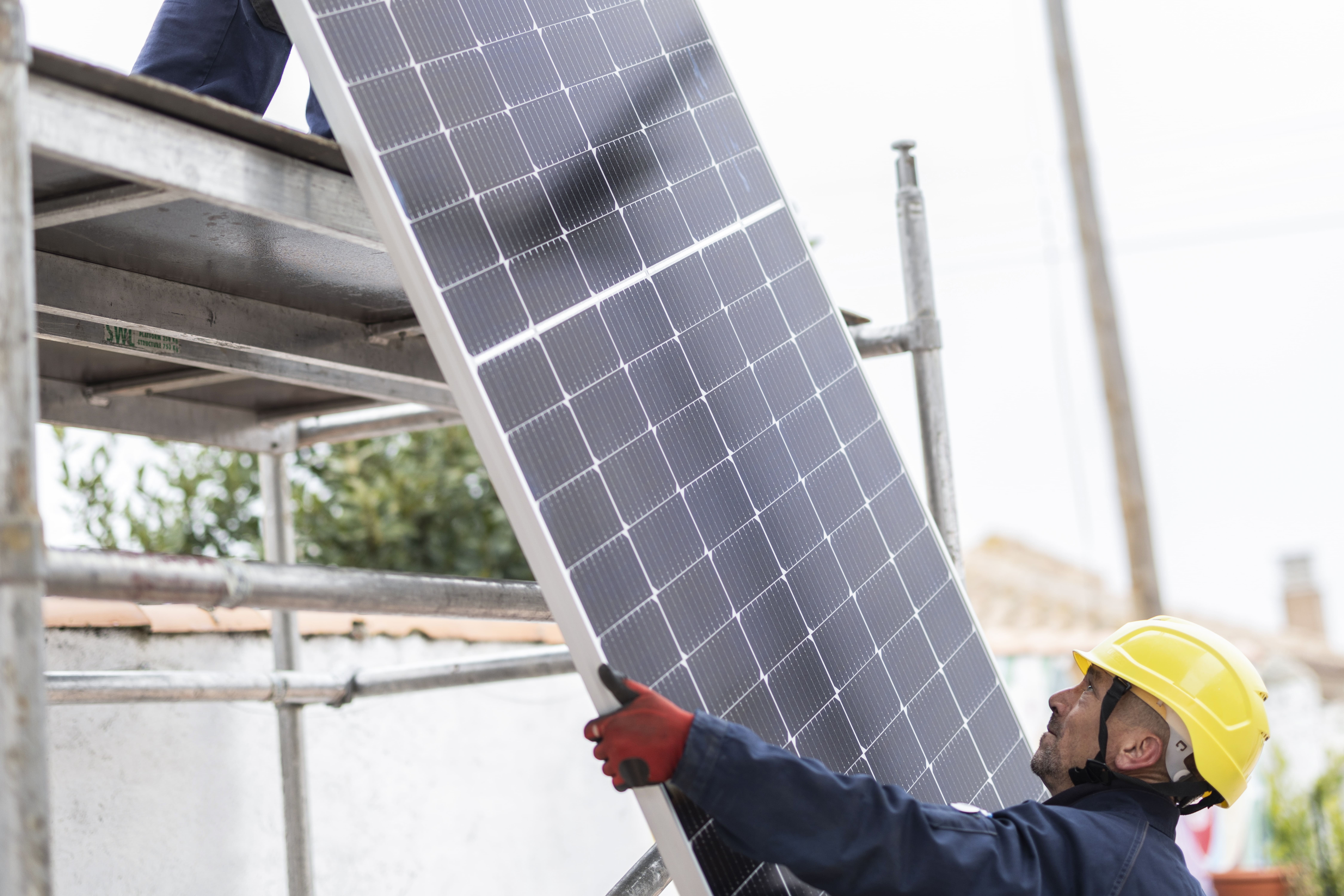
Installing solar panels on your home roof is one of the most practical steps you can take to produce clean energy, reduce electricity taken from the grid and make your home more efficient. However, installing a photovoltaic system is not just about mounting modules on the roof: it is a technical process that includes preliminary checks, design, electrical connections, testing, activation and monitoring.
Knowing the main steps helps you understand what to expect, which checks to carry out and how to prepare your home before the technicians arrive. In this guide, we’ll look at how solar panel installation works, what requirements a home needs to meet and what happens after the system has been installed.
What installing photovoltaic solar panels means
When we talk about solar panel installation in a residential context, we usually mean photovoltaic panels, meaning modules that turn sunlight into electricity.
This is different from solar thermal technology, which uses the sun’s heat to produce domestic hot water. Photovoltaics, on the other hand, produce electricity that can be used to power appliances, a heat pump, an induction hob, a storage battery and a wallbox for electric vehicle charging.
A home photovoltaic system usually includes:
photovoltaic modules;
mounting structures;
inverter;
cables and electrical protection devices;
monitoring system;
optional storage battery;
optional wallbox for home charging.
Installing the panels is only one part of the job. For the system to work properly, it also needs electrical connections, inverter configuration, safety checks and grid connection procedures.
Home requirements before installation
Before installing solar panels, it is necessary to understand whether the home is suitable. There is no one-size-fits-all answer: every roof, electrical system and consumption profile has different characteristics.
The first element to assess is the available surface area. It is not just the total size of the roof that matters, but the space that can actually be used for panels. Chimneys, skylights, antennas, dormers, parapets and shaded areas can reduce the usable surface.
Orientation and tilt also influence production. A favourable exposure makes it possible to use sunlight more effectively, but layouts that differ from the classic south-facing orientation can also work well if designed correctly.
Another important aspect is the presence of shade. Trees, nearby buildings, chimneys or other obstacles can reduce system performance, especially if the shade falls on the panels during the central hours of the day.
The condition of the roof must also be checked. If the roof is old, damaged or due for maintenance work, it is better to deal with this before installation. Removing a newly installed system to repair the roof would be a waste, as well as an avoidable cost.
Finally, there must be enough space for the inverter, any battery and electrical components. Garages, technical rooms or protected external walls can be suitable options, as long as they are accessible, ventilated and compatible with the technical requirements of the devices.
Technical analysis and system sizing
After an initial assessment of the home, the next step is the technical analysis. This stage turns the initial idea into a concrete project.
It starts with electricity consumption. Bills help show how much energy the home uses during the year and in which periods. This figure is essential for choosing the right system size.
It is also useful to consider future consumption. If you plan to install a heat pump, buy an electric car or switch to an induction hob in the next few years, the system should be designed with this in mind.
Sizing takes into account:
annual consumption in kWh;
available surface area;
roof exposure;
presence of shade;
desired power output;
optional battery;
optional electric vehicle charging.
The goal is not to install “as many panels as possible”, but to design a system that matches the home’s real consumption and future needs.
Installation design
The design stage defines how the system will be built. This is where the panel layout, inverter position, cable route and any integration with a battery or wallbox are established.
The module layout must take into account the usable surface area, orientation, shade and any obstacles on the roof. A good design does not simply fill every available space, but places the panels where they can produce more effectively.
The inverter is installed in an accessible, ventilated and protected location. It is the component that converts the energy produced by the panels into energy that can be used in the home, so its position should not be chosen at random.
The cable route must also be planned. An orderly, protected and discreet route makes the system safer, easier to inspect and more visually pleasing.
If a battery and wallbox are planned, it is best to integrate them from the design stage. This makes it easier to coordinate production, storage, household consumption and electric vehicle charging.
Solar panel installation: the main steps
The installation phase is when the project takes shape. The technicians prepare the work area, access the roof and begin installing the mounting structures.
First, the mounting systems are installed. On a pitched roof, brackets, hooks and rails are generally used; on a flat roof, tilted structures and ballast may be used. The solution changes depending on the type of roof.
After the structures are installed, the photovoltaic modules are positioned. The panels must be aligned, properly secured and installed in a way that ensures stability, ventilation and resistance to weather conditions.
Next comes the electrical wiring. The modules are connected to one another and then to the inverter. The cables must be protected from sun, rain and mechanical stress, especially in outdoor sections.
The inverter is then connected to the home electrical panel, with the necessary protection devices. If present, the storage battery is also installed and configured. If the project includes a wallbox, the charging unit is connected and configured as well.
This phase can take from a few days to longer, depending on the complexity of the roof, the size of the system, accessibility and the presence of additional components.
Installation on pitched roofs, flat roofs or alternative structures
The type of roof has a major impact on the installation method.
On a pitched tiled roof, the panels normally follow the slope of the roof pitch. This is a very common solution for homes and requires mounting systems suitable for the roof covering to prevent leaks or damage.
On a flat roof, modules are often installed on tilted structures. In this case, it is necessary to consider the weight of the ballast, wind resistance and the distance between rows of panels to avoid mutual shading.
There are also alternative solutions, such as photovoltaic carports, solar pergolas, garages or outbuildings. These can be useful when the main roof is not available or when solar production is to be combined with other uses, such as protecting the car and charging it with energy produced at home.
Testing and system activation
Once installation is complete, the system must be checked and tested.
Testing is used to verify:
panel fastening;
cable integrity;
correct connections;
inverter operation;
presence of electrical protection devices;
monitoring system operation;
optional battery;
optional wallbox.
It is important to distinguish between an installed, tested and active system. A system may be physically ready, but not yet fully enabled for connection or energy feed-in to the grid.
Activation may include procedures with the distributor, meter configuration and completion of the technical documentation. Only after these steps can the system operate fully as planned in the project.
Solar panel installation timing
Timing depends on several factors. The physical installation of a standard home system may take only a few days, but the full process is broader.
The main steps are:
site inspection and data collection;
design;
material order;
installation;
electrical connections;
testing;
connection procedures;
final activation.
Timing may be affected by a complex roof, bad weather, difficult access, the presence of a battery or wallbox, electrical upgrades and the distributor’s technical timelines.
For this reason, it is better not to consider only the days spent on site. The actual installation can be quick, but the full project requires several steps.
What to check before, during and after installation
Before the work begins, it is useful to prepare the home in a simple but effective way. Clear access to the roof, garage, technical room and electrical panel. If the inverter or battery will be installed in a specific area, make sure the space is already available.
During installation, there is no need to check every technical detail, but it is worth making sure that the position of the panels, inverter and cables is consistent with what was agreed. If changes from the original project come up, it is reasonable to ask why.
After installation, the most useful checks concern:
inverter start-up;
access to the monitoring app;
display of production data;
operation of any battery;
operation of any wallbox;
delivery of final documents;
information on warranty, assistance and maintenance.
This moment is also important for understanding how to read the first production data and what to do in case of anomalies.
Monitoring and use of the energy produced
After activation, monitoring becomes a valuable tool. It allows you to see how much energy the panels produce, how much is consumed at home, how much is fed into the grid and how much is possibly stored in the battery.
The main data to observe are:
instant production;
daily, monthly and annual production;
self-consumption;
energy taken from the grid;
energy fed into the grid;
battery state of charge;
any errors or notifications.
In the first few days, it is normal to check the app often, but the data should be interpreted with common sense. Weather, season, time of day and household habits have a major impact on production and self-consumption.
To make better use of solar energy, it is helpful to shift some consumption, where possible, to the hours of higher production. Washing machines, dishwashers, dryers, heat pumps and electric vehicle charging can be managed more intelligently.
There is no need to turn everyday life upside down. Often, small habits are enough to increase self-consumption and make better use of the system.
Storage battery and wallbox: when to consider them
A storage battery makes it possible to use solar energy even when the panels are not producing, for example in the evening. It is not mandatory, but it can be useful if household consumption is concentrated outside daylight hours.
A wallbox, on the other hand, becomes interesting for anyone who owns or plans to buy an electric car. Integrating photovoltaics and home charging makes it possible to use part of the energy produced at home for daily driving.
Thinking about a battery and wallbox already at the design stage is often the best choice. Even when they are not installed immediately, preparing spaces and connections can make future integrations easier.
Maintenance and common problems after installation
A photovoltaic system generally requires little maintenance, but it should still be checked over time.
The first check is production monitoring. If the system produces much less than usual without an obvious reason, it may be useful to check for dirt, new shading, inverter errors or connection issues.
Panel cleaning is not always needed frequently. Rain and tilt often help remove dust and light dirt. However, in very dusty areas or places with many trees, periodic cleaning may be useful.
The most common problems after installation are:
production lower than expected;
app not showing updated data;
inverter showing error messages;
battery not charging correctly;
wallbox not using solar energy as expected;
system installed but not yet active on the grid.
Not all of these problems indicate a fault. Sometimes they depend on configuration, internet connection, procedures not yet completed or simple weather conditions.
Practical mistakes to avoid
Some mistakes can reduce system efficiency or make future management more complicated.
The first is underestimating shade. Even small shaded areas, if present during the central hours of the day, can reduce production.
The second is installing panels on a roof that needs renovation. If the roof is in poor condition, it is better to repair it first.
Another mistake is sizing the system only according to current consumption, ignoring possible future changes such as an electric car, heat pump or induction hob.
Finally, be careful not to neglect monitoring. A system without clear data is harder to optimise and control.
FAQ about solar panel installation
How long does it take to install a home photovoltaic system?
Physical installation may take a few days, but the full process includes site inspection, design, procedures, testing and activation.
Can solar panels be installed on any roof?
Not always. Available space, good exposure, a roof in suitable condition and the possibility of electrical connection are required.
Does the home electrical system need to be modified?
It depends on the condition of the electrical panel and the system configuration. In some cases, new protection devices or upgrades are required.
Is a storage battery mandatory?
No. It can be useful for increasing self-consumption, but it is not always necessary.
Can a wallbox be added after installing photovoltaics?
Yes, in many cases it is possible. However, planning for it from the design stage can simplify connections and preparation work.
Does the system produce energy immediately after installation?
It can produce energy after installation and testing, but full activation may depend on procedures, the meter and grid connection.
How do I know if the system is working well?
The simplest way is to check the monitoring system: production, consumption, self-consumption, any errors and performance over time.
Solar panel installation is a process that goes beyond simply placing modules on the roof. To work well, a photovoltaic system must be assessed, designed, installed, tested and monitored correctly.
A suitable home, a roof in good condition, coherent sizing and good integration with the inverter, battery or wallbox can make a difference over time.
Understanding the installation steps helps you prepare better, ask the right questions and make the most of the energy produced. The result is a more efficient, more aware home, ready for a different way of producing and using energy.
Purchase your EV Charger
Our expert will contact you to offer you the most suitable solution for you.