Jun 3, 2026
Photovoltaic battery price: a practical guide to costs and savings
How much does a photovoltaic battery really cost, and how can you choose the most convenient solution to increase self-consumption, energy independence and savings on your electricity bill?
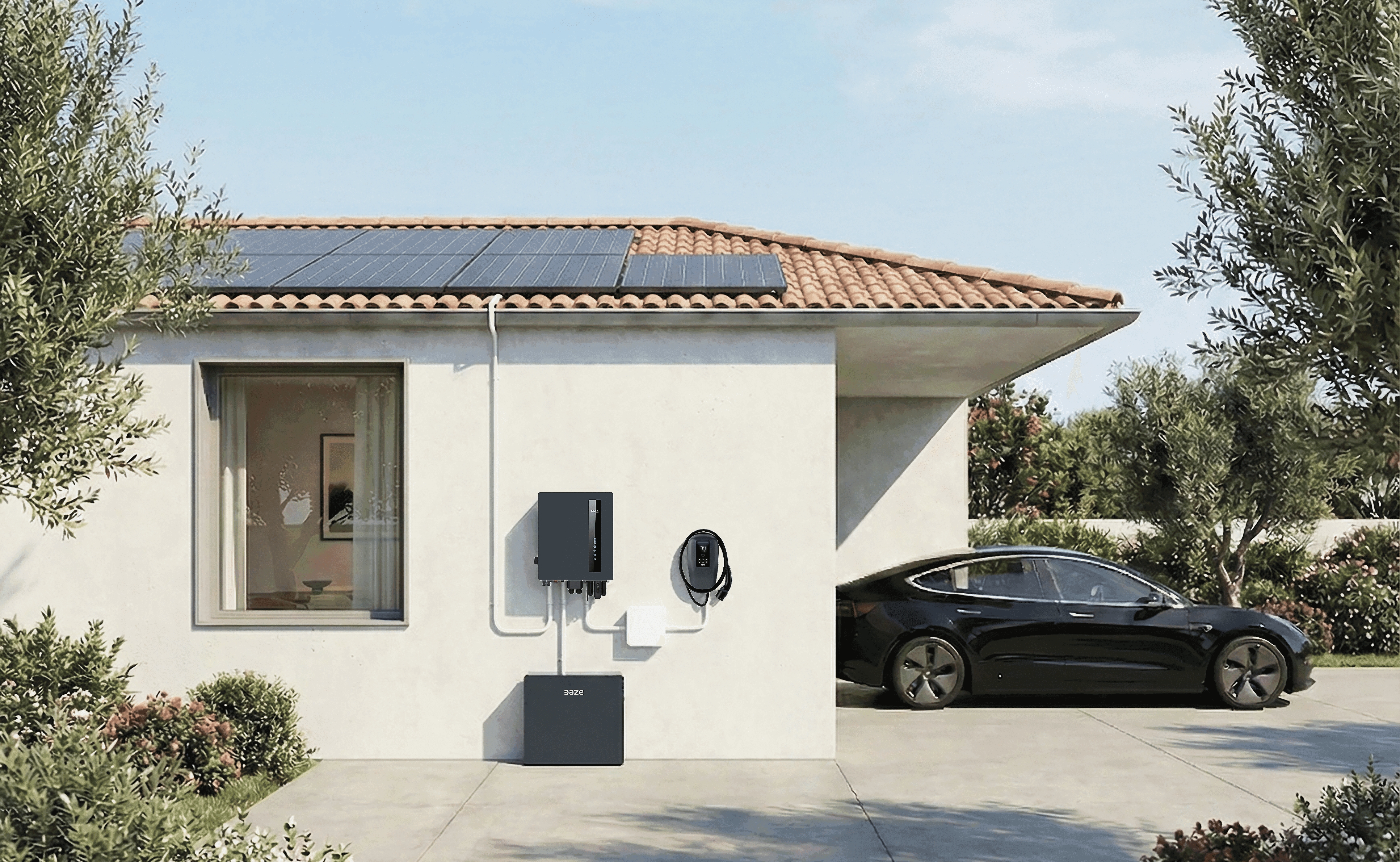
Installing a battery for a photovoltaic system is one of the most important choices for anyone who wants to make better use of the energy produced by their solar panels. The first question, however, is always the same: what is the price of a photovoltaic battery?
The answer depends on several factors: capacity, technology, brand, inverter, installation, any backup function and available incentives. In general, in 2026, a domestic storage battery can start from a few thousand euros for smaller sizes and exceed 10,000 euros for larger and more complete systems.
So the real question is not only “how much does it cost?”, but how much does it cost compared with the savings it can generate? A correctly sized battery can increase self-consumption and reduce energy drawn from the grid. A battery that is too large, chosen simply “to be on the safe side”, can instead unnecessarily extend the payback period.
How much does a battery for a domestic photovoltaic system cost?
The price of a domestic photovoltaic battery depends first of all on its storage capacity, expressed in kWh. The more energy the battery can store, the more the cost tends to increase.
However, the final price also includes other elements:
battery capacity;
cell technology;
brand and component quality;
inverter compatibility;
possible inverter replacement;
installation;
electrical materials;
configuration and testing;
any backup function;
warranty and support.
For a home with normal consumption, a 5 to 10 kWh battery is often the most considered solution. However, prices vary significantly depending on capacity, technology and what is included in the quote.
A 3 kWh photovoltaic battery may be suitable for low consumption or as a basic addition to the system. In general, the indicative installed price can start from around €1,500 and reach up to €4,500, especially if additional components or electrical upgrades are required.
A 5 kWh battery is one of the most common options for homes with moderate consumption. It may be enough to cover part of evening consumption and increase self-consumption. The indicative cost is often between €2,500 and €5,500, depending on the configuration.
For an average family, an 8 kWh battery can offer a good balance between capacity and investment. In this case, the price can be indicatively between €5,000 and €8,000, especially when the system includes installation, configuration and monitoring.
A 10 kWh photovoltaic battery is suitable for medium-high consumption or for those who want greater energy independence. The price can start from around €5,500 and exceed €8,000, depending on the brand, inverter compatibility and the presence of advanced features.
Finally, a 15 kWh or larger battery is more suitable for large homes, houses with a heat pump, electric air conditioning or an electric car. In these cases, the cost can range from around €8,000 to €12,000 or more, especially if the system is modular, expandable or equipped with backup.
These figures should be considered as rough price ranges, not fixed price lists. The actual price always depends on the technical configuration, the type of system, the installer and the services included.
Battery-only price, installed price and turnkey price
When talking about “photovoltaic battery price”, it is important to distinguish between three different concepts.
The battery-only price refers only to the cost of the component. It is the easiest figure to compare, but also the least complete.
The installed price includes the battery, installation, connections, configuration and testing. This is already a more realistic reference.
The turnkey price may also include the inverter, paperwork, monitoring systems, accessory materials and, in some cases, backup components.
This distinction is essential. A battery that looks inexpensive at first can become less convenient if the quote does not include installation, a compatible inverter or electrical upgrades.
Photovoltaic battery price per kWh: how to understand the real cost
A useful way to compare several solutions is to calculate the price per kWh of storage.
If a 10 kWh battery costs €7,000, the theoretical price is €700/kWh. However, this calculation is only a starting point. To be truly useful, it should take into account:
usable capacity;
charge and discharge efficiency;
depth of discharge;
lifespan;
warranty;
residual capacity guaranteed over time.
A 10 kWh battery does not always make all 10 kWh declared by the manufacturer available. Some systems limit the depth of discharge to preserve cell life. For this reason, the most interesting figure is not only the price per nominal kWh, but the price per usable kWh.
A slightly more expensive battery with higher usable capacity, better efficiency and a stronger warranty may prove more cost-effective over time.
Difference between kW and kWh in photovoltaic batteries
One of the most common mistakes is confusing kW and kWh. This happens often, partly because online searches such as “10 kW photovoltaic battery price” are common. In reality, when talking about storage, the correct figure is almost always kWh.
kW indicates power. In photovoltaics, for example, a 6 kW system indicates the theoretical maximum power of the panels under standard conditions.
kWh, on the other hand, indicates energy. A 10 kWh battery can store a certain amount of energy to be used later, for example in the evening or at night.
Put simply: kW tells you “how powerful” a system can be, while kWh tells you “how much energy” it can contain or produce over time.
What determines the price of a photovoltaic battery?
The cost of a storage battery depends on several factors. The most important are capacity, technology, product quality, system compatibility and installation.
Capacity is the first element. A 5 kWh battery costs less than a 15 kWh battery, but it is not always less convenient. If the home uses little energy in the evening, a small battery may be perfect. If, on the other hand, there is a heat pump, electric air conditioning or an electric car, more storage may be needed.
Technology affects price, lifespan and performance. The most common batteries for residential use are lithium batteries, especially lithium iron phosphate batteries, often abbreviated as LFP. They are appreciated for their safety, durability and stability.
The brand can also influence the cost. Premium brands may cost more, but they often offer solid warranties, more advanced monitoring apps, better integration with the inverter and more structured support.
Then there is the issue of inverter compatibility. If the battery is installed together with a new system, a hybrid inverter is often chosen from the start. If, instead, the battery is added to an existing system, it is necessary to check whether the current inverter is compatible. In some cases, a retrofit system is required. In others, replacing the inverter may be the better option.
Finally, installation must be considered. A battery is not an appliance to simply plug into a socket. It requires qualified technicians, correct connections, electrical protections, software configuration and testing.
To better understand how panels, inverter, battery, electrical panel and grid work together, you can read more about the layout of a photovoltaic system with storage.
Photovoltaic battery price for 3, 6 and 10 kW systems
Battery capacity should be chosen based on the system power, but above all based on the home’s actual consumption.
For a 3 kW photovoltaic system, a battery between 3 and 5 kWh is often considered. This can be a suitable solution for limited consumption, small homes or houses with moderate evening consumption. In these cases, a battery that is too large may not be used properly.
For a 6 kW photovoltaic system, a battery between 5 and 10 kWh is often a balanced choice. It may be suitable for an average family, especially if the home is often empty during the day and consumption is concentrated in the late afternoon and evening.
For a 10 kW photovoltaic system, a battery from 10 to 15 kWh or more can be considered. This configuration is more suitable for large homes, houses with a heat pump, electric air conditioning or an electric car.
In general, a 3–5 kWh battery may be enough for low consumption, a 5–10 kWh battery is often suitable for an average family, while capacities of 10–15 kWh or more should be considered for homes with high consumption. For a second home, however, storage is not always convenient if the property is used only occasionally.
However, it is important to remember that the battery should not be chosen only according to the power of the system. What matters most is when energy is consumed. A family that uses a lot of energy during sunlight hours has different needs from a family that consumes mainly in the evening.
How much does it cost to add a battery to an existing photovoltaic system?
Adding a battery to an already installed system is possible, but it requires a careful technical assessment.
The cost mainly depends on three factors:
inverter compatibility;
battery capacity;
work required to integrate the system.
If the existing inverter is not compatible, the price may increase because a new inverter or retrofit system is needed. Before installing the battery, the technician must check the inverter, electrical panel, meter, available space and protections.
Skipping this step is a mistake: the risk is buying a battery that later requires unexpected additional costs.
Complete system, backup and electric car: when further information is needed
In some cases, the price of the battery must be evaluated within a broader project. For example, if you are buying a complete system with panels, inverter and storage, the cost does not depend only on the battery, but on the entire configuration. To learn more, you can read our guide on the cost of photovoltaics with storage.
The backup function can also increase the price, because it requires dedicated components and configuration. Not all batteries power the home during a blackout: to do so, the system must be specifically designed, often for essential loads such as lights, refrigerator, router or electric gate.
If there is an electric car at home, energy demand increases, but it is not always convenient to significantly increase the domestic battery size. It is often more efficient to schedule charging during solar production hours using a smart wallbox.
Photovoltaic battery and self-consumption: why it affects savings
A battery increases the convenience of photovoltaics because it allows more energy produced at home to be used, especially in the evening and at night.
The more solar energy is self-consumed, the less energy is purchased from the grid. For this reason, the price of the battery should always be assessed together with the family’s actual consumption and the amount of energy that can effectively be shifted to hours without sunlight.
Is it worth installing a photovoltaic battery?
A photovoltaic battery can be worthwhile when the system produces more energy than is consumed during the day and when the main consumption is concentrated in the evening.
It is less convenient, however, if the home already consumes a lot of energy during sunlight hours, if consumption is low or if the battery is oversized.
The real convenience always depends on the relationship between initial cost, annual savings, available incentives and the actual use of the storage system.
Investment payback period
The payback period indicates how many years it takes for the savings generated by the battery to offset the cost incurred.
The simplified formula is:
Payback period = net cost of the battery / annual savings generated
If a battery costs €4,000 after incentives and generates €400 in annual savings, the payback period will be around 10 years.
Payback varies according to:
energy price;
amount of energy self-consumed;
initial battery cost;
usable capacity;
lifespan;
incentives;
household habits.
Two homes with the same battery can have very different results. One will use it every day, while the other will use it only partially.
Incentives, tax deductions and net battery price
Incentives can significantly reduce the effective cost of a battery. However, rules can change over time, so it is always advisable to check requirements, rates, limits and documentation before proceeding.
When evaluating the price, it is useful to distinguish between gross price, effective cost, initial outlay and tax saving.
The gross price is the amount shown in the quote.
The effective cost is the cost after deductions or incentives.
The initial outlay is the amount to be paid immediately.
The tax saving is the amount recovered over time.
If a battery costs €8,000 and a 50% deduction applies, the effective cost over time may become €4,000. However, the family may still need to pay the full amount upfront and then recover the deduction over the following years.
To properly assess the investment, it is also important to consider any financing, interest, recovery times and tax capacity.
How to size a photovoltaic battery
The right battery is not necessarily the largest one. It is the one that charges and discharges regularly, without remaining unused for long periods.
To choose the correct capacity, you need to evaluate:
annual consumption shown on the electricity bill;
evening and night-time consumption;
system production;
presence of a heat pump, air conditioning or induction hob;
any electric car;
main objective: savings, independence or backup.
These elements help avoid both oversizing, which increases the cost without generating enough benefit, and undersizing, which limits self-consumption and reduces potential savings.
Mistakes to avoid when choosing a battery
Choosing a battery is an important investment. The most common mistakes are:
choosing only based on the lowest price;
oversizing capacity compared with actual consumption;
undersizing the storage system and reducing self-consumption;
ignoring usable capacity, depth of discharge and efficiency;
failing to check compatibility with the inverter and existing system;
failing to check warranty, cycles and residual capacity;
comparing non-equivalent quotes.
An inexpensive battery can be convenient only if the system is complete, safe, compatible and well supported. Likewise, a premium battery makes sense if it offers longer life, better support, higher efficiency and fewer problems over time.
How to read a photovoltaic battery quote
A good quote should be clear. If some items are vague, it is better to ask for clarification.
Before accepting a quote for a photovoltaic battery, check that it clearly indicates:
battery brand and model;
nominal capacity and usable capacity;
whether the inverter is included, excluded or already present;
installation, configuration and testing;
any backup function;
product and installation warranty;
whether VAT is included or excluded.
If you need to compare several offers, assess not only the final price, but also what is included and the reliability of the installer.
Frequently asked questions about photovoltaic battery prices
How much does a battery for a domestic photovoltaic system cost?
A domestic photovoltaic battery can cost from a few thousand euros up to over €10,000, depending on capacity, technology, brand, inverter, installation and backup function.
How much does a 5 kWh storage battery cost?
A 5 kWh battery can indicatively cost between €2,500 and €5,500, depending on the configuration and what is included in the price.
How much does a 10 kWh photovoltaic battery cost?
A 10 kWh battery can indicatively cost between €5,500 and €8,000 or more. The price increases if inverters, backup, paperwork or complex installations are included.
How much does it cost to add a battery to an existing system?
It depends on inverter compatibility and the upgrades required. If the system is already prepared, the cost will be lower. If the inverter needs to be replaced, the price increases.
How much does a photovoltaic system with storage cost?
A photovoltaic system with a battery can cost from less than €10,000 for small configurations to over €20,000 for more powerful systems with larger storage capacity.
How many kWh of battery capacity does a home need?
For a home with moderate consumption, 5 kWh may be enough. For an average family, 5–10 kWh is often considered. For homes with a heat pump, electric car or high consumption, it may be necessary to increase capacity to 10–15 kWh or more.
Is a photovoltaic battery always convenient?
No. It is especially convenient when the energy produced during the day is not immediately consumed and can be used in the evening thanks to storage.
Do photovoltaic batteries work during a blackout?
Only if the system is designed for backup. Not all batteries power the home during a grid outage.
Is it better to install the battery immediately or add it later?
Installing it immediately allows for integrated system design. Adding it later can be useful if you first want to better understand actual consumption and production. The choice depends on budget and objectives.
How to assess the right price for a photovoltaic battery
The price of a photovoltaic battery should not be judged only by looking at the initial cost. It is important to consider usable capacity, technology, compatibility, installation, warranty, efficiency, lifespan and the savings generated.
A 5 kWh battery may be perfect for a small home, while a 10 or 15 kWh battery may be more suitable for families with high consumption, a heat pump or an electric car. The best choice, however, always comes from real data: electricity bill consumption, system production, daily habits and energy goals.
In short, the right battery is not necessarily the cheapest or the largest. It is the one that works well every day, increases self-consumption, reduces energy drawn from the grid and offers a solid balance between price, quality and long-term convenience.
Purchase your EV Charger
Our expert will contact you to offer you the most suitable solution for you.